Chiropractic Care for Spinal Stenosis
12 Min ReadHealthSource Chiropractic
When a patient reports leg pain or numbness with walking that improves while sitting or leaning forward, the pattern deserves more than a quick label. Several spinal conditions can produce similar complaints, so the location, neurologic findings, and effect on function matter before discussing conservative care.
Call (440) 934-5858 to talk with HealthSource about your practice
Chiropractic care for spinal stenosis should begin with an individual assessment, not a promised result. Spinal stenosis is a narrowing of spaces in the spine that may press on the spinal cord or nerve roots. Symptoms can include pain, numbness, tingling, cramping, or weakness. Lumbar symptoms that worsen with standing or walking and ease with sitting or leaning forward may differ from sciatica or disc pain, but overlap is possible. Severe groin numbness, loss of bowel or bladder control, or inability to walk requires prompt medical care.
For a chiropractic practice owner, the responsible conversation is about what the examination supports, what care may address, and when referral belongs in the plan. Start with what the narrowing means and why symptoms do not always match an image. Owners who also want to see the multi-service model can review how HealthSource approaches practice transformation.
What chiropractic care for spinal stenosis starts with
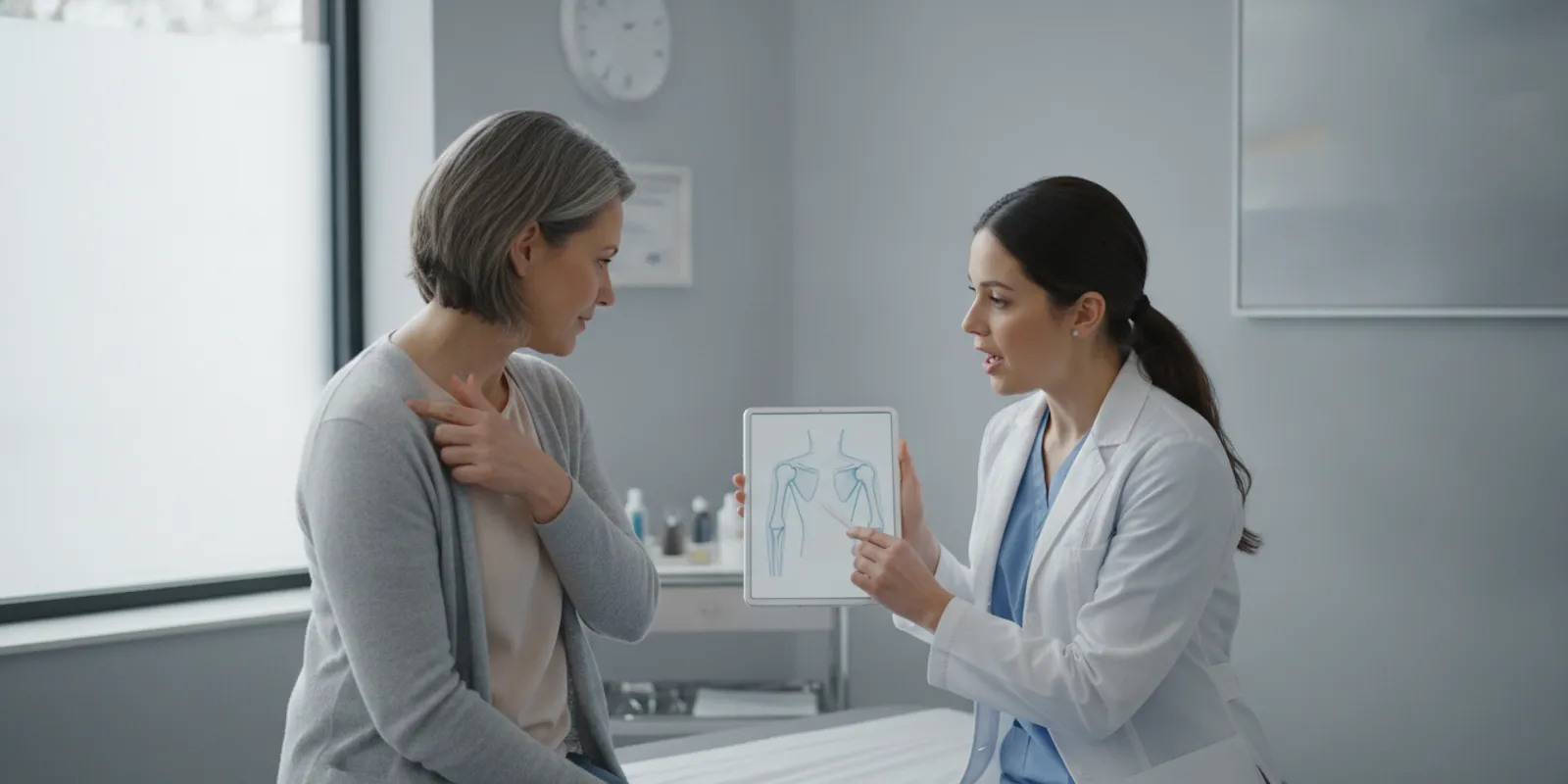
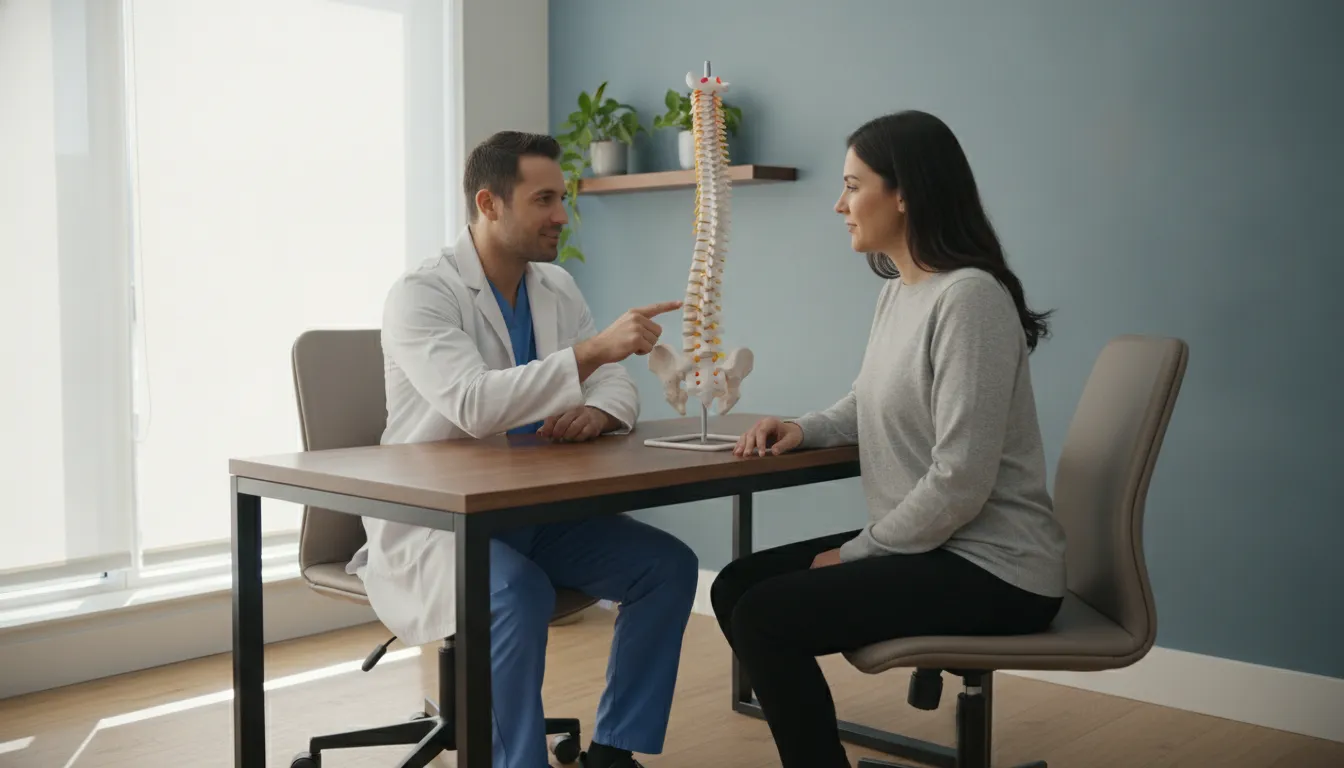
Spinal stenosis is a narrowing of spaces inside the spine. The National Institute of Arthritis and Musculoskeletal and Skin Diseases describes that narrowing as pressure on the spinal cord, on nerve roots, or on both. The space involved may be the spinal canal, the area near a nerve root, or an opening between vertebrae where a nerve leaves the spine.
That definition is the one a practice should use before anyone names a technique. Stenosis is not a brand of back pain, and it is not the same question as a herniated disc. A disc can contribute to crowding, but a disc page answers a different problem. Readers who came in with a disc question can use the herniated disc guide instead of stretching this page to cover it.
The narrowing shows up most often in the lumbar spine and the cervical spine. Age raises the chance because discs lose height, joints wear, and the tunnels around nerves can get smaller. Younger adults can have it too, including people born with a narrower canal or people with a spine injury. None of that tells a clinician what to do on a given visit. It only tells the team which anatomy the conversation is about.
Owners should also separate the word from the person. Someone can have narrowing on an image and few symptoms. Someone else can have walking-limited leg symptoms and still need a medical workup before a chiropractic plan is even discussed. The useful practice habit is to name the space that is narrow, name the region, and then let the exam decide the next step.
How lumbar and cervical symptom patterns differ
The symptom pattern depends on where the space is narrow. Lumbar stenosis often shows up as low-back pain plus leg symptoms. Cervical stenosis more often shows up in the neck, arms, and hands. Mixing those patterns in one script makes the front desk and the doctor tell two different stories.
| What to compare. | Lumbar pattern. | Cervical pattern. |
|---|---|---|
| Where symptoms show up. | Low back, buttocks, legs, and feet. | Neck, shoulders, arms, hands, and fingers. |
| What often makes them worse. | Standing, walking, or bending backward. | Neck position and arm use. The history has to say which. |
| What may ease them. | Sitting or leaning forward, which flexes the lower back. | A change in neck position. Do not assume the lumbar posture applies. |
| What the note should capture. | Walking tolerance and whether flexion helps. | Which arm or hand is involved, and any grip weakness. |
The lumbar walking pattern has a plain-language name: neurogenic claudication. Leg pain, burning, numbness, cramping, or weakness builds while the person stands or walks, then eases when they sit or lean forward. Flexing the lower back can open space at the back of the spinal column. Extending it can close that space down. That is a description of the pattern, not a promise that a visit will change it.
This is also why the page should not borrow the sciatica answer. Sciatica is a leg-pain pattern with its own intake. A stenosis conversation asks whether walking distance and forward flexion change the story. If the complaint is a nerve-pain pattern without that walking story, send the reader to the sciatica guide for practice owners.
One more limit belongs in the same conversation. Imaging can show narrowing in a person who feels fine, and the National Institute of Arthritis and Musculoskeletal and Skin Diseases notes that an image by itself does not decide whether treatment is needed. The pattern, the exam, and the person's function decide the next conversation.
Questions that belong in the first visit
The first visit is a history and an exam, not a form that diagnoses stenosis at the desk. A licensed chiropractor can ask where the symptom sits, whether it travels, when it started, and what a normal walk does to it. Those questions match the history NIAMS describes for this condition: location, quality, timing, and what movement changes.
The team can prepare the visit without deciding it. Five notes are enough before the doctor walks in:
- Where the symptom is, and whether it stays in the back or neck or travels into a limb.
- How far the person can walk before symptoms build, and whether standing in line does the same thing.
- Whether sitting or leaning forward eases lumbar symptoms, or whether a neck position changes arm symptoms.
- Any change in bowel, bladder, or sexual function, stated in the person's own words.
- Who else is already involved, including a physician, a surgeon, or a physical therapist, and what imaging the person already has.
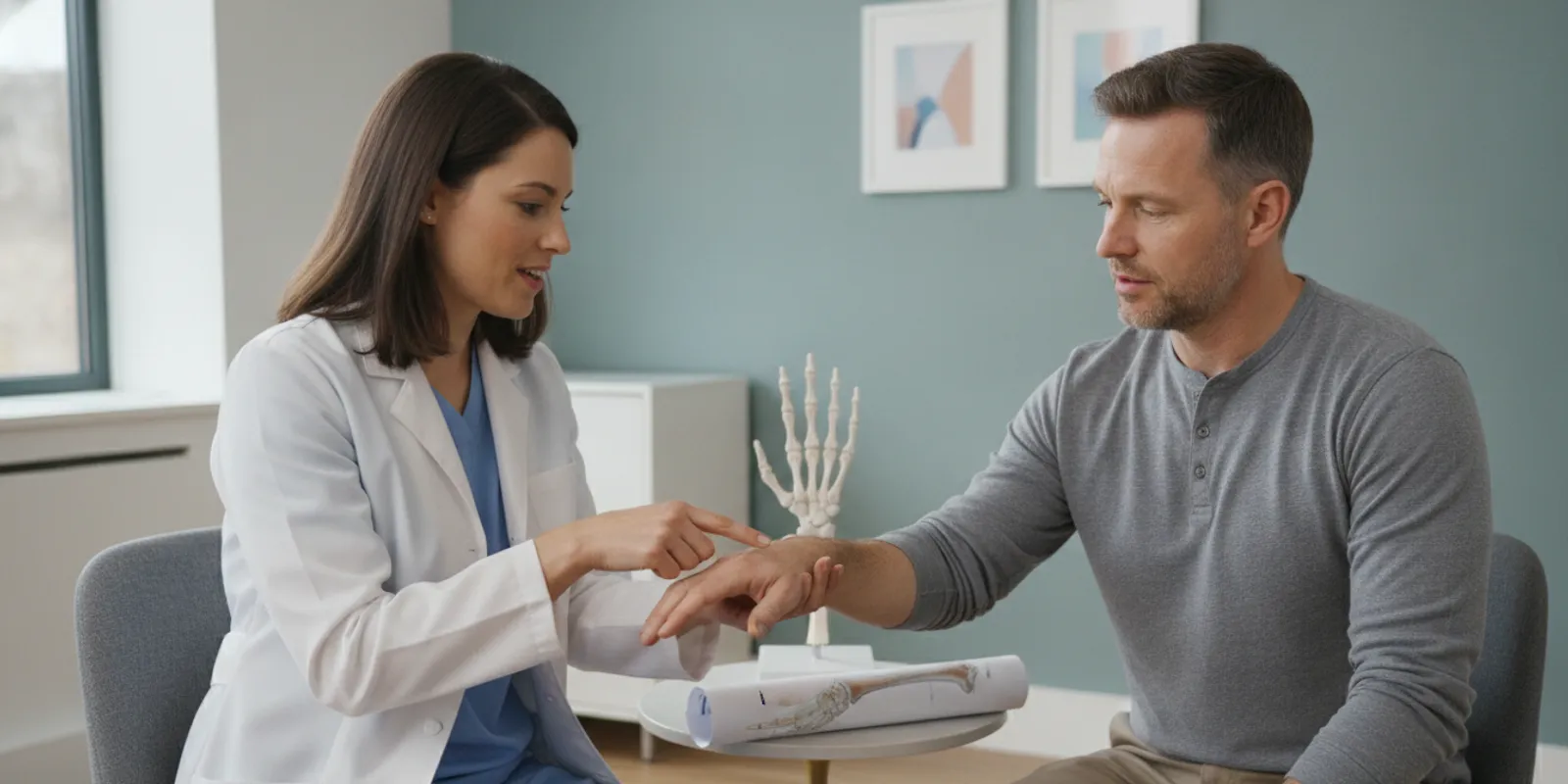
The exam itself stays with the clinician. NIAMS describes checks of motion, including whether bending backward brings symptoms on and whether bending forward eases them, plus sensation, strength, reflexes, balance, and gait. A practice can train the team to record what the person said. It should not train the team to score those tests.
Write the answers in everyday words. "Legs burn after one block and ease in a chair" is more useful than a label. "Hands tingle when the neck extends" is more useful than a technique name. The doctor can then decide whether the visit continues, whether imaging needs a physician's read, or whether the person should be sent on the same day.
Owners should review a sample note once a month. If the walking distance, the easing posture, and the bowel and bladder question are missing, the workflow is not ready, no matter how complete the marketing page sounds.
When a stenosis concern needs medical referral
Some stenosis symptoms are not a scheduling question. The National Institute of Arthritis and Musculoskeletal and Skin Diseases notes that more severe stenosis can affect bowel, bladder, or sexual function. The American Academy of Orthopaedic Surgeons also flags severe groin numbness, loss of bowel or bladder control, and inability to walk as reasons for urgent medical care.
Treat those reports as a stop. The front desk should not offer the next open adjustment, and the clinician should not fold them into a wellness plan. Tell the person to seek emergency or same-day medical care, and document what was said and where you sent them. Progressive leg or arm weakness belongs in the same category until a physician has evaluated it.
Other histories should leave the routine new-patient path even when they are less dramatic. New trauma, unexplained fever, a history of cancer, or neurologic symptoms that are clearly getting worse week by week are reasons to refer rather than start a course of visits. This article is not a legal standard of care. The licensed clinician makes that call for the person in the room.
Say this in the office before a symptom forces it. A short written handoff, the same words at the desk and in the treatment room, keeps a worried patient from hearing two plans. Chiropractic care does not prevent these events, and no script should imply that it does.
How to explain conservative options without a promise
Patients ask for the best treatment. A careful practice answers with the options a physician and a chiropractor may discuss, then stops before a ranking. Nonsurgical care described by NIAMS includes physical therapy to keep spinal motion, strengthen the trunk, build endurance, and steady balance, plus gradual aerobic activity such as pool walking or a stationary bike. A brace is sometimes used for support. None of that widens a canal.
Mayo Clinic lists medicines, physical therapy, steroid injections, and surgery among medical options, and it names chiropractic treatment among complementary choices. That mention is not an endorsement of a technique, and it is not a result. Medicines and injections belong to the prescribing clinician. Surgery, including a laminectomy that removes bone to make room, is a surgeon's recommendation when symptoms limit daily life enough to justify it.
Inside a chiropractic practice, the honest sentence is narrower. Care may address related movement, activity tolerance, and other findings the exam supports. It does not reverse arthritis, open a foramen on demand, or keep someone out of surgery. If the person is also asking about a disc bulge, point them to the non-surgical bulging disc guide rather than answering that question here.
HealthSource clinics are built as a multi-service model. The seven service streams include chiropractic care, functional exercise, Class IV laser therapy, spinal decompression, nutrition support, a wellness membership, and sleep support. Those streams are a way to organize a practice. They are not a stenosis protocol, and they should be offered only when the clinician decides they fit that person.
Owners comparing decompression and laser as services can read how those two services differ. That comparison is about the services, not about a stenosis outcome, a success rate, or revenue.
A team workflow that stays inside clinical judgment
The owner's job is to make one explanation survive the handoff. The front desk, the doctor, and the rehab team should use the same words for narrowing, the same question about walking and forward flexion, and the same red-flag stop. A recheck should ask whether walking tolerance changed, not whether a technique "worked."
Put the boundary in the marketing review, not only in the chart. Do not publish a line that says chiropractic cures stenosis, restores a canal, or guarantees a walking distance. Do not let a decompression or laser offer stand in for the exam. If a campaign needs a condition page, this article's job is the explanation. Service comparisons stay on their own URLs.
Keep neighboring topics neighboring. Disc herniation has its own clinical guide, and readers with that question should use the herniated disc guide. A broader look at disc-care choices belongs on the disc problems comparison. Repeating those pages here would compete with them and would not help a stenosis visit.
Practice owners who want to see how a multi-service model is organized, including rehabilitation alongside chiropractic care, can review what it looks like to transform a chiropractic practice. That page is about the model. It is not a claim that the model changes a stenosis result.
Review three charts a month against this workflow. Look for the walking note, the easing posture, the bowel and bladder question, and a clear next step. If those four items are present, the team is explaining the condition. If they are missing, fix the workflow before you add another service.
A note on what this article is not
This article is general information for practice owners. It is not legal, tax, accounting, valuation, financial, or medical advice, and it is not a treatment plan for any person. A licensed clinician decides whether to examine someone. A physician decides medical care, including medicines, injections, and surgery.
Frequently asked questions
What does stenosis mean in medical terms?
Stenosis means a space has become narrow. In the spine, that space may be the canal, the area around a nerve root, or the opening where a nerve leaves between vertebrae. The word describes anatomy. It does not name a treatment.
Is chiropractic care a good idea for cervical stenosis?
Cervical stenosis is a neck pattern, often with symptoms in the arms or hands, and it is a different conversation from lumbar walking symptoms. Whether chiropractic care is appropriate depends on the exam, the neurologic findings, and any physician already involved. No page can call it good or bad for every person.
What is the best treatment for spinal stenosis at L4-L5 or L5-S1?
There is no single best treatment for those levels. L4-L5 and L5-S1 are common lumbar levels, but the plan still depends on symptoms, exam findings, and imaging read in context. A physician may discuss therapy, medicines, injections, or surgery. A chiropractor may discuss conservative care only when the individual exam supports it.
Can chiropractic care widen a stenotic canal or prevent surgery?
No. Care does not open a narrowed canal, and it does not guarantee that someone will avoid surgery. The fair statement is that a clinician may address movement, activity, and other findings the exam supports, while urgent neurologic symptoms go to medical care.
What should the team say when someone asks if care is safe?
Say that safety is an individual decision. Ask about weakness, walking ability, and bowel or bladder changes before any visit is booked as routine. The licensed clinician decides whether to examine, refer, or both. Do not promise a result to make the answer sound simpler.
See how a multi-service practice is organized
A stenosis conversation still ends with the clinician in front of the patient. If you want to see how HealthSource groups chiropractic care with rehabilitation and other services for practice owners, start with the chiropractor path rather than an investor page.
Call (440) 934-5858 or see how HealthSource organizes a multi-service chiropractic practice.