
Spinal Decompression vs Laser Therapy: A DC's Guide
24 Min ReadHealthSource Chiropractic
Some patients walk through your door with complex issues that don’t fully resolve with traditional adjustments. For them, you need more options in your clinical toolkit. Spinal decompression and cold laser therapy are two powerful, non-invasive answers that can deliver life-changing results. But to build true patient trust and create the most effective care plans, you need to know precisely which tool to reach for. This guide breaks down the spinal decompression vs laser therapy comparison from a patient-centric view. We’ll explore which conditions respond best to each modality, helping you create the personalized treatment plans that lead to superior outcomes, glowing testimonials, and a thriving, reputable clinic.
Key Takeaways
- Distinguish between mechanical and cellular healing: Spinal decompression is a mechanical therapy that physically creates space in the spine to relieve pressure on discs and nerves. In contrast, cold laser therapy is a cellular treatment that uses light energy to reduce inflammation and speed up tissue repair.
- Tailor treatments to the diagnosis: Use spinal decompression as your primary tool for structural spinal issues like herniated discs and sciatica. Reserve cold laser therapy for soft tissue injuries, inflammation, and arthritis. For complex cases, you can combine both to address the problem from two different angles.
- View new therapies as a business strategy: Adding these services does more than improve clinical care; it transforms your practice. You can create new revenue streams, achieve better patient outcomes that generate referrals, and establish your clinic as a modern wellness leader.
What Is Spinal Decompression Therapy?
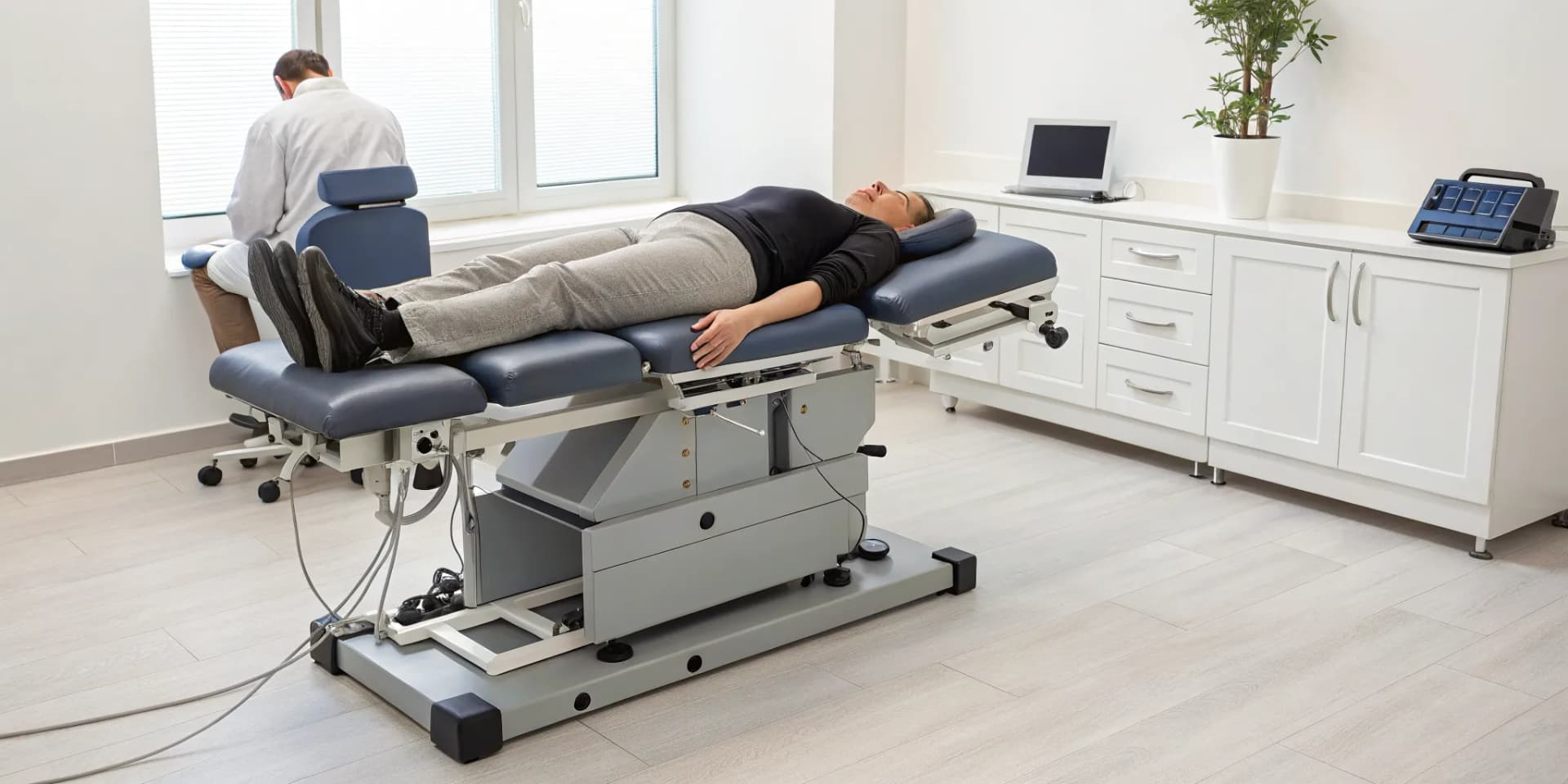
Spinal decompression therapy is a non-surgical treatment you can offer patients struggling with persistent back, neck, or leg pain stemming from spinal issues. Think of it as a sophisticated, modern approach to traction that provides targeted relief without invasive procedures. During a session, your patient lies comfortably on a specialized, computer-controlled table fitted with harnesses. The system then applies a gentle, precise stretching force to the spine, creating negative pressure within the discs. This process is designed to be comfortable and relaxing, offering a powerful alternative for those seeking lasting relief.
By incorporating this technology, you can provide a powerful solution for conditions that may not fully respond to adjustments alone. It's a key service that can set your clinic apart and address the growing demand for comprehensive chiropractic care. Adding spinal decompression is more than just adding a piece of equipment; it's about expanding your clinical capabilities and building a more robust practice. It aligns perfectly with a business model focused on delivering superior patient outcomes and creating diverse revenue streams for your clinic. You're not just treating symptoms; you're providing a path to long-term healing that patients will value.
How It Works
The science behind spinal decompression is straightforward and elegant. The gentle stretching of the spine creates a vacuum effect, or negative intradiscal pressure. This is the key to its effectiveness. This negative pressure helps retract bulging or herniated discs, pulling the displaced material back into place and taking pressure off pinched nerves. At the same time, this process encourages the flow of water, oxygen, and nutrient-rich fluids into the discs. This rehydration and nutrient supply is essential for healing damaged disc tissue. It’s a targeted mechanical therapy that facilitates the body’s natural healing processes from the inside out.
What Conditions Does It Treat?
Spinal decompression allows you to effectively address some of the most common and debilitating spinal conditions your patients face. It’s an excellent treatment option for chronic pain that hasn't responded to other conservative methods. You can confidently recommend this therapy for patients with:
- Herniated or bulging discs
- Degenerative disc disease
- Sciatica
- Spinal stenosis
- Pinched nerves
- Posterior facet syndrome (worn spinal joints)
By offering this service, you expand your ability to help a wider range of patients find relief, solidifying your clinic's reputation as a go-to center for complex spinal issues.
The Core Benefits for Patients
For your patients, the benefits of spinal decompression are life-changing. The most immediate advantage is significant pain reduction as pressure is taken off spinal nerves. But the benefits go deeper than just temporary relief. By promoting disc healing and repositioning, the therapy can provide long-lasting results. Patients often experience improved spinal flexibility and mobility, allowing them to return to activities they love. This therapy is a cornerstone of achieving better patient outcomes, as it directly addresses the root cause of their pain. It offers a safe and effective alternative to surgery, giving patients a clear path toward recovery and a better quality of life.
What Is Cold Laser Therapy?
If you're looking to add modern, effective treatments to your practice, cold laser therapy is a fantastic option. Also known as low-level laser therapy (LLLT), this non-invasive treatment uses specific wavelengths of light to encourage healing in damaged tissues. It’s a gentle yet powerful tool that works without any cuts or needles, making it an incredibly comfortable experience for your patients. For clinic owners, incorporating this kind of tech-based service is a strategic move. It not only improves patient outcomes but also helps you build a more robust practice with seven unique revenue streams.
Cold laser therapy allows you to address pain and inflammation at the source, offering a sophisticated solution that complements your chiropractic adjustments. By providing advanced therapies like this, you position your clinic as a comprehensive wellness center, not just a place for spinal manipulation. This distinction is key to attracting and retaining patients who are actively seeking the best possible care. It demonstrates your commitment to leveraging technology to achieve superior results, which is a core principle of the HealthSource business model. It’s a clear way to show patients you’re invested in their long-term health and recovery.
How It Works
The science behind cold laser therapy is straightforward. The device delivers focused light energy directly to the affected area. This light penetrates the skin and stimulates activity within the cells, essentially giving them a jump-start. This cellular boost helps reduce inflammation, ease pain, and speed up the body’s natural healing mechanisms. It also enhances blood flow to the tissue, bringing more oxygen and vital nutrients to the site of injury. The result is a reduction in swelling and discomfort, helping your patients feel better and recover faster.
What Conditions Does It Treat?
One of the biggest advantages of cold laser therapy is its versatility. You can use it to treat a wide range of both acute and chronic conditions that your patients present with every day. It’s highly effective for everything from knee pain, tennis elbow, and carpal tunnel syndrome to tendonitis, fibromyalgia, and sciatica. You can also apply it to help with headaches, herniated discs, plantar fasciitis, and various muscle injuries. This broad applicability makes it an invaluable tool, helping you meet the growing demand for chiropractic services with effective, targeted solutions.
The Core Benefits for Patients
When you explain cold laser therapy to your patients, the benefits are easy to communicate and understand. They’ll appreciate that you’re offering a treatment that is:
- Non-invasive and pain-free: There are no needles or surgery involved, which is a huge relief for many patients.
- Fast and effective: The therapy accelerates the body’s natural healing processes, helping them recover more quickly.
- Reduces pain and swelling: It directly addresses inflammation, leading to improved comfort and mobility.
- Promotes better healing: By enhancing blood flow, it ensures the injured area gets the resources it needs to repair itself properly.
Spinal Decompression vs. Laser Therapy: A Head-to-Head Comparison
As a clinic owner, you’re always looking for effective, non-invasive ways to deliver better patient outcomes. Spinal decompression and cold laser therapy are two powerful modalities that can do just that, but they work in fundamentally different ways. While both can be incredible assets to your practice, understanding their unique mechanisms, applications, and patient experiences is key to using them effectively. Think of them as specialized tools in your clinical toolkit; knowing when to use each one separately, or even together, is what sets a good clinic apart from a great one.
Integrating advanced therapies like these is a cornerstone of building a modern, successful practice. It not only expands the scope of conditions you can treat but also opens up new avenues for clinic growth. By offering a more comprehensive suite of services, you can attract more patients and create diversified income through seven unique revenue streams. This head-to-head comparison will break down exactly what you need to know about each therapy so you can make informed decisions for your patients and your business.
How They Work Differently
At their core, these two therapies address pain and dysfunction from completely different angles. Spinal decompression is a mechanical therapy. During a session, your patient lies on a specialized, computer-controlled table that gently stretches and relaxes the spine in a precise rhythm. This action creates negative pressure within the intervertebral discs, which helps retract bulging or herniated material and allows for an influx of oxygen and nutrients to promote healing. It’s a direct approach to relieving physical pressure on nerves and discs.
Cold laser therapy, on the other hand, is a light-based therapy that works at the cellular level. It uses specific wavelengths of low-level light to penetrate the skin and stimulate cellular activity, a process known as photobiomodulation. This light energy helps increase ATP production in the mitochondria, which fuels cellular repair, reduces inflammation, and blocks pain signals. It doesn’t physically move structures; instead, it gives the body’s cells the energy they need to heal themselves more efficiently.
Treatment Focus and Patient Application
Because their mechanisms are so different, each therapy excels at treating specific types of conditions. Spinal decompression is your go-to for issues directly related to spinal compression. It’s highly effective for patients with herniated or bulging discs, sciatica, degenerative disc disease, and facet syndrome. If a patient’s pain stems from direct pressure on a nerve root or the gradual breakdown of their spinal discs, decompression offers a targeted solution to create space and facilitate healing.
Cold laser therapy has a much broader range of applications because it targets inflammation and cellular repair. You can use it to treat a wide variety of musculoskeletal issues, including soft tissue injuries like muscle strains and ligament sprains, tendonitis, bursitis, and chronic pain conditions like arthritis. It’s an excellent tool for managing localized pain and inflammation anywhere in the body, not just the spine. This makes it a versatile addition to almost any patient’s treatment plan.
The Patient Experience
Explaining the treatment experience is crucial for patient comfort and compliance. For spinal decompression, patients are comfortably secured to the table with a harness. They won’t feel pain; instead, they’ll notice a gentle, intermittent pulling and stretching sensation as the table works. Many patients find the sessions to be quite relaxing and may even fall asleep. The entire process is passive, controlled by the system, and designed for comfort.
The experience with cold laser therapy is even simpler. The patient will feel little to nothing during the treatment, aside from the touch of the laser device on their skin. Some report a very mild, soothing warmth or a slight tingling sensation in the treatment area, but there is no pain involved. Sessions are typically quick, often lasting just a few minutes, making it an easy and comfortable therapy for patients to receive.
Safety Profiles and Potential Side Effects
Both therapies boast excellent safety records, which is a major plus for any non-invasive treatment. Cold laser therapy is exceptionally safe, with virtually no side effects. Because it’s a non-invasive treatment that doesn’t use heat, medicine, or needles, the risks are minimal. The primary safety protocol is ensuring both the patient and practitioner wear protective eyewear.
Spinal decompression is also very safe when performed on properly screened candidates. Most side effects are mild and temporary, such as a dull ache or muscle soreness, similar to how one might feel after starting a new exercise. However, it’s not suitable for everyone. You must screen for contraindications like fractures, tumors, or severe osteoporosis. Proper franchise training and support ensures you can confidently identify the right candidates and administer treatment safely.
Choosing the Right Tool: A Condition-Based Guide
As a clinician, your expertise lies in accurately diagnosing the root cause of a patient's pain. Once you have a clear diagnosis, choosing the most effective treatment modality is the next critical step. Having a diverse set of tools allows you to move beyond a one-size-fits-all approach and create truly customized care plans. Both spinal decompression and cold laser therapy are powerful, non-invasive options, but they excel in different scenarios. Understanding when to use each one, or when to combine them, is key to delivering superior patient outcomes and positioning your clinic as a leader in comprehensive care. This decision-making process is a cornerstone of a modern chiropractic business model that prioritizes personalized treatment over simple adjustments. Let's walk through a condition-based framework to help you select the right therapy for the right patient, every time. This strategic application of technology not only helps your patients heal faster but also strengthens your practice's reputation and financial health. By integrating these advanced therapies, you demonstrate a commitment to results that goes far beyond the standard, building patient trust and setting your clinic apart from the competition.
When to Recommend Spinal Decompression
Think of spinal decompression as your primary tool for mechanical issues involving the spine. When a patient presents with pain stemming from direct pressure on a nerve or disc, decompression is often the most direct path to relief. It’s ideal for conditions like herniated or bulging discs, sciatica, degenerative disc disease, and facet syndrome. The therapy works by gently stretching the spine, creating negative pressure within the discs. This vacuum effect can help retract bulging material and creates an environment where water, oxygen, and nutrients can flow back into the disc to promote healing. It directly addresses the structural problem, making it a foundational treatment for many common back and neck pain complaints.
When to Recommend Cold Laser Therapy
Cold laser therapy, or low-level laser therapy (LLLT), is your go-to for addressing pain at a cellular level. It’s less about structural correction and more about accelerating the body’s natural healing processes. Recommend this therapy for conditions involving inflammation, soft tissue damage, and cellular repair. It’s highly effective for treating sprains, strains, tendonitis, bursitis, and arthritic pain. The low-intensity light penetrates the tissue, stimulating cellular metabolism, reducing inflammation, and decreasing pain signals. As the demand for chiropractic care grows, patients are looking for treatments that offer quick and effective relief, and LLLT often provides noticeable improvement after just a few sessions.
Can You Use Both Therapies Together?
Absolutely. In fact, combining spinal decompression and cold laser therapy can create a synergistic effect that leads to faster and more durable results for your patients. The two treatments address pain from different angles: decompression corrects the underlying mechanical issue, while laser therapy manages the associated inflammation and accelerates tissue repair. For a patient with a herniated disc and significant sciatic nerve inflammation, for example, this dual approach is incredibly effective. You can use decompression to relieve pressure on the nerve root and then apply laser therapy to calm the inflammation and speed healing in the surrounding tissues. Offering integrated care plans like this not only improves outcomes but also enhances your practice by creating more comprehensive and valuable revenue streams.
Clearing Up the Confusion: Common Therapy Myths
When you introduce new therapies into your practice, you also take on the role of educator. Patients often arrive with preconceived notions or misinformation they’ve gathered online. Clearing up these myths is the first step in building trust and ensuring they feel confident in your treatment plan. By proactively addressing these common points of confusion around spinal decompression and cold laser therapy, you can guide patients toward the best path for their healing and position your clinic as a trusted authority.
Let's set the record straight on a few of the most persistent myths surrounding these powerful modalities.
Myth: Spinal Decompression is Painful or Surgical
The term "spinal decompression" can sound intense, leading many patients to assume it’s an invasive or painful procedure. It’s important to clarify that non-surgical spinal decompression is a gentle, computer-aided therapy designed to be relaxing. Most patients don't feel pain during the treatment; instead, they experience a slow, controlled stretching sensation in their spine.
This therapy works by gently elongating the spine to reduce pressure on compressed discs and nerves, creating an environment that supports the body's natural healing process. It’s a world away from surgical interventions. Educating patients on this distinction is key to easing their fears and helping them understand the benefits. It's a cornerstone of a modern chiropractic business model that prioritizes patient comfort and outcomes.
Myth: Cold Laser Therapy is Just a Fad
With new wellness trends popping up constantly, it’s understandable why some patients might be skeptical of cold laser therapy. However, this treatment, also known as low-level laser therapy (LLLT), is far from a fleeting fad. It is a well-established, FDA-cleared modality that has been used by physical therapists and chiropractors for decades to treat a wide range of musculoskeletal issues.
Cold laser therapy uses specific wavelengths of light to penetrate tissue, stimulating cellular repair, reducing inflammation, and relieving pain at the source. It’s a non-invasive and painless treatment that provides a powerful alternative for managing soft tissue injuries and chronic pain. Offering it can become one of your clinic's unique revenue streams while delivering exceptional, science-backed results.
Myth: The Two Therapies Are Interchangeable
While both spinal decompression and cold laser therapy are excellent non-surgical options for pain relief, they are not interchangeable. They operate on different principles and target different problems. Confusing the two can lead to less-than-optimal treatment plans. Spinal decompression is a mechanical therapy focused specifically on relieving pressure within the spinal column, making it ideal for conditions like herniated discs, sciatica, and degenerative disc disease.
In contrast, cold laser therapy is a biostimulative treatment that promotes healing at a cellular level. It’s best suited for soft tissue injuries, inflammation, and joint pain. Understanding their distinct applications is crucial as the demand for chiropractic care grows and patients seek more specialized solutions. In many cases, the therapies can be used together to create a comprehensive treatment plan, but they each play a unique and important role.
Guiding Patients: How to Choose the Right Therapy
Helping a patient decide on the right course of action is one of the most important parts of our job. When you have powerful tools like spinal decompression and cold laser therapy at your disposal, the key is knowing how to match the treatment to the person. It’s not about simply telling them what to do; it’s about having a conversation, presenting the options clearly, and co-creating a plan that aligns with their specific condition and life goals. This collaborative approach builds trust and empowers patients to take an active role in their recovery.
Guiding this decision requires a structured approach. You need to look at the full picture, from the clinical diagnosis to the patient’s personal expectations. By walking them through a clear and logical process, you can demystify their options and help them feel confident in their treatment plan. This is a cornerstone of a different kind of chiropractic business model, one that prioritizes patient outcomes and education. Let’s walk through the four key steps to guide your patients in choosing between spinal decompression, cold laser therapy, or a combination of both.
Assess the Patient's Condition and Goals
The first step is always a thorough assessment that goes beyond the initial diagnosis. You need to understand not just what is wrong, but how it affects the patient’s daily life and what they hope to achieve. The best choice of therapy depends entirely on their specific pain and needs. For example, cold laser therapy is often ideal for muscle injuries and chronic inflammatory pain, while spinal decompression therapy directly targets issues with spinal discs and nerve compression.
Start by asking targeted questions. Are they an athlete trying to get back on the field? A desk worker with persistent neck pain? A retiree who wants to garden without discomfort? Their goals will shape the treatment plan. A patient with an acute muscle strain might benefit most from laser therapy’s healing properties, whereas someone with sciatica from a herniated disc is a prime candidate for decompression.
Review Their Medical History
Before recommending any treatment, a comprehensive review of the patient's medical history is essential for ensuring their safety. While both spinal decompression and cold laser therapy have excellent safety profiles, they aren’t suitable for everyone. For instance, spinal decompression therapy is generally considered safe, but it may not be appropriate for patients with conditions like severe osteoporosis, spinal fractures, or certain types of surgical hardware. Similarly, laser therapy has its own set of contraindications.
This conversation is a critical trust-building moment. It shows your commitment to their well-being above all else. Be sure to ask about past surgeries, known spinal instabilities, pregnancies, and any other significant health issues. A careful review protects the patient from potential risks and solidifies your role as a responsible and knowledgeable healthcare provider.
Discuss Time, Cost, and Insurance
An open and honest conversation about the practical aspects of treatment is just as important as the clinical discussion. Patients need to understand the commitment involved, including the number of sessions, the total timeline, and the financial investment. Setting clear expectations from the start prevents frustration and helps with patient compliance. For example, you can explain that a typical course of treatment might involve 6 to 12 laser sessions or 15 to 30 decompression sessions to achieve lasting relief.
Be transparent about your clinic's pricing and what their insurance may or may not cover. Providing this clarity upfront empowers patients to make informed financial decisions without feeling pressured. This practical discussion reinforces your partnership and shows that you respect their time and budget as much as you care about their clinical outcome.
Create a Combined Treatment Plan
Sometimes, the best approach isn’t choosing one therapy over the other, but using them together. A combined treatment plan can create a powerful synergistic effect that leads to faster and more comprehensive results. You can explain to patients that they often feel better sooner when both treatments are used in tandem. For instance, spinal decompression can address the mechanical issue in the spine, like a bulging disc, while laser therapy helps the surrounding soft tissues heal faster by reducing inflammation and pain.
This integrated approach allows you to tackle a problem from multiple angles, improving patient outcomes and setting your clinic apart. By offering advanced, multi-faceted care plans, you not only help your patients more effectively but also open up seven unique revenue streams for your practice.
Why Adding These Therapies Transforms Your Practice
Integrating spinal decompression and cold laser therapy into your clinic is about more than just expanding your list of services. It’s a strategic decision that can fundamentally reshape your practice's growth, clinical effectiveness, and market reputation. By offering these advanced, non-invasive treatments, you open the door to new patient populations, achieve superior outcomes, and solidify your status as a comprehensive wellness provider in your community. Let's look at how these additions can make a real difference for your business and your patients.
Create New Revenue Streams
Moving beyond a practice centered solely on adjustments is key to long-term financial health. Spinal decompression and cold laser therapy introduce valuable, often cash-based services that create new income opportunities. Many patients are actively seeking effective, non-surgical options for pain management and are willing to pay for advanced solutions that deliver results. By incorporating these modalities, you diversify your clinic’s financial foundation. This approach aligns perfectly with a model that emphasizes building seven unique revenue streams, making your practice more resilient and less dependent on insurance reimbursements. It’s a direct path to increasing your collections while providing cutting-edge care.
Achieve Better Patient Outcomes
Your reputation is built on results, and these therapies empower you to deliver exceptional ones. For patients who haven't found relief through adjustments alone, spinal decompression for disc issues or cold laser therapy for inflammation can be game-changers. Research shows that laser therapy can help patients return to normal activities up to 30% faster, with many noticing improvement after their first session. Providing faster, more effective relief leads to higher patient satisfaction, better retention, and a surge in word-of-mouth referrals. This commitment to superior care is the cornerstone of a different kind of chiropractic business model that prioritizes patient success above all else.
Position Your Clinic as a Wellness Leader
In a competitive market, differentiation is everything. Offering advanced therapies like spinal decompression and cold laser therapy immediately sets your clinic apart. It signals to your community that you are a forward-thinking wellness hub, not just a place for a quick adjustment. This positioning attracts a broader range of patients, from athletes seeking faster recovery to chronic pain sufferers looking for non-invasive solutions. As the demand for chiropractic care continues to grow, clinics that provide a comprehensive suite of services will become the go-to leaders in their area. You’ll build a brand recognized for its modern approach and commitment to whole-body health.
Frequently Asked Questions
If I can only invest in one therapy right now, which one should I choose? That’s a great question, and the best answer depends on the patients you see most often. If your practice is filled with cases of sciatica, herniated discs, and other issues stemming from spinal compression, then spinal decompression is a logical first choice. It directly targets those specific mechanical problems. However, if you treat a wider variety of musculoskeletal conditions like tendonitis, muscle strains, or arthritis, cold laser therapy offers more versatility. It can be applied to almost any part of the body to manage pain and inflammation, making it a flexible tool for a diverse patient base.
How can I best explain the value of these cash-based services to my patients? The key is to frame the conversation around long-term results, not just cost. Help patients understand that these therapies are an investment in resolving the root cause of their pain, which is very different from simply managing symptoms. You can compare the cost of a full treatment plan to the potential expenses and risks of more invasive procedures or a lifetime of medication. When you explain that the goal is to get them back to living their life fully, the value becomes much clearer than the price tag.
Can I perform these therapies on the same day as a standard chiropractic adjustment? Yes, and in many cases, that’s the most effective approach. The therapies complement each other perfectly. An adjustment can restore proper motion to the joints, and following it with cold laser therapy can help reduce any associated inflammation and accelerate tissue repair. Similarly, performing an adjustment before spinal decompression can help prepare the spine for treatment. Combining them allows you to create a powerful, synergistic care plan that addresses the patient’s condition from multiple angles.
What does the training process look like for my team and me? Proper training is essential, and it goes far beyond just learning which buttons to press. A comprehensive training program will teach you and your staff how to screen patients effectively to identify ideal candidates and rule out any contraindications. You’ll also learn how to develop customized treatment protocols for various conditions. The goal is to ensure you can use the technology safely, confidently, and in a way that produces the best possible outcomes for your patients.
Besides patient outcomes, what's the biggest business advantage of adding these therapies? The biggest advantage is how it positions your clinic in the market. By offering these advanced services, you shift your practice's identity from a place people go for adjustments to a comprehensive wellness center known for solving complex cases. This differentiation attracts a new type of patient, one who is actively seeking modern, non-surgical solutions. It builds your authority in the community and makes your clinic the clear choice for anyone looking for more than temporary relief.


