
Treating Sciatica with Physical Therapy: A Full Guide
21 Min ReadHealthSource Chiropractic
Many patients believe that sciatica is something they just have to live with, or that invasive surgery is their only other option. As a chiropractor, you have the power to show them a better way. By combining your expertise in spinal health with the principles of rehabilitative care, you can offer a powerful, non-surgical solution. Treating sciatica with physical therapy is a critical component of this approach, as it addresses the muscular imbalances and weaknesses that often perpetuate the problem. This guide will walk you through the most effective exercises and lifestyle changes that complement your adjustments, helping you provide a holistic treatment plan.
Key Takeaways
- Combine Chiropractic and Rehab for Better Results: An integrated approach is more powerful than either therapy alone. Use chiropractic adjustments to correct the spinal cause of sciatica, then use rehabilitative exercises to strengthen supporting muscles and prevent future issues.
- Educate Patients for Lasting Relief: Your role extends beyond the adjustment table. Teach patients about proper posture, targeted exercises, and lifestyle habits to help them manage their recovery and prevent sciatica from returning, positioning you as their trusted wellness partner.
- Focus on the Underlying Cause: Remember that sciatica is a symptom, not the diagnosis itself. A successful treatment plan begins with identifying the specific mechanical issue, like a herniated disc or spinal misalignment, so you can apply a targeted and effective solution.
What Is Sciatica? (And What It Isn't)
As a chiropractor, you’ve likely seen countless patients walk in complaining of “sciatica.” It’s one of the most common and misunderstood conditions you treat. Helping patients understand what’s really happening in their bodies is the first step toward effective treatment and lasting relief. Let's clarify what sciatica is, what causes it, and what it isn't, so you can better educate the people who trust you with their care.
Recognize the Telltale Symptoms
The classic sign of sciatica is pain that radiates along the sciatic nerve pathway. This path starts in the lower back and travels through the hips, buttocks, and down one leg. Patients often describe it as a sharp, shooting, or burning sensation, but it can also present as a dull ache.
Beyond pain, other telltale symptoms include numbness, tingling, or muscle weakness in the affected leg or foot. The pain can range from mild to excruciating and may worsen with specific movements like sitting for long periods, coughing, or sneezing. Recognizing these specific symptoms helps differentiate sciatica from general low back pain, allowing you to pinpoint the problem and create a more effective treatment plan.
Understand What Triggers Sciatica
One of the most important things to communicate to patients is that sciatica isn't a diagnosis in itself; it's a symptom of an underlying issue. The pain occurs when the sciatic nerve, the longest nerve in the body, becomes compressed or irritated. The most frequent culprit is a herniated or slipped disc in the lumbar spine that presses on the nerve root.
Other common causes include spinal stenosis (a narrowing of the spinal canal), bone spurs on the vertebrae, or piriformis syndrome. By explaining that something is physically pressing on the nerve, you help patients grasp why treatment needs to address the root cause. This understanding is crucial as the demand for chiropractic care grows for conditions that go beyond simple backaches.
Bust Common Sciatica Myths
Clearing up misconceptions is a huge part of patient education. Many people arrive with preconceived notions about sciatica that can hinder their recovery. A common myth is that sciatica is a leg problem, but as you know, the issue almost always originates in the lower back.
Another major myth is that surgery is inevitable. The truth is that most cases of sciatica respond exceptionally well to conservative, non-surgical treatments. Your expertise in spinal adjustments and rehabilitative care is key to providing this relief. By offering a comprehensive business model that integrates various therapies, you can show patients a clear, effective path to recovery without invasive procedures, positioning your clinic as a primary solution for lasting wellness.
How Physical Therapy Helps Relieve Sciatica
When a patient is dealing with the sharp, radiating pain of sciatica, finding effective relief is their top priority. Physical therapy offers a powerful, non-invasive path to recovery. It’s a conservative treatment, meaning it doesn’t rely on medication or surgery, but its impact can be profound. The core goal of physical therapy for sciatica is twofold: first, to calm the immediate pain and inflammation, and second, to address the underlying mechanical issues to prevent the pain from coming back. This is accomplished through a carefully structured program that restores proper movement, strengthens supporting muscles, and improves overall function.
For clinic owners, incorporating physical therapy creates a more comprehensive and effective business model. It allows you to offer a full spectrum of care that moves patients from passive pain relief to active, long-term wellness. A physical therapist will assess the specific cause of the nerve compression and design a program that combines passive treatments, which soothe initial symptoms, with active exercises that empower the patient to heal themselves. This integrated approach not only produces better patient outcomes but also positions your clinic as a leader in holistic musculoskeletal health, meeting the growing demand for chiropractic care and related wellness services.
Passive vs. Active Therapy Techniques
A physical therapy program for sciatica typically blends passive and active techniques. Passive therapies are treatments the therapist performs on you. Think of things like hot and cold packs to manage inflammation, ultrasound to promote tissue healing, or manual therapy to soothe tight muscles. These methods are fantastic for providing immediate relief, especially during an acute flare-up when pain makes it difficult to move.
Active therapy, on the other hand, involves you doing the work through specific exercises and stretches. This is the part of the program that builds long-term strength and stability. Your therapist will guide you through a routine designed to strengthen your core, improve flexibility in your hips and hamstrings, and correct postural imbalances. The journey usually begins with passive treatments to get the pain under control, then gradually shifts toward an active program that gives you the tools to manage your condition independently.
Why a Personalized Treatment Plan Is Key
Sciatica isn’t a one-size-fits-all condition, so the treatment shouldn’t be either. The exact cause, from a herniated disc to spinal stenosis, can vary greatly from person to person. That’s why a personalized treatment plan is absolutely essential for success. A skilled physical therapist will conduct a thorough evaluation to pinpoint the root of the problem. They’ll assess your posture, range of motion, muscle strength, and movement patterns to understand your unique situation.
Based on this assessment, they will create a tailored plan with clear goals: reduce your pain, restore normal movement, strengthen weak muscles, and improve your ability to perform daily activities without discomfort. This customized approach ensures you’re doing the right exercises for your specific condition, which is not only safer but also far more effective than following a generic routine you might find online.
A Look at the McKenzie Method and Nerve Gliding
Among the many tools in a physical therapist’s toolkit, the McKenzie Method and nerve gliding are two highly effective techniques for sciatica. The McKenzie Method is a system of assessment and treatment that uses repeated movements to see how your symptoms respond. For many sciatica patients, specific exercises like back extensions can help centralize the pain, moving it out of the leg and concentrating it in the lower back. This is often the first step toward eliminating it completely.
Nerve gliding, sometimes called neural flossing, involves gentle exercises designed to help the sciatic nerve move more freely through its pathway. When the nerve is compressed or irritated, it can get "stuck" to surrounding tissues. These specialized stretches encourage the nerve to slide back and forth, which can reduce irritation, decrease pain, and improve your leg's range of motion.
The Role of Manual Therapy and Low-Impact Exercise
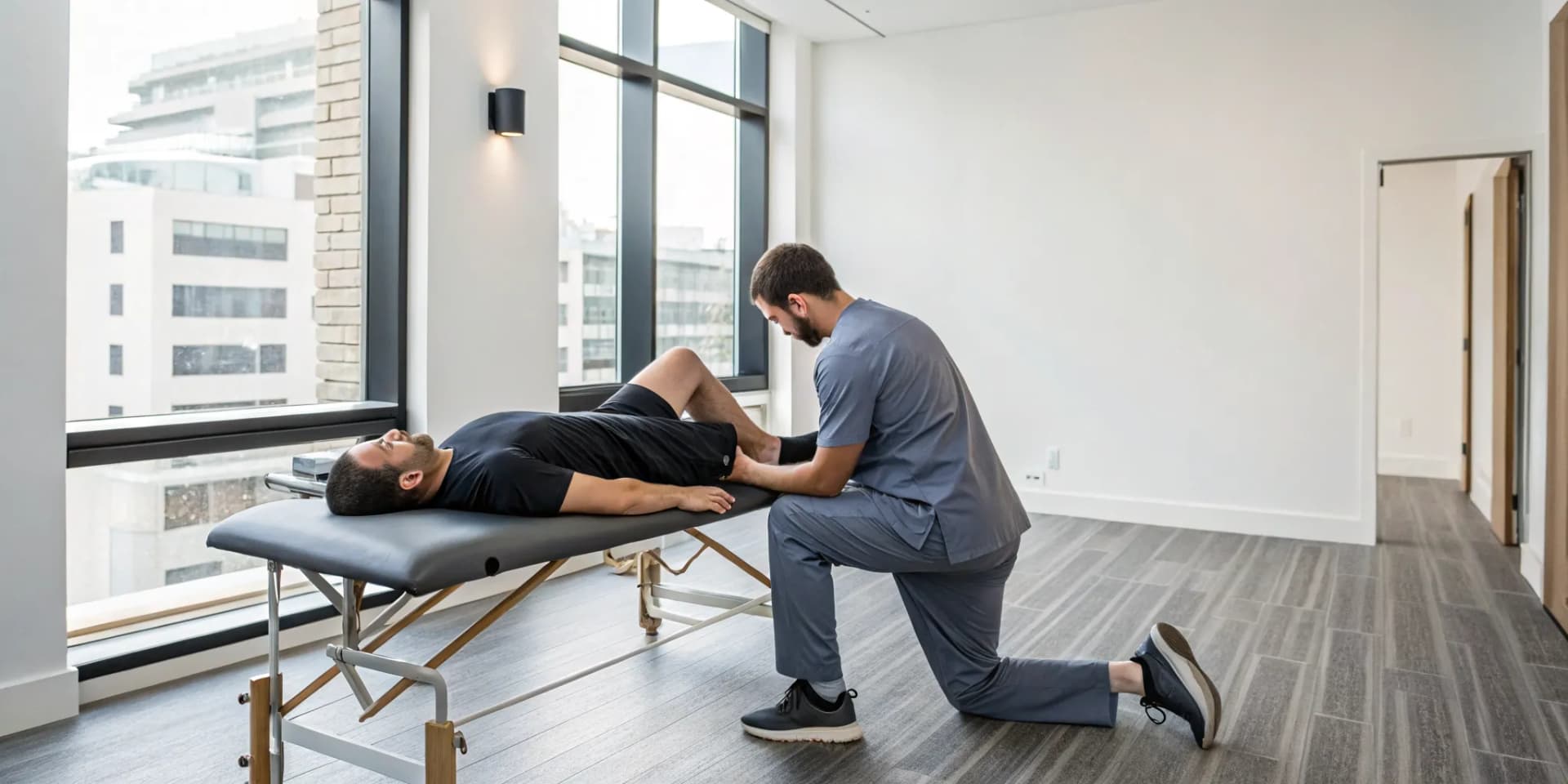
Manual therapy is a cornerstone of physical therapy for sciatica. These are the hands-on techniques your therapist uses to directly treat your tissues and joints. This can include joint mobilization to restore movement in the spine, soft tissue massage to release tight muscles, or myofascial release to address restrictions in the connective tissue. These techniques can provide significant pain relief and improve mobility, making it easier to participate in the active exercise portion of your recovery.
Complementing manual therapy is low-impact aerobic exercise. Activities like walking, swimming, or using an elliptical machine increase blood flow to the injured area, which delivers vital oxygen and nutrients that promote healing. Plus, aerobic exercise triggers the release of endorphins, your body’s natural pain relievers. This combination of hands-on treatment and gentle movement helps you feel better faster and builds a strong foundation for a pain-free life.
The Best Exercises and Stretches for Sciatica
When sciatica sends that sharp, radiating pain down your leg, the last thing you might want to do is move. But gentle, targeted movement is often exactly what your body needs. The right exercises and stretches can help relieve pressure on the sciatic nerve, strengthen the muscles that support your spine, and improve your flexibility to prevent future flare-ups.
This is all part of a comprehensive approach to wellness that goes beyond temporary fixes. By incorporating these movements, patients can take an active role in their recovery. Remember to always start slowly and listen to your body. If any movement causes sharp or increasing pain, it’s best to stop and consult a professional.
Strengthen Your Core with Glute Bridges
A strong core is your back’s best friend. The glute bridge is a fantastic exercise for activating your glutes and core muscles, which helps stabilize your lower back and pelvis. Stronger support muscles mean less strain on your spine and, in turn, less irritation on the sciatic nerve.
To perform a glute bridge, lie on your back with your knees bent and feet flat on the floor, about hip-width apart. Tighten your abdominal muscles and lift your hips off the floor until your body forms a straight line from your shoulders to your knees. Squeeze your glutes at the top and hold for a few seconds before slowly lowering your hips back down.
Loosen Up with Knee-to-Chest and Piriformis Stretches
Tight muscles in your hips and lower back can contribute to sciatic pain. Gentle stretches can help release this tension and create more space around the nerve. The knee-to-chest stretch is a simple way to ease tightness in the lower back.
Lying on your back, gently pull one knee toward your chest until you feel a comfortable stretch in your lower back and hip. For a deeper stretch targeting the piriformis muscle, which is often involved in sciatica, try the figure-four stretch. While lying on your back, cross one ankle over the opposite knee and gently pull the supporting leg toward you.
Build Stability with Bird-Dog and Clamshell Exercises
Stability exercises are crucial for teaching your core and hip muscles to work together, protecting your spine during everyday movements. The bird-dog exercise is excellent for improving balance and strengthening the deep muscles of your core and back.
Start on your hands and knees, keeping your back flat. Engage your core, then extend one arm straight forward and the opposite leg straight back. Hold for a moment, focusing on keeping your hips level, then return to the starting position and switch sides. The clamshell exercise specifically targets the hip abductors, which are key for pelvic stability. Lie on your side with your knees bent and stacked. Keeping your feet together, lift your top knee toward the ceiling without rocking your hips.
Find Gentle Relief with Cobra Stretch and Child's Pose
Sometimes, your body just needs a moment of gentle release. The cobra stretch, a modified back extension, can help relieve pressure on the spinal discs. Lie on your stomach and place your hands under your shoulders. Gently press up to lift your head and chest, keeping a slight bend in your elbows and your hips on the floor.
Child’s pose is a restorative stretch that can help lengthen the spine and relieve tension. From your hands and knees, sit back on your heels and fold forward, resting your forehead on the floor. These poses are less about building strength and more about finding gentle relief and promoting relaxation in the muscles surrounding your spine.
How to Exercise Safely at Home
While it’s tempting to curl up and rest when you’re in pain, too much inactivity can actually make things worse. Staying active helps deliver healing nutrients to the injured area and prevents the supporting muscles from weakening. The key is to move safely and intelligently.
Always warm up with a few minutes of light walking before you stretch or exercise. Listen to your body; a "good" stretch should feel like a gentle pull, not a sharp pain. If an exercise hurts, stop. The growing demand for chiropractic care shows that more people are seeking professional guidance for conditions like sciatica. A personalized plan from a chiropractor is the safest and most effective way to ensure you’re doing the right exercises for your specific condition.
Lifestyle Changes That Support Your Recovery
Your physical therapy sessions are a powerful part of your healing, but what you do between appointments matters just as much. Think of your daily habits as the foundation that makes your treatment even more effective. By making a few intentional adjustments to your lifestyle, you can speed up your recovery, reduce pain, and build resilience against future sciatica flare-ups. These changes empower you to take an active role in your own well-being, turning everyday actions into opportunities for healing. Let’s walk through some of the most impactful habits you can adopt to support your journey back to a pain-free life.
Practice Good Posture and Ergonomics
It might sound simple, but how you sit, stand, and move throughout the day has a huge impact on your spine. Poor posture can strain your lower back and aggravate the sciatic nerve, undoing the progress you make in physical therapy. Using correct posture is vital for both treating and preventing sciatica. When sitting, keep your feet flat on the floor, your back straight, and your shoulders relaxed. An ergonomic chair or a simple lumbar support pillow can make a world of difference. When you stand, distribute your weight evenly on both feet. These small, consistent adjustments reduce daily stress on your spine, creating an environment where your body can truly heal.
Use Heat and Cold Therapy Correctly
Knowing when to use heat versus cold can significantly manage your sciatica symptoms. For the first few days of a painful flare-up, when inflammation is high, cold therapy is your best friend. Applying an ice pack wrapped in a thin towel to the painful area for 15-20 minutes can help reduce swelling and numb the sharp pain. After the initial inflammation subsides (usually after 48-72 hours), you can switch to heat. A heating pad or warm bath can help relax tight muscles that may be compressing the sciatic nerve. According to the Hospital for Special Surgery, this simple approach can help mild sciatica get better on its own, making it a great tool to use alongside your prescribed exercises.
Maintain a Healthy Weight and Stay Active
While it’s tempting to stay in bed when you’re in pain, prolonged rest can actually slow down your recovery. As one Spine-Health article explains, staying active helps deliver healing nutrients to the injured tissues and prevents your supporting muscles from weakening. Gentle activities like walking or swimming keep your body moving without adding stress. Maintaining a healthy weight also plays a key role, as it reduces the overall load on your spine and discs. Even a small amount of weight loss can lead to a significant reduction in back pain. This proactive approach aligns with the growing demand for chiropractic care that addresses lifestyle factors for long-term wellness.
Commit to Your Physical Therapy Program
For physical therapy to be truly effective, you have to stick with it. Consistency is the secret ingredient to a successful recovery. Your prescribed exercises are designed to progressively strengthen your core, improve flexibility, and relieve nerve pressure over time. Skipping sessions or neglecting your at-home routine can stall your progress and prolong your pain. If an exercise feels too difficult or causes more pain, talk to your therapist. They can modify the movement to fit your needs. Committing to your program is an investment in your future health, helping you build the strength and habits needed to keep sciatica from coming back.
When Should You See a Professional for Sciatica?
While it’s tempting to try and wait out the pain, sciatica often requires a professional eye to identify and treat the root cause. Listening to your body and knowing when to seek help is the first step toward lasting relief. Ignoring persistent symptoms can lead to a longer, more difficult recovery. A structured, professional approach not only addresses the immediate pain but also helps prevent it from becoming a chronic issue. Here’s how to tell when it’s time to see a professional and what your first visit will look like.
Signs It's Time to Get Help
If your sciatic pain has lingered for more than a week or two without improvement, it’s time to schedule an appointment. Even mild sciatica can benefit from a professional evaluation; the sooner you get it checked out, the better your outcome is likely to be. While rest and home care can provide temporary relief, a proper diagnosis is essential for effective treatment.
You should seek urgent medical care if you experience severe symptoms alongside your sciatica. Go to an emergency room or urgent care clinic if you have a fever, chills, or night sweats, which could signal an infection. Other red flags include severe pain, progressive numbness or weakness in your leg, or any changes in your bladder or bowel control.
What to Expect at Your First PT Session
Your first physical therapy session is all about assessment and creating a strategy. Your therapist will develop a personalized plan designed to reduce your pain, correct your body mechanics, strengthen supporting muscles, and improve your flexibility. The goal is to get you back to your daily activities without discomfort. This comprehensive approach is key to not just feeling better, but staying better.
You can expect your therapist to use hands-on techniques to help relieve pressure on the sciatic nerve and perform stretches to loosen tight muscles. A crucial part of your recovery will be the exercises you’re given to do at home. Consistently performing these movements is essential for building strength and preventing future flare-ups.
How Chiropractic Care Enhances Sciatica Treatment
Physical therapy is a fantastic starting point for sciatica relief, but integrating it with chiropractic care creates a powerhouse treatment plan. This combined approach moves beyond temporary pain management to correct the structural problems causing the pain in the first place. For clinic owners, this means delivering a higher level of care that produces more significant, lasting results for patients. At HealthSource, we’ve built our entire clinical model around this philosophy, empowering chiropractors to provide comprehensive solutions that help patients get back to living their lives fully.
Address the Root Cause, Not Just the Symptoms
As you know, sciatica isn't a diagnosis; it's a symptom of an underlying problem, like a herniated disc or spinal misalignment compressing the sciatic nerve. While physical therapy excels at strengthening supporting muscles and improving flexibility, chiropractic adjustments directly address these structural root causes. By correcting subluxations and restoring proper spinal alignment, you can relieve the pressure on the sciatic nerve, providing a foundation for true healing. This is a critical distinction that separates a temporary fix from a long-term solution. Focusing on the source of the problem is how you can deliver the unmatched patient outcomes that build a trusted, successful practice.
Discover the Long-Term Benefits of Integrated Care
When you combine chiropractic care with physical therapy, you create a synergistic effect that helps patients recover faster and more completely. Chiropractic adjustments restore joint mobility and reduce nerve irritation, which allows patients to perform their physical therapy exercises with better form and less pain. This integrated care model is highly effective, as most sciatica cases can be managed with non-surgical treatments. By offering both services, you provide a holistic and conservative treatment path. This not only improves patient results but also strengthens your business by incorporating diversified services that cater to a wider range of patient needs, setting your clinic apart as a comprehensive wellness destination.
Learn How to Prevent Future Flare-Ups
A crucial part of effective sciatica treatment is empowering patients to prevent recurrences. A deeper understanding of what causes their sciatica is the first step toward preventing future flare-ups. As a chiropractor, your role extends beyond the adjustment table. You can provide essential education on proper posture, body mechanics, and at-home exercises that maintain spinal health. This proactive approach transforms your role from a pain-relief provider to a long-term wellness partner. By teaching patients how to care for their spine, you help them stay healthy and active while building lasting loyalty to your clinic, tapping into the growing demand for wellness solutions.
Frequently Asked Questions
My patient says they have sciatica, but how can I help them understand the difference between that and regular low back pain? The key distinction to explain is the path the pain takes. General low back pain is usually localized, feeling like an ache or stiffness in the back itself. Sciatica is different because it involves nerve pain that radiates from the lower back, through the buttock, and down the leg. Helping your patient identify this specific, traveling sensation of sharpness, tingling, or numbness is the first step in confirming the issue is nerve-related and not just muscular.
Is it better to rest completely or stay active during a sciatica flare-up? This is a common question, and the answer is a balance of both. While some initial rest can help calm severe, acute pain, too much inactivity can actually make things worse by weakening the muscles that support the spine. Encourage your patients to start with gentle movements, like short walks, as soon as they are able. The goal is to transition from rest to a guided, active recovery program that promotes blood flow and healing without aggravating the nerve.
If a chiropractic adjustment fixes the spinal issue, why is physical therapy also necessary? This is a great point to clarify for patients. Explain that the chiropractic adjustment is designed to correct the structural problem, such as restoring motion to a joint or relieving direct pressure on the sciatic nerve. Physical therapy then builds on that correction. It strengthens the core and back muscles, improves flexibility, and retrains movement patterns. Think of it this way: the adjustment unlocks the door, and physical therapy strengthens the frame to ensure it stays open for good.
Can't my patients just find stretches and exercises for sciatica online? While the internet is full of information, it's best to caution against a do-it-yourself approach. Sciatica can stem from different underlying causes, like a herniated disc or spinal stenosis, and an exercise that helps one condition could worsen another. A professional evaluation is essential to pinpoint the exact cause of the nerve compression. This allows you to create a safe, personalized plan that ensures your patient is doing the right movements for their specific situation.
Once the pain is gone, what's the best way to prevent sciatica from returning? Preventing a recurrence is all about building resilience. The most effective strategy combines maintaining the strength and flexibility gained in treatment with practicing better daily habits. Educate your patients on the importance of consistent core exercises, using proper posture when sitting and standing, and being mindful of their body mechanics when lifting. By making these practices a regular part of their life, they can maintain spinal health and significantly reduce the risk of future flare-ups.


