
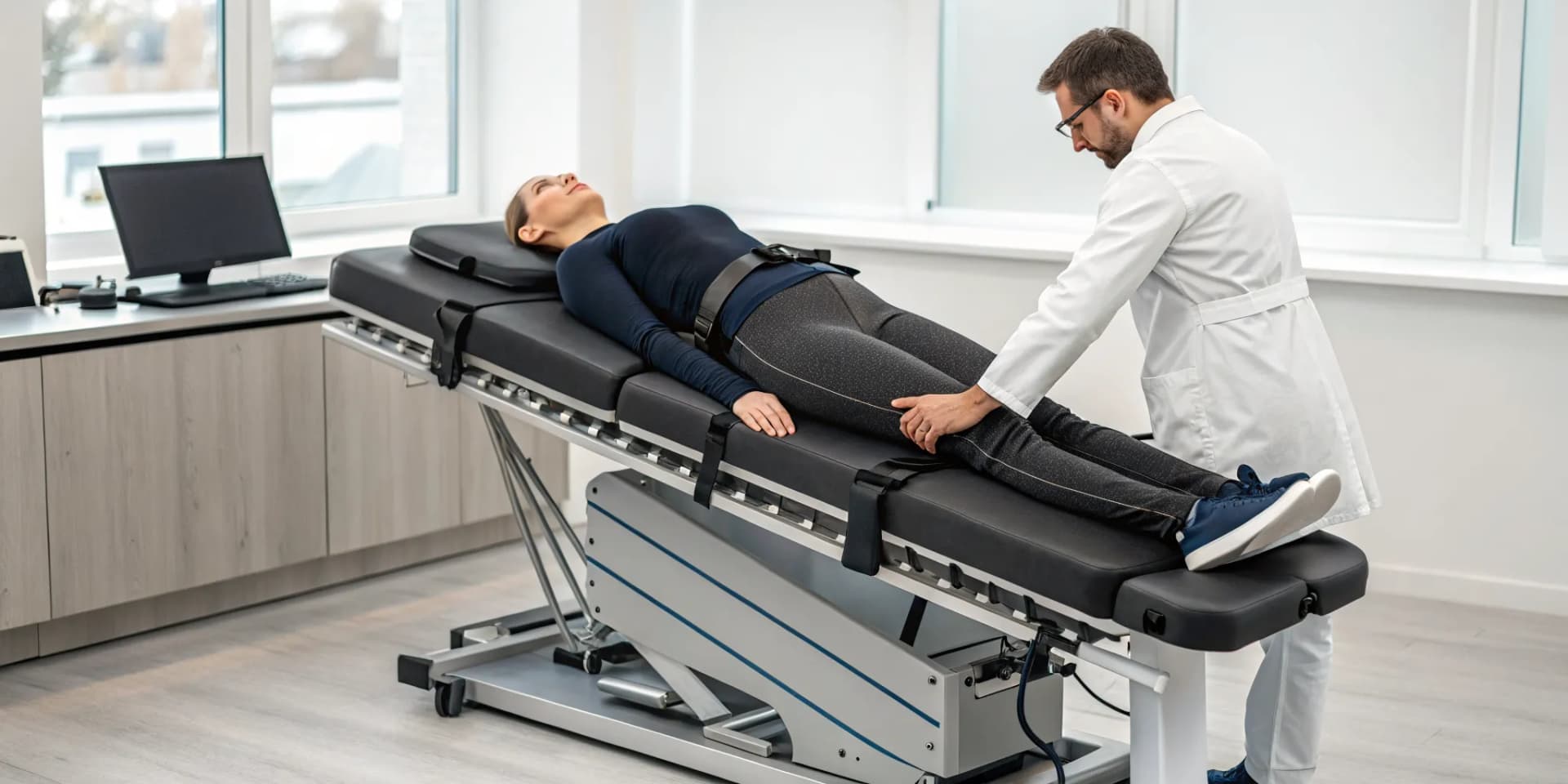
A Chiropractor's Guide to Spinal Decompression Technology
25 Min ReadHealthSource Chiropractic
The physical demands of being a chiropractor are significant. Many clinic owners dream of a path where they can scale their impact and income without spending more hours on the table. This transition from practitioner to CEO requires leveraging systems and technology. Spinal decompression therapy offers a clear opportunity to do just that. By implementing this service, you can oversee treatment plans and generate substantial revenue while empowering your team to deliver care. This article explores how spinal decompression technology for chiropractors can be a key component in building a business that gives you more freedom, profitability, and a larger exit strategy.
Key Takeaways
- Prioritize patient selection for best results: Spinal decompression is most effective for specific disc-related issues like herniated discs and sciatica, so its success depends on a thorough assessment to identify the right candidates and avoid contraindications.
- Integrate decompression into a complete care plan: Use this technology as part of a holistic strategy that includes chiropractic adjustments and corrective exercises; this comprehensive approach delivers better, more lasting patient outcomes.
- Investigate the technology, not just the marketing: Critically evaluate the research and mechanics behind any decompression system before you buy, ensuring your investment is based on proven clinical effectiveness rather than inflated sales claims.
What Is Spinal Decompression Technology?
As a chiropractor, you’re always looking for effective ways to help patients find lasting relief from pain. While your adjustments are the cornerstone of care, some patients with chronic back, neck, and sciatic pain need something more. This is where spinal decompression technology comes in. Think of it as a powerful, non-surgical tool that can complement your hands-on work and address complex disc-related issues at their source.
At its core, spinal decompression therapy is a treatment that helps relieve back pain by gently taking pressure off the nerves in the spine. It uses a motorized, computer-controlled table to carefully stretch the spine, creating negative pressure within the discs. This process can help retract bulging or herniated discs, taking pressure off pinched nerves and allowing for the flow of water, oxygen, and nutrient-rich fluids into the discs to promote healing.
For clinic owners, incorporating this technology can be a game-changer. It not only provides a solution for tough cases but also positions your practice as a modern, results-oriented clinic. Offering advanced services like spinal decompression aligns with a comprehensive business model focused on delivering unmatched patient outcomes. It’s a way to expand your treatment capabilities, attract new patients, and build a practice that stands out for its commitment to leveraging technology for better health.
How Decompression Works
The concept behind spinal decompression is straightforward yet sophisticated. The patient lies comfortably on a specialized table, secured by a harness. The device then applies a precise and gentle stretching force to the spine in a series of controlled movements. This isn't just a simple pull; it's a calculated process designed to create space between the vertebrae without triggering the body's natural muscle-guarding reflex.
This gentle stretching creates a vacuum effect, or negative pressure, inside the targeted spinal discs. This is the key to its therapeutic benefit. The negative pressure helps to pull herniated or bulging disc material back into place, which can immediately relieve pressure on pinched nerves. Just as importantly, this process encourages the diffusion of water, oxygen, and nutrients into the disc, which is essential for rehydration and long-term healing.
Decompression vs. Traction: What's the Difference?
You might hear the terms "traction" and "decompression" used interchangeably, but there's a critical distinction. Traditional traction typically involves applying a sustained, static force to stretch the spine. While this can provide some relief, the body often resists this steady pull with protective muscle spasms, which can limit the effectiveness of the treatment and even cause discomfort for the patient.
Modern spinal decompression, on the other hand, is a more advanced and intelligent form of therapy. It is a newer type of traction therapy that uses computer-controlled technology to apply intermittent and oscillating forces. The system is smart enough to sense the body's resistance and adjust its pull accordingly, effectively bypassing the muscle-guarding reflex. This allows for a much deeper and more targeted decompression of the spinal disc, making it a more comfortable and often more effective treatment.
The Science of Negative Intradiscal Pressure
The effectiveness of spinal decompression is rooted in a simple physiological principle: reducing intradiscal pressure. Your spinal discs act as cushions between your vertebrae, but constant forces like gravity, poor posture, and injury can increase the pressure inside them. When this pressure becomes too high, it can cause the disc's soft center to bulge or herniate, pressing on nearby nerves and causing significant pain.
Spinal decompression therapy directly addresses this problem by creating negative pressure within the disc. Think of it like a vacuum. This negative pressure helps to "suck" the bulging or herniated material back into the center of the disc and away from the nerve root. This not only alleviates pain but also creates an environment conducive to healing by drawing in essential nutrients and oxygen, helping the disc to rehydrate and repair itself.
Types of Decompression Devices for Your Clinic
When you decide to add spinal decompression to your clinic, you’ll find a range of equipment options. While they all aim to relieve pressure on the spine, the technology, application, and cost can vary significantly. Understanding the different types of devices is the first step in choosing the right fit for your patients and your practice. From foundational motorized tables to highly sophisticated, computer-controlled units, each system offers a unique approach to therapy. Let's look at the main categories you'll encounter.
Motorized Traction Tables
Motorized traction tables are a common and foundational tool for spinal decompression. Think of them as a more advanced, automated form of traditional traction. These tables use a motorized pulley system to apply a steady, gentle pulling force to the spine. This stretching action helps to create space between the vertebrae, which can relieve pressure on discs and nerves.
While they may not have the sophisticated feedback loops of more expensive units, motorized tables are effective for applying consistent force. They are a reliable option for clinics looking to introduce decompression therapy without the significant initial investment required for high-tech systems. They provide a controlled method to help relieve pain and encourage healing for your patients.
Computer-Controlled Decompression Units
Computer-controlled units represent the next level in decompression technology. These advanced systems use sophisticated software and sensitive motors to apply a precise and variable pulling force. Unlike the constant pull of a basic traction table, these machines can create complex patterns of distraction and relaxation. The idea is to bypass the body's natural muscle guarding response for a more effective treatment.
This type of non-surgical spinal decompression therapy is often used for specific conditions like herniated discs. The precision allows you to tailor the treatment protocol to the individual patient’s needs. While the investment can be substantial, these systems offer a high degree of control and are often at the center of a modern, tech-forward chiropractic clinic.
Cervical Decompression Devices
While many decompression tables are designed for the lumbar spine, specialized devices exist specifically for cervical decompression. These systems focus on relieving pressure in the neck. They work by gently stretching the cervical spine to take pressure off the nerves and discs. This can be incredibly effective for patients suffering from neck pain, radiating arm pain, or headaches stemming from cervical issues.
Some full-spine tables have cervical attachments, while other standalone units are dedicated solely to treating the neck. Given the rise of "tech neck" and other postural problems, offering targeted spinal decompression therapy for the cervical spine can address a significant and growing patient need, setting your clinic apart.
Pneumatic Decompression Systems
Pneumatic decompression systems use air pressure to generate the decompressive force. Instead of a motor and pulley, these devices use air-filled bladders within a vest or harness worn by the patient. As the system inflates, it creates a gentle, upward lift that stretches the spine. This method provides a comfortable and evenly distributed pull.
These systems are often used for treating conditions like bulging or herniated discs. The pneumatic approach offers a different feel for the patient compared to motorized traction and can be a great option for those who may be sensitive to the direct pull of other machines. It’s another effective tool in your arsenal for providing targeted, non-invasive relief and can be a key part of a comprehensive chiropractic business model.
What Conditions Can Spinal Decompression Treat?
As a chiropractor, you know that many patients walk through your door seeking relief from debilitating back and neck pain. Spinal decompression therapy offers a targeted, non-invasive solution for several specific spinal conditions by gently stretching the spine and relieving pressure on the discs and nerves. Integrating this technology can significantly expand your treatment capabilities, allowing you to help a wider range of patients and address the root cause of their pain. This not only leads to better patient outcomes but also positions your clinic as a comprehensive wellness center, which is a key factor in the growing demand for chiropractic services. Let’s look at the primary conditions that respond well to this therapy.
Herniated and Bulging Discs
For patients with herniated or bulging discs, spinal decompression can be a game-changer. The therapy works by creating negative intradiscal pressure, which can help retract the protruding or herniated disc material back into place. This process takes pressure off the surrounding nerves, which is the primary source of pain for many patients. By creating this gentle vacuum effect, you also encourage the flow of water, oxygen, and nutrient-rich fluids into the disc, which promotes healing. Offering a non-surgical solution for what one source calls "Bulging or herniated discs" can set your practice apart and attract patients who are looking for effective alternatives to more invasive procedures.
Degenerative Disc Disease
Degenerative disc disease is a common, age-related condition where the spinal discs lose hydration and break down over time. This can lead to chronic pain, stiffness, and reduced mobility. Spinal decompression directly addresses the physiological effects of this condition. The gentle stretching and relaxation cycles help to rehydrate worn-out discs and restore their height. This therapy is an excellent tool for managing patients with degenerative disc disease, as it can slow the degenerative process and provide significant pain relief. Adding this service can become one of your clinic's unique revenue streams, offering long-term care plans for patients managing this chronic issue.
Sciatica
Few conditions are as disruptive as sciatica, with its characteristic pain radiating down the leg. Since sciatica is a symptom, not a diagnosis, the key is to treat its underlying cause, which is often a herniated disc or spinal stenosis compressing the sciatic nerve. Spinal decompression is highly effective for this, as it directly targets the compression. By creating more space for the nerve root, the therapy can alleviate the inflammation and pressure that cause the sharp, shooting pain of sciatica. Providing this level of relief can dramatically improve a patient's quality of life and build immense trust in your clinical expertise.
Spinal Stenosis
Spinal stenosis, or the narrowing of the spinal canal, puts pressure on the spinal cord and nerves, causing pain, numbness, and weakness. While it can be a challenging condition to treat, spinal decompression offers a valuable non-surgical option. The therapy works by gently stretching the spine, which can temporarily widen the foraminal openings where the nerves exit the spinal canal. This can provide immediate relief from the nerve compression associated with spinal stenosis. For patients who are not surgical candidates or wish to avoid surgery, offering decompression therapy provides a powerful and much-needed treatment alternative.
What Does the Research Say?
As a clinician, you know that any new modality needs to stand up to scrutiny. When it comes to spinal decompression, the research presents a mixed but important picture. It’s a tool that shows promise for specific conditions, but it’s also surrounded by marketing claims that can sometimes outpace the scientific evidence. Understanding this landscape is key to making an informed decision for your patients and your practice. Let's look at what the studies show, where they fall short, and how to separate clinical reality from marketing hype.
The Evidence in Favor of Decompression
There is clinical evidence suggesting that spinal decompression can be a valuable tool in your treatment arsenal. Research and clinical guidelines indicate that it can offer significant relief for patients struggling with lower back pain. According to the Cleveland Clinic, this therapy is often used for conditions like bulging or herniated discs, degenerative disc disease, sciatica, and persistent back and neck pain stemming from disc issues. For the right patient, creating negative pressure within the disc can provide a powerful, non-surgical path toward pain relief and improved function, making it a compelling option for your clinic.
Where the Evidence Falls Short
While many clinicians report positive outcomes, it's also true that the body of high-quality research on spinal decompression has some gaps. A critical review of the scientific literature points out that there is a shortage of robust, large-scale studies to definitively support some of the efficacy claims. An article in PMC notes that many existing studies are small or have design flaws that can make their results less reliable. This doesn't mean the therapy doesn't work; it simply means you should approach it with a critical eye and rely on your own clinical judgment when evaluating its place in your practice.
Marketing Claims vs. Clinical Reality
Spinal decompression technology is heavily advertised to both doctors and patients, often with bold claims of high success rates. It’s not uncommon to see marketing materials that seem more focused on sales than on science. This is where your expertise becomes crucial. You have to weigh the potential benefits against the sometimes-inflated promises. As you explore different systems, remember that a sound business model is built on effective treatments, not just flashy equipment. Your goal is to find technology that delivers real, measurable results for your patients, independent of what the brochure says.
Weighing the Pros and Cons for Your Practice
Adding any new technology to your clinic is a big decision, and spinal decompression is no exception. It requires an investment in equipment, training, and marketing. But when implemented correctly, it can also be a powerful addition to your clinic's services and one of your unique revenue streams. The key is to go in with a clear understanding of what the technology can and can’t do for your patients and your practice. By carefully considering the benefits, limitations, and ideal patient profiles, you can make an informed choice that aligns with your clinic’s goals and commitment to providing exceptional care. This thoughtful approach ensures you’re not just buying a machine, but strategically expanding your ability to deliver life-changing results.
How Decompression Can Benefit Your Practice
For the right patients, spinal decompression can be a game-changer. It offers a gentle, non-surgical method for addressing chronic pain. The technology works by carefully stretching the spine, which creates a vacuum effect within the discs. This process can help retract bulging or herniated discs, taking pressure off nerves and other spinal structures. It also encourages the flow of water, oxygen, and nutrient-rich fluids into the discs so they can heal. Offering this advanced therapy can set your practice apart, providing a valuable alternative for patients who haven't found relief elsewhere and helping you meet the growing demand for chiropractic care.
Limitations and Contraindications
As effective as decompression can be, it isn’t a one-size-fits-all solution. Patient safety must always come first, and there are specific situations where this therapy is not appropriate. It's generally not recommended for individuals with conditions like severe osteoporosis, spinal fractures, or tumors. Patients with spinal implants, such as metal rods or screws, are also typically not candidates for this treatment. A thorough health history and physical examination are essential to screen for these contraindications. This is a core part of the responsible, systems-driven approach we emphasize in our franchise training and support, ensuring you deliver the best and safest outcomes.
Identifying Patients Who Aren't Candidates
Beyond clear contraindications, it’s also important to know which conditions decompression is designed to treat. This therapy is most effective for pain stemming from specific disc-related issues. Ideal candidates often suffer from bulging or herniated discs, degenerative disc disease, sciatica, or spinal stenosis. If a patient's back or neck pain is caused by a muscle strain or another issue not directly related to the spinal discs, decompression is unlikely to be the right course of action. Properly identifying who will benefit most is a crucial part of integrating this service successfully and building a different kind of chiropractic business model that’s built on trust and clinical excellence.
Debunking Common Decompression Myths
Spinal decompression can be a game-changer for your patients and your practice, but it’s also surrounded by a lot of hype. As a clinic owner, you need to see past the sales pitches to understand what this technology can and can’t do. Let's clear up a few common myths so you can make decisions based on solid clinical reasoning and sound business strategy, not just marketing promises.
Myth: "It Works for Every Patient"
While spinal decompression is incredibly effective for specific conditions like herniated discs and sciatica, it’s not a magic bullet for all back pain. The key to success is a thorough patient assessment. Certain conditions are clear contraindications, making this treatment unsuitable and potentially harmful. For example, patients with severe osteoporosis, spinal fractures, implants like screws or plates, or blood clotting issues are not good candidates. Your clinical judgment is the most important tool you have. Choosing the right patient for the right therapy is the foundation of delivering the unmatched patient outcomes that build a trusted and successful practice.
Myth: "All Systems Deliver the Same Results"
It’s easy to assume that one decompression table is just like any other, but that’s far from the truth. The technology, mechanics, and software can vary dramatically between systems, and so can the results. Some of the foundational research was conducted on specific machines where the patient lies prone, yet many other companies use that same data to sell systems where the patient is supine. As one study points out, these claims might not be valid. Before you invest, it's critical to look past the brand name and examine the scientific literature supporting the specific device you’re considering. The details of how a machine creates and controls decompressive force matter immensely for clinical efficacy.
Myth: "The Marketing Always Reflects the Science"
You’ve probably seen the ads promising "86% success rates" or other impressive statistics. While these numbers are appealing, they often come from studies designed more for marketing than for genuine scientific discovery. The reality is that the quality of research in this area varies widely. As a savvy clinic owner, it’s your job to be a critical consumer of this information. Always ask to see the research behind the claims. A reputable company will be transparent about its data. Building a resilient practice means investing in treatments and technologies that provide real value, contributing to a business model with diverse and reliable revenue streams based on proven results, not just hype.
How to Integrate Decompression into Your Treatment Plans
Adding spinal decompression to your clinic is more than just purchasing a new piece of equipment. It’s about thoughtfully weaving a new modality into your existing clinical framework to get the best possible results for your patients. A systematic approach ensures that you’re not just offering a service, but delivering a solution as part of a comprehensive care strategy. This level of integration is what separates a good clinic from a great one, creating a patient experience that is both effective and seamless. By developing clear protocols for patient selection, treatment, and follow-up, you can confidently add decompression to your toolkit and see a real impact on patient outcomes and your practice’s growth. This is a core principle of the HealthSource business model, which is built on advanced clinical and operating systems.
Conduct Thorough Patient Assessments
Before a patient ever gets on a decompression table, a comprehensive assessment is non-negotiable. This is your opportunity to determine if they are a suitable candidate and to rule out any contraindications. Start with a detailed health history, paying close attention to the nature and duration of their symptoms. A complete physical and neurological exam will help you pinpoint the source of the pain. As with any treatment, it's wise to consider the full spectrum of care. A common approach is to start with less invasive options before moving on to more involved therapies like spinal decompression therapy. This careful, upfront work ensures you’re making the right recommendation for the right patient, every time.
Obtain Informed Consent
Once you’ve identified a good candidate, the next step is a clear and honest conversation about the treatment itself. This is where you obtain informed consent. Explain what spinal decompression is, how the technology works, and what the patient can expect during a session. Discuss the potential benefits, such as relief from bulging or herniated discs, as well as the limitations and any potential side effects. It's helpful to frame it as a non-surgical option that has its own set of pros and cons. This conversation builds trust and empowers your patients to be active participants in their own care, which is essential for a successful therapeutic relationship.
Combine Decompression with Other Treatments
Spinal decompression is most effective when it’s part of a holistic treatment plan. Using it as a standalone therapy can limit its long-term benefits. Instead, think of it as a powerful tool that prepares the body for other therapeutic interventions. Combining decompression with chiropractic adjustments, corrective exercises, and lifestyle modifications can create a synergistic effect that leads to better, more durable outcomes. This multi-faceted approach not only addresses the immediate symptoms but also corrects the underlying biomechanical issues. It also aligns with a diversified practice model that offers patients a full suite of solutions, creating seven unique revenue streams for your clinic.
Monitor Progress and Adjust Plans
Spinal decompression isn't a "set it and forget it" treatment. Consistent monitoring is key to ensuring the therapy is working and to making timely adjustments. Track your patient's progress using both subjective feedback (like pain levels) and objective measures (like range of motion and functional tests). Given that some studies on decompression have been criticized for their design, your own clinical data becomes even more valuable in guiding care. These efficacy claims highlight the need for a personalized approach. If a patient isn't responding as expected, be prepared to modify the frequency, duration, or force of the decompression, or to reconsider the overall treatment strategy. This adaptability is the hallmark of excellent clinical management.
Educate Patients and Set Realistic Expectations
Patient education is the thread that ties the entire treatment plan together. It’s your job to set clear and realistic expectations from the very beginning. Explain that spinal decompression is a process that typically requires a series of treatments over several weeks. Let them know that the procedure itself is generally comfortable, though some mild soreness afterward is possible. Managing expectations about the timeline for relief and the importance of adhering to the full treatment plan helps prevent patient dropout and improves compliance. When patients understand the "why" behind their care, they become more invested in the outcome and are more likely to achieve the results they’re looking for.
Is Spinal Decompression a Smart Investment for Your Clinic?
Adding spinal decompression technology is a significant business decision that goes beyond just clinical application. It requires a careful analysis of the costs, the potential return, and how it will fit into your practice. For many clinic owners, it represents a path toward offering more advanced, non-surgical options for patients with chronic pain from conditions like herniated discs and sciatica. By thinking through the financial and operational implications, you can determine if this technology aligns with your long-term vision for your clinic, whether that involves expanding your services, attracting new patients, or even creating a practice that can thrive without you on the table every day.
Analyzing Cost, ROI, and Revenue
Let's be direct: spinal decompression machines are a major capital expense. The equipment can cost a significant amount, with some advanced systems running upwards of $100,000. Before you get sticker shock, it's important to calculate the potential return on investment. Decompression is often a cash-based service, providing a direct and predictable income source that isn't dependent on insurance reimbursements. This can be a key part of diversifying your clinic's finances and building out your seven unique revenue streams. By offering a high-value, specialized service, you can attract a new patient base actively seeking non-surgical solutions, ultimately driving both revenue and patient outcomes.
What to Look for When Comparing Systems
The market for decompression technology is crowded, and the marketing can be aggressive, with some companies claiming success rates of 86% or higher. It's your job to look past the flashy advertisements and evaluate the systems critically. Don't just compare prices; compare the technology itself. Does the system offer true, computer-controlled logarithmic pulls, or is it a glorified traction table? Look for peer-reviewed research that backs the specific device you're considering, not just the general concept of decompression. A proven business model relies on tools and systems that deliver consistent, predictable results, so choose technology that is both clinically effective and built to last.
Evaluating Training, Support, and Clinic Integration
A state-of-the-art machine is only as good as the team operating it. When vetting manufacturers, ask detailed questions about their training and support. Do they provide comprehensive, hands-on training for you and your staff? What does their protocol for technical support and maintenance look like? Downtime means lost revenue and frustrated patients. Beyond the technical aspects, consider how you will integrate this service. The best results often come from combining decompression with other modalities like physical therapy and rehabilitation. Having a partner who provides robust franchise training and support can make all the difference in successfully launching and marketing the new service within a cohesive, patient-centered care plan.
Frequently Asked Questions
Isn't spinal decompression just a more expensive version of traction? That's a common question, but there is a key technological difference. Traditional traction applies a steady, constant pull, which can cause the body's muscles to reflexively guard against the stretch. Modern spinal decompression systems use computer-controlled technology to apply a gentle, intermittent force. This intelligent approach is designed to sense and bypass the body's muscle-guarding response, allowing for a more targeted and comfortable decompression of the spinal disc.
How do I determine which patients will benefit most from this therapy? The first step is always a thorough assessment to pinpoint the cause of the pain. Spinal decompression is a precision tool, not a cure-all for every type of back pain. It is most effective for patients whose pain stems from specific disc issues, such as herniated or bulging discs, degenerative disc disease, and sciatica. A careful screening process is also essential to rule out patients for whom the therapy is not appropriate, like those with spinal fractures, severe osteoporosis, or implants.
The cost of these systems is high. How do I justify the investment for my practice? It's true that this is a significant investment, so it's important to think about it strategically. Decompression therapy is often offered as a cash-based service, which can create a predictable and direct revenue stream for your clinic that isn't tied to insurance reimbursements. It also allows you to attract a specific group of patients who are actively seeking effective, non-surgical solutions for chronic pain. This can position your clinic as a go-to center for advanced care in your community.
Is spinal decompression a standalone treatment, or should I combine it with other therapies? Spinal decompression works best when it is part of a comprehensive treatment plan. Think of it as a powerful tool that creates an ideal environment for healing by taking pressure off the disc. To achieve lasting results, you should combine it with other treatments like chiropractic adjustments, corrective exercises, and patient education on posture and lifestyle. This integrated approach addresses both the immediate symptoms and the underlying biomechanical issues.
With some of the marketing hype out there, how do I confidently choose a system and explain its value? Your clinical judgment is your best guide. When evaluating different systems, ask the manufacturer for the research that supports their specific device, not just general studies on decompression. A reputable company will be transparent with their data. Your confidence comes from investing in technology that delivers real, measurable results. This allows you to build your practice on a foundation of clinical excellence and patient trust, which is far more valuable than any marketing claim.


