
7 Spinal Decompression Marketing Strategies That Work
20 Min ReadHealthSource Chiropractic
You didn’t go through years of school just to own a job. You wanted to build a business, an asset that provides freedom and a valuable exit strategy. Yet, many clinic owners find their business can’t function without them physically at the adjustment table. A strategic spinal decompression marketing plan is a crucial step in transforming your practice into a scalable enterprise. By creating a predictable stream of high-value patients for a premium service, you build a system that generates revenue independent of your own hours. This is how you create a true business that can grow beyond a single room.
Key Takeaways
- Focus your marketing to attract ideal cases: Shifting from general chiropractic marketing to a specific focus on spinal decompression positions your clinic as a specialized center. This attracts highly motivated patients who are actively seeking solutions, resulting in higher-value cases and establishing you as the go-to expert in your area.
- Build trust through education: Patients seeking spinal decompression need to understand the therapy before they commit. Create content like videos, blog posts, and patient testimonials that explain the process and benefits, which builds confidence and makes potential patients more likely to book and complete their care plans.
- Use proven systems to save time and money: Building a marketing plan from scratch is complex and time-consuming. Partnering with a franchise like HealthSource gives you immediate access to tested marketing campaigns and technology, which handles the heavy lifting so you can focus on patient care and scaling your business.
What Is Spinal Decompression Marketing?
Think of your general marketing as a wide net, catching a variety of patients with different needs. Spinal decompression marketing, on the other hand, is more like a specialized lure. It’s a focused strategy designed to attract and educate potential patients specifically about non-surgical spinal decompression therapy. The main goal is to reach people suffering from chronic back pain, sciatica, or herniated discs and show them that you offer a powerful, non-invasive solution they may not even know exists. This isn't just about filling your schedule; it's about attracting the exact type of patient you can help most profoundly.
As patients become more proactive in seeking alternatives to surgery and long-term medication, the demand for chiropractic care that offers tangible results is growing. By marketing a high-value service like spinal decompression, you’re not just adding another tool to your belt. You’re positioning your clinic as a specialized center for pain relief. This can become a cornerstone of your practice and one of several unique revenue streams that help you build a more profitable and resilient business. Ultimately, it's a key step toward creating a practice that gives you more freedom, allowing you to work on your business, not just in it.
How It's Different from General Chiropractic Marketing
While your general marketing might talk about overall wellness, posture, or relief from common aches, spinal decompression marketing requires a much more targeted and educational approach. Many people suffering from debilitating back pain have never heard of spinal decompression, or they may have misconceptions about what it involves. Your marketing needs to bridge that knowledge gap.
Instead of broad messages, you’ll be creating content that explains the science behind the therapy, what a session feels like, and the specific conditions it treats. It’s about speaking directly to the person who has tried everything else without success. This educational focus helps build trust before a patient even steps into your clinic, establishing you as an expert and making the conversation about care much easier.
Is This Marketing Right for Your Practice?
To figure out if this specialized marketing is a good fit, take a look at your current patient list and the community you serve. Do you frequently see patients with chronic, unresolved back and neck pain? Your area’s demographics are also a big clue. If your town has a large population of office workers, manual laborers, active athletes, or older adults, you have a built-in audience for spinal decompression therapy.
Investing in this type of marketing is a strategic decision that aligns with building a different kind of chiropractic business model. It’s about intentionally attracting higher-value cases that lead to more profound patient outcomes and greater professional satisfaction. If you’re ready to become the go-to expert for serious back pain in your area, spinal decompression marketing is your next logical step.
How Spinal Decompression Marketing Grows Your Practice
Marketing a specialized service like spinal decompression does more than just fill your appointment book. It strategically repositions your entire practice. Instead of competing with every other chiropractor in town for general wellness patients, you become a destination for a specific group of people in serious need of a solution. This targeted approach helps you build a more profitable, scalable, and ultimately more valuable business. It’s about attracting the right cases, building unshakable authority in your community, and creating a practice that can thrive, even when you decide to step away from the table.
Attract Higher-Quality Patients
Spinal decompression marketing connects you with patients who are actively searching for relief from chronic and often debilitating conditions like sciatica or herniated discs. These individuals aren't just "shopping around"; they are highly motivated to find a real solution. Because many patients don't know that effective, non-surgical options exist, your marketing serves as a vital educational tool. When you use social proof like patient testimonials, you show them what's possible. This approach helps you build a patient base that is committed to their treatment plans, leading to better outcomes and higher case values. It’s a core part of the HealthSource business model, which focuses on delivering exceptional, outcome-based care.
Strengthen Your Local Authority
When you market spinal decompression, you signal to your community that you offer more than routine adjustments. You establish your clinic as a specialized center for complex spinal issues. This immediately sets you apart from general practices and builds your local authority. You become the clinic that other healthcare professionals, like primary care physicians and physical therapists, think of first for non-surgical spine care referrals. This professional network is a powerful asset for growth. Being part of a larger network, like the one fostered by the HealthSource franchisee culture, can further amplify this effect, giving you the credibility and connections to become a recognized leader in your area.
Become the Go-To Expert in Your Area
A focused marketing strategy allows you to become the definitive expert for spinal decompression in your region. It starts with deeply understanding your target audience: people living with chronic pain who feel like surgery is their only option. By tailoring your message directly to their fears and hopes, you build immediate trust. You can then use patient feedback to continuously refine your services and marketing. This creates a powerful cycle where excellent results generate compelling testimonials, which in turn attract more ideal patients. This reputation for expertise not only drives growth but also meets the rising demand for chiropractic services that offer clear, life-changing solutions.
Effective Spinal Decompression Marketing Strategies
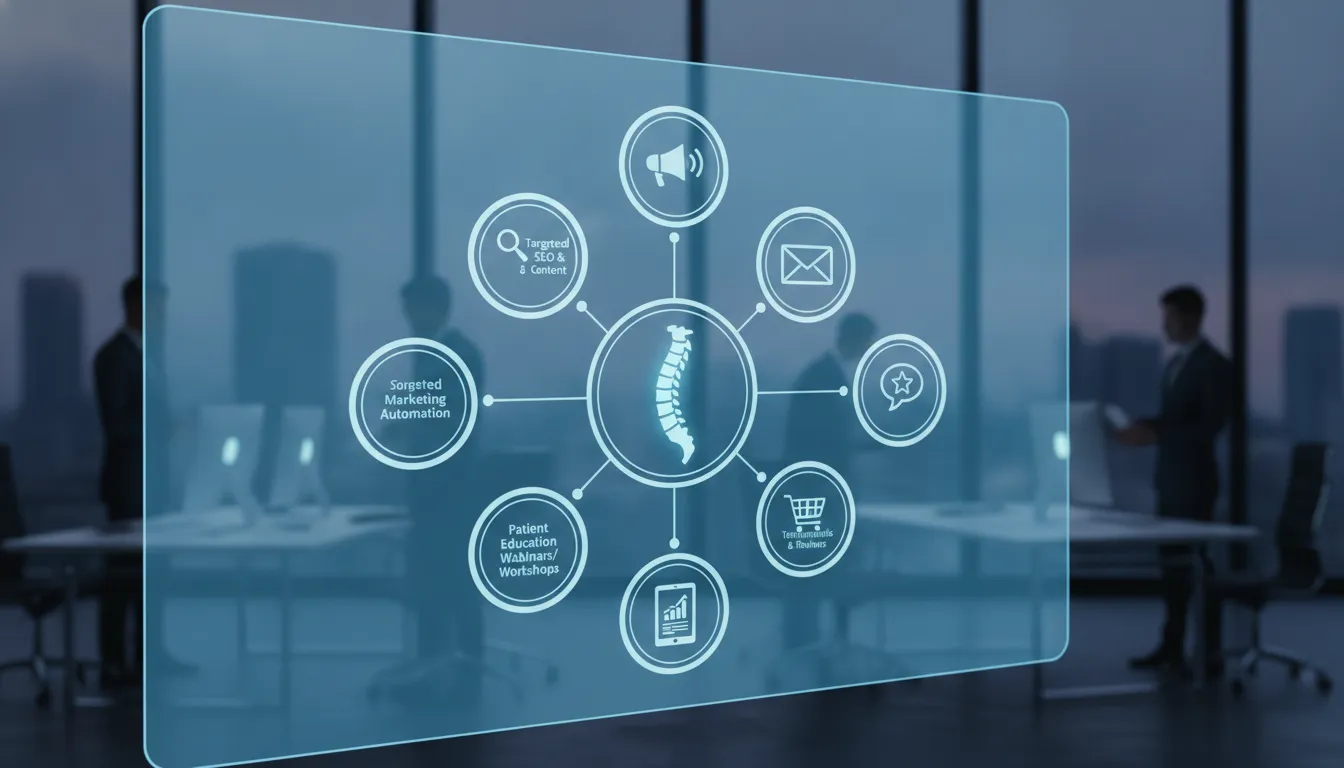
Putting together a marketing plan for a specialized service like spinal decompression doesn't have to be complicated. It’s about connecting with the right people, in the right place, with a message that shows you understand their pain and can offer a real solution. These strategies are designed to attract patients actively looking for relief and establish your clinic as the premier choice in your community. By focusing your efforts, you can fill your schedule with the cases you’re most passionate about treating.
Many of these tactics are foundational to the proven marketing systems we provide our franchisees, taking the guesswork out of growth and letting you focus on patient care. Let’s look at seven effective strategies you can start using.
Optimize for Local and AI-Powered Search
When someone is in pain, they grab their phone and search for "spinal decompression near me." You need to be the first name they see. Optimizing for local search means making sure your Google Business Profile is complete and packed with positive reviews. Think about the questions patients ask and use their language on your website. This not only helps with traditional search but also prepares you for AI-powered voice searches.
You can seek feedback from your patients to understand what they were searching for and use those insights to refine your online presence. This ensures your clinic shows up when potential patients need you most, turning their urgent search for relief directly into an appointment with you.
Run Targeted Ad Campaigns
Paid advertising on platforms like Google and Facebook allows you to get in front of a highly motivated audience. These aren't just casual browsers; people clicking on an ad for spinal decompression are often experiencing significant pain and have already decided they need help. They are actively seeking a solution, making them high-quality leads for your practice.
You can target your ads based on location, age, and even interests to ensure your message reaches the right people. This targeted approach means your marketing dollars are spent more efficiently, attracting patients who are ready to book a consultation. It’s a key part of building a practice with multiple revenue streams that consistently brings in new patients.
Create Educational Content That Builds Trust
Patients looking into spinal decompression are often trying to avoid surgery and want to understand their options. By creating educational content, you can build trust and position yourself as the go-to expert. Simple blog posts or short, educational videos explaining how the treatment works can demystify the process and ease patient anxieties.
You can use videos to explain treatments or share ergonomic tips for people who sit at a desk all day. This content doesn't just attract new patients; it also shows you care about their well-being beyond the adjustment table. It demonstrates your commitment to patient outcomes, which is a core part of the HealthSource story.
Leverage Patient Testimonials and Social Proof
Nothing is more powerful than a current patient sharing their success story. Social proof is an effective way to market spinal decompression because it offers genuine hope to those who are suffering. Ask your satisfied patients if they would be willing to share their experience on video or in a written review.
Feature these testimonials prominently on your website, share them on social media, and include them in your email newsletters. Seeing real people find relief from conditions similar to their own can be the final push a potential patient needs to schedule their first appointment. These stories are authentic, relatable, and incredibly persuasive, building a foundation of trust before a patient even walks through your door.
Host Community Workshops
Hosting a small, informal workshop is a fantastic way to connect with your community and generate new leads. You can invite people with chronic back or neck pain to an event at your clinic to learn more about non-surgical solutions. A simple presentation explaining what spinal decompression is, who it helps, and what the process looks like can be incredibly effective.
This approach allows you to build personal relationships and answer questions in a relaxed, no-pressure environment. It positions you as a helpful resource, not just a service provider. By showing people you're invested in their health, you create a direct path for them to become patients and see firsthand how your different kind of chiropractic business model puts their well-being first.
Manage Your Online Reputation
Your online reputation is your digital storefront. Before booking an appointment, most patients will look up your clinic and read your reviews. Proactively managing your reputation by encouraging happy patients to leave reviews on Google, Facebook, and other platforms is essential. It’s also important to respond to all reviews, both positive and negative, in a professional and timely manner.
A strong online reputation builds instant credibility and makes your clinic the obvious choice. For many chiropractors, this can feel like a full-time job. Partnering with a system that provides franchise training and support can help you implement a consistent strategy to maintain a stellar reputation and attract a steady stream of new patients.
Implement a Patient Nurturing System
Your relationship with a patient doesn't end after their first visit. A patient nurturing system helps you stay connected, build loyalty, and encourage referrals. This can be as simple as an automated email sequence that checks in on them or a referral program that rewards existing patients for sending their friends and family your way.
For example, you can create a simple referral program with incentives like a complimentary wellness product or a discount on a future service. Nurturing your patient base turns them into advocates for your practice, creating a powerful and cost-effective marketing channel. This focus on relationships is central to thriving in a rich franchisee culture where everyone supports each other's success.
How to Measure Your Marketing Success
Putting a marketing strategy into motion is one thing, but knowing if it’s actually working is what separates a thriving practice from one that’s just getting by. Measuring your success isn’t about getting bogged down in spreadsheets; it’s about gaining clarity on what’s bringing new patients through your door and what’s falling flat. When you track the right metrics, you can confidently double down on the strategies that deliver a real return on your investment and refine the ones that don’t. This data-driven approach allows you to make smarter decisions, ensuring every dollar and hour you spend on marketing contributes directly to your practice’s growth and your long-term goals.
Track Patient Acquisition and Conversions
The most direct way to measure your marketing’s impact is to track how many new spinal decompression patients it brings in. You need to know which channels are performing best, whether it’s your local SEO efforts, a targeted Facebook ad, or a community workshop. A simple way to start is by adding a "How did you hear about us?" field to your intake forms. For digital campaigns, you can use unique phone numbers or landing pages to trace a new patient directly back to the ad or email they clicked. This is a continuous process of seeking feedback and analyzing what works, allowing you to improve your services and marketing based on real-world results.
Monitor Appointment Show-Up Rates
Getting a potential patient to book an initial consultation is a huge win, but the job isn’t done until they walk through your door. Your appointment show-up rate is a critical health metric for your marketing funnel. A low show-up rate might indicate that your marketing is attracting people who aren’t fully committed or that your follow-up process needs improvement. Effective marketing doesn’t just generate leads; it educates and excites potential patients about the life-changing results of spinal decompression. When people truly understand the value you offer, they are far more likely to keep their appointments and start care. This is where HealthSource’s proven systems can make a significant difference.
Measure Patient Retention and Referrals
Happy patients are your most powerful marketing asset. When you deliver exceptional outcomes, your patients not only complete their treatment plans but also become enthusiastic advocates for your practice. Tracking patient retention and referral rates tells you if you’re attracting the right kind of patient and delivering on your promises. A high retention rate means your clinical and communication systems are working, while a steady stream of referrals shows that you’ve built genuine trust. You can encourage this by creating a simple referral program that rewards patients for spreading the word. These metrics are the ultimate validation that your practice is making a real impact in your community.
Use Technology to Simplify Tracking
Manually tracking every lead and patient can feel overwhelming, but the right technology makes it simple. Modern practice management software can help you follow a patient’s journey from their first click on an ad to their final appointment and beyond. These systems can automate much of the data collection, giving you a clear dashboard of your key performance indicators. Partnering with a system that provides effective digital marketing strategies can help you deliver consistent messaging that gets patients in the door and builds loyalty. With the right tools, you can spend less time guessing and more time making informed decisions that grow your practice and expand your revenue streams.
The HealthSource Advantage: A Marketing Edge
Implementing a comprehensive spinal decompression marketing plan is a full-time job. Between optimizing your website, running ad campaigns, and nurturing patient relationships, it’s easy to feel like you’re spending more time on marketing than on patient care. This is where many talented chiropractors get stuck, unable to grow their practice to its full potential. You're an expert in clinical care, not necessarily digital advertising. But what if you didn't have to build it all from scratch?
Partnering with HealthSource gives you an immediate advantage. Instead of guessing which strategies will work, you gain access to a complete, proven marketing system from day one. We provide the tools, technology, and expert support to attract high-value spinal decompression patients consistently. This allows you to focus on what you do best: delivering exceptional outcomes for your patients. Our chiropractic business model is designed to handle the heavy lifting of marketing, so you can concentrate on scaling your business and achieving your personal and financial goals, whether that means opening more clinics or preparing for a profitable exit.
Access Proven, Done-for-You Marketing Systems
Imagine having a dedicated marketing agency that already understands the nuances of promoting spinal decompression. That’s what you get with HealthSource. We’ve developed powerful, done-for-you marketing campaigns that get patients in the door. You don't need to become an expert in Facebook ads or search engine optimization because we've already perfected those strategies. Our team helps you deliver consistent, effective messages that build brand loyalty and drive appointments. This isn't about generic marketing materials. It's a sophisticated system built on years of data and success across hundreds of clinics. With our franchise training and support, you’ll learn how to implement these systems effortlessly, saving you countless hours and thousands of dollars in trial-and-error marketing.
Utilize Integrated Tech for Patient Management
Great marketing gets patients to your clinic, but great systems keep them coming back. HealthSource provides integrated technology that streamlines every aspect of the patient journey. Our platforms make it simple to manage appointments, track progress, and communicate with your patients effectively. This tech-forward approach helps you gather patient feedback and analyze their input, allowing you to continuously refine your services and improve outcomes. This integrated system also simplifies your business operations. With everything from patient scheduling to billing in one place, you can run your clinic more efficiently. This frees you up to either focus on patient care or step away from the treatment table to manage your business from a higher level. Our technology is a key component in managing the seven unique revenue streams available to you as a HealthSource franchisee.
Receive Support for Growth and Your Exit Strategy
Whether your goal is to expand to multiple locations or build a valuable asset for a future sale, your marketing strategy needs to support that vision. At HealthSource, we help you build a business that’s scalable and sellable. Your website is the digital front door to your clinic, and we ensure it’s mobile-friendly, easy to use, and designed to convert visitors into patients. We also provide systems to encourage word-of-mouth referrals, because happy patients are your best marketers. This long-term support is what truly sets HealthSource apart. We’re not just focused on your immediate success; we’re invested in your future. By helping you build a strong brand and a predictable patient pipeline, we empower you to create a much larger business and a more profitable exit strategy. Our franchisee testimonials show how our model has helped chiropractors achieve financial freedom and a better work-life balance.
Frequently Asked Questions
I'm already busy running my clinic. How much time does this kind of specialized marketing really take? That’s a great question, and it’s the reality for most clinic owners. If you were to build a spinal decompression marketing plan from scratch, it would be a significant time commitment. Between creating educational content, managing ad campaigns, and tracking results, it can feel like a second job. The key is to rely on proven systems. The goal of a strong marketing plan isn't to add more to your plate; it's to work more efficiently, attracting the right patients so you can focus on their care.
What's the most important first step if I want to start marketing spinal decompression? Before you spend a dime on ads, start with your online foundation. Make sure your Google Business Profile is completely filled out, accurate, and full of recent patient reviews. This is often the very first impression a potential patient has of your clinic when they search for pain relief. At the same time, start talking to your existing patients about their journey to finding you. Understanding the words they use to describe their pain will give you the exact language you need for your website and future marketing messages.
My patients have never heard of spinal decompression. How do I market something they don't know to search for? You’re right, most people don't search for clinical terms; they search for solutions to their problems. Your marketing shouldn't lead with the name of the therapy, but with the pain it resolves. Focus your message on conditions like "sciatica relief without surgery" or "help for herniated discs." You can use targeted ads to reach people who have shown interest in back pain topics. Then, you use educational content like blog posts and videos to introduce spinal decompression as the powerful, non-invasive solution they've been hoping to find.
Is it better to focus on digital marketing or local, in-person events? The most effective strategy uses both, as they serve different purposes. Digital marketing, like local search optimization and targeted ads, is fantastic for capturing people who are actively looking for a solution right now. In-person workshops, on the other hand, allow you to build trust and educate people in your community who may be suffering but haven't started searching for care yet. Think of digital as casting a net for active searchers and local events as planting seeds for future patients.
How do I know if my marketing is actually working and not just wasting money? You can measure your success by tracking a few key numbers. First, always ask new patients how they heard about you on your intake forms. This tells you which channels are delivering. Second, monitor your appointment show-up rate for new consultations; a high rate means your marketing is attracting motivated, well-informed patients. Finally, keep an eye on how many patients complete their care plans and refer their friends and family. These metrics give you a clear picture of your return on investment.


