
Franchise Growth
How Chiropractic Franchising Works: A Practical Guide
12 Min ReadChris Tom
If you are researching how chiropractic franchising works, the most useful answer is operational: a franchise connects local clinic ownership with a repeatable system for clinical and business operations. The owner leads the practice, the licensed clinical team leads patient care, and the franchisor supplies standards, training, technology, and support that help the clinic move from planning to daily execution.
For the definition, ownership responsibilities, and broader context, read the chiropractic franchise education guide. This article goes further into the mechanics that matter after the initial decision: launch sequence, systems adoption, team support, and the work of operating a clinic once the doors open.
How Does a Chiropractic Franchise Separate Clinical and Business Operations?
A chiropractic franchise separates clinical judgment from business leadership while connecting both through shared systems. The owner is accountable for the practice as an operating enterprise. The Doctor of Chiropractic and other qualified clinicians are accountable for patient care within their professional responsibilities. HealthSource Chiropractic builds its model around this division.
| Area | Owner or operating leader | Licensed clinical leader |
|---|---|---|
| People | Recruits, schedules, coaches, and develops the business team. | Leads clinical onboarding, care standards, and professional development. |
| Clinic operations | Oversees workflow, performance, budgeting, vendors, and facilities. | Helps ensure care delivery fits clinical and professional requirements. |
| Patient care | Supports the patient experience and removes operational obstacles. | Makes examinations, recommendations, and treatment decisions. |
| Growth | Leads local marketing, community relationships, and expansion planning. | Builds trust through appropriate clinical leadership and patient care. |
This separation is not a way to place clinical care on autopilot. It is a way to give each responsibility to the person qualified to handle it, then use shared reporting and communication to keep the clinic aligned. The owner still needs to understand the patient journey, and the clinical team still needs a reliable operating environment.
For a closer look at how an existing practice can be developed into a more comprehensive model, visit Transform Your Practice. The goal is not to ask a chiropractor to abandon an established practice, but to show how systems can support a bigger and better version of the practice they want to build.
What Happens From Signing to the First Patient?
The period between signing a franchise agreement and welcoming the first patient is a coordinated launch process. It can include discovery, site and territory decisions, design and equipment planning, technology setup, hiring, training, local marketing, and opening preparation. The sequence and timing vary by location and project, but the handoffs must be managed as one operating plan.
- Confirm the operating plan. The owner clarifies the intended ownership role, market, financing plan, responsibilities, and launch priorities with the franchise team. An existing practice conversion may follow a different path than a new clinic.
- Evaluate the market and site. Site selection considers territory availability, demographics, visibility, access, lease terms, clinic format, and the operational needs of the intended patient population. The owner remains responsible for making informed decisions and obtaining appropriate advice.
- Plan the clinic environment. The team coordinates layout, buildout, equipment, technology, signage, supplies, and workflow. A good plan considers how patients move from arrival through care, checkout, follow-up, and reactivation.
- Recruit and prepare the team. Hiring is not only a staffing task. It establishes who owns the front desk, patient communication, clinical delivery, scheduling, billing, marketing follow-up, and daily leadership once the clinic is open.
- Train against the system. The owner, doctor, and staff learn the tools and standards relevant to their roles. Training should connect the written process to the decisions people make during a busy clinic day.
- Build local awareness. Pre-opening marketing introduces the clinic, creates community relationships, and prepares the team to respond to inquiries. National resources can help, but local execution still belongs to the clinic.
- Run an opening readiness check. Before the first patient, the team confirms staffing, equipment, technology, scheduling, supplies, patient communication, compliance processes, and escalation paths.
The practical value of a franchise launch sequence is visibility. Instead of discovering every dependency after opening, the owner can see which decisions must happen first, which teams own each handoff, and where a delay could affect the first patient experience.
How Do Training and Ongoing Support Work?
Training and support work best as an operating cadence rather than a one-time orientation. HealthSource Chiropractic describes a combination of online education, live training, field support, marketing resources, and practice systems. The purpose is to help owners and teams keep improving after the launch, when real staffing and patient-flow challenges begin.
Role-based education
HealthSource Chiropractic's Cortex learning management system is described in customer materials as offering more than 900 video courses. The curriculum can support business operations, clinical services, marketing, technology, compliance, and team development. A large library is useful when it is connected to a clear path: what a new owner learns first, what a front desk team member needs next, and how leaders confirm adoption.
Live learning and field guidance
Ongoing education gives franchisees a way to ask questions, learn from other clinics, and respond to changes in the system. HealthSource materials describe weekly Tuesday Training and quarterly field expert visits. The value is not simply the number of sessions. It is the ability to turn an operating problem into a documented lesson, a coached behavior, or a measurable next step.

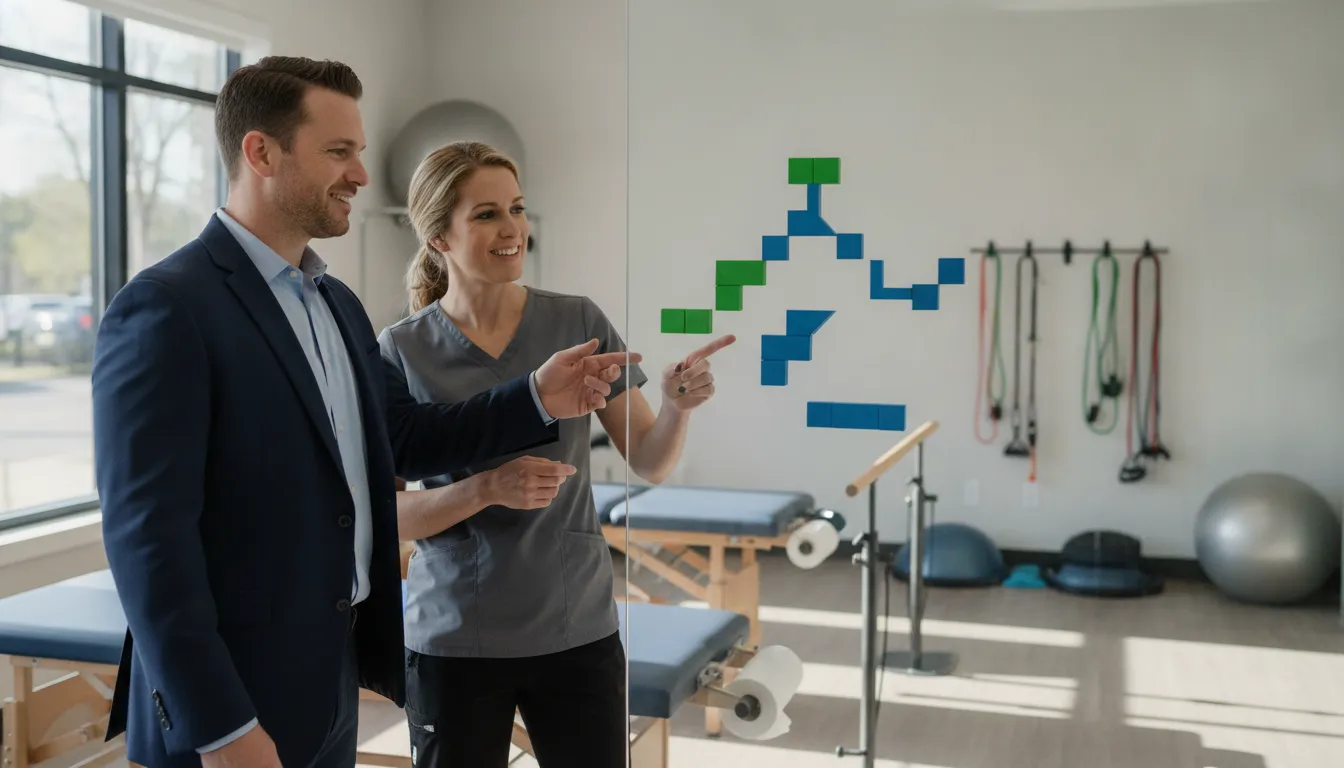
Effective franchise training connects classroom or digital instruction to the decisions teams make during a busy clinic day.
Marketing and local launch resources
Support may include brand assets, campaign resources, launch planning, local marketing guidance, reputation support, and community outreach ideas. The owner still needs to understand the local market and lead the team through execution. Marketing support is most valuable when it gives the clinic a consistent starting point while leaving room for appropriate local relationships.
Explore HealthSource Chiropractic's training and support overview for more information about the resources available across the franchise journey. Prospective owners should also ask which services are included, which require separate decisions, and how support is measured after opening.
What Technology Runs the Day-to-Day Clinic?
Technology turns a franchise model into repeatable daily workflows. In a chiropractic clinic, the system may connect scheduling, patient records, billing and collections, marketing follow-up, reporting, inventory, and compliance tracking. HealthSource Chiropractic materials describe an integrated practice-management platform and technology training intended to help teams use these systems consistently.
- Scheduling and patient flow: The team manages appointments, arrival, room use, follow-up, and reactivation without relying on disconnected personal workarounds.
- Records and communication: Staff follow approved processes for documentation, patient communication, and handoffs between the front desk and clinical team.
- Billing and collections: Owners can monitor administrative workflows, identify delays, and train the team to address issues before they become recurring problems.
- Performance reporting: Dashboards and regular reports help owners see activity, capacity, staffing needs, and trends that are difficult to spot from memory alone.
- Marketing follow-up: The team tracks inquiries, appointments, referrals, and reactivation so local marketing becomes a process rather than an occasional campaign.
- Inventory and compliance: Repeatable checklists help the clinic manage supplies, approved services, required documentation, and operational standards.
Software does not replace leadership. A scheduling platform cannot fix unclear roles, and a dashboard cannot create accountability by itself. The franchise system is strongest when owners use technology to make the right work visible, then coach people through the behaviors that improve the patient and team experience.
The related chiropractic practice management systems guide covers system selection and workflow considerations in more detail. This article's focus is different: how technology fits inside the broader franchise operating model and the responsibilities of the people using it.
How Does the Franchisor Relationship Work After Opening?
After opening, the franchisor relationship becomes a recurring operating partnership. The owner is not handing over responsibility for the clinic. Instead, the owner uses agreed-upon standards, reporting, coaching, training, and resources to lead the local team while staying connected to the wider HealthSource Chiropractic system.
That relationship often includes several types of interaction:
- Standards and updates: The clinic receives guidance on brand, facility, service, technology, and operating expectations.
- Performance conversations: Owners review results, identify constraints, and decide which actions deserve attention first.
- Operational coaching: Support teams help translate a recurring issue into a process change, training need, or leadership decision.
- Peer learning: A franchise culture can give owners access to experiences from other clinics facing similar staffing, marketing, or growth questions.
- Growth planning: Owners who want to reduce time on the tables, lead multiple clinics, or build a larger exit strategy can use the system to clarify the capabilities needed for the next stage.
The connection to the franchise system does not remove local accountability. The owner still has to hire well, communicate clearly, protect the patient experience, monitor the numbers, and act when standards are not being met. Support is a multiplier for disciplined leadership, not a substitute for it.
For the broader educational context, revisit the definition and mechanics guide. It explains the owner and franchisor relationship at a high level; this article focuses on how that relationship is carried out through launch meetings, training, systems, and ongoing operating conversations.
What Operational Challenges Can the Support System Address?
A support system earns its value when a clinic encounters ordinary operating friction. Franchise support cannot guarantee a result or remove every local challenge, but it can give the owner a structured way to diagnose problems, involve the right resource, and make improvements before a small issue becomes part of the clinic culture.
| Challenge | Useful response |
|---|---|
| Launch tasks are falling behind | Rebuild the dependency list, assign one owner per handoff, and escalate decisions that affect opening readiness. |
| Staff are using different workflows | Observe the process, return to the standard, coach the behavior, and use training or field support where needed. |
| The owner is pulled into every task | Clarify role ownership, delegate repeatable work, and use reporting to manage by priorities rather than interruptions. |
| Patient follow-up is inconsistent | Map the handoff from inquiry to appointment to follow-up, then track where leads or patients are being lost. |
| The clinic wants to add services | Confirm clinical, staffing, equipment, training, compliance, and patient-experience requirements before implementation. |
These responses are deliberately practical. The objective is not to make the clinic look uniform for its own sake. It is to create enough consistency that an owner can identify what is working, spot what is breaking, and improve the practice without rebuilding the entire operating model every week.
Is a Chiropractic Franchise a Fit for Your Practice Goals?
A chiropractic franchise may fit an owner who wants an established operating framework, structured training, technology support, multiple service pathways, and a community of other franchisees. It may be less comfortable for an owner who wants complete freedom over vendors, workflows, branding, or service decisions. The right question is whether the system supports the practice and role you want to build.
Before requesting information, write down the work you want to keep doing and the work you want to delegate or systematize. Then ask:
- Do I want to lead clinical care, business operations, or a defined combination of both?
- Which parts of my current practice depend too heavily on me personally?
- Would a repeatable system help me improve staffing, marketing, reporting, or patient flow?
- What standards or restrictions would I need to understand before committing?
- How will I evaluate the current Franchise Disclosure Document and agreement with qualified advisers?
- What would a responsible first year look like for my team, patients, and family?
Frequently Asked Questions About How Chiropractic Franchising Works
What does a chiropractic franchise owner do each day?
The owner typically leads business operations, staffing, financial oversight, local marketing, team development, and growth planning. The exact role varies by ownership structure. Licensed clinicians remain responsible for patient-care decisions within their professional responsibilities.
How long does it take to open a chiropractic franchise?
There is no universal timeline. A new clinic and an existing-practice conversion have different needs, and timing depends on territory, site, lease, buildout, equipment, hiring, training, technology, and local approvals. Ask the franchisor for a stage-by-stage launch plan instead of relying on a general promise.
Does a franchise owner choose the clinic's software?
Many franchise systems specify or recommend technology so locations can follow consistent workflows and reporting. HealthSource Chiropractic provides practice-management and training resources described in its franchise materials. Confirm which tools are required, what they do, how training works, and how data is supported before signing.
Can an existing chiropractic practice use a franchise model?
Some systems offer a conversion path for existing practices. The evaluation should cover the current location, team, patient experience, services, technology, brand transition, and operational changes. HealthSource Chiropractic's conversion information is a starting point for a conversation about fit.
What support continues after the clinic opens?
Ongoing support may include training updates, field guidance, marketing resources, technology assistance, operational coaching, and peer learning. The scope depends on the franchise agreement and current program. Ask how often support is delivered, who provides it, and how an owner requests help with a specific clinic problem.
What should I review before becoming a franchise owner?
Review the current Franchise Disclosure Document, franchise agreement, investment requirements, territory terms, training commitments, technology obligations, renewal provisions, and support promises. Discuss the documents with qualified legal and financial advisers, and speak with current franchise owners about how the system works in practice.
HealthSource Chiropractic provides franchise information for prospective owners. Investment, performance, territory, ownership, and operational requirements vary. Review the current Franchise Disclosure Document and consult qualified advisers before making a decision.


