
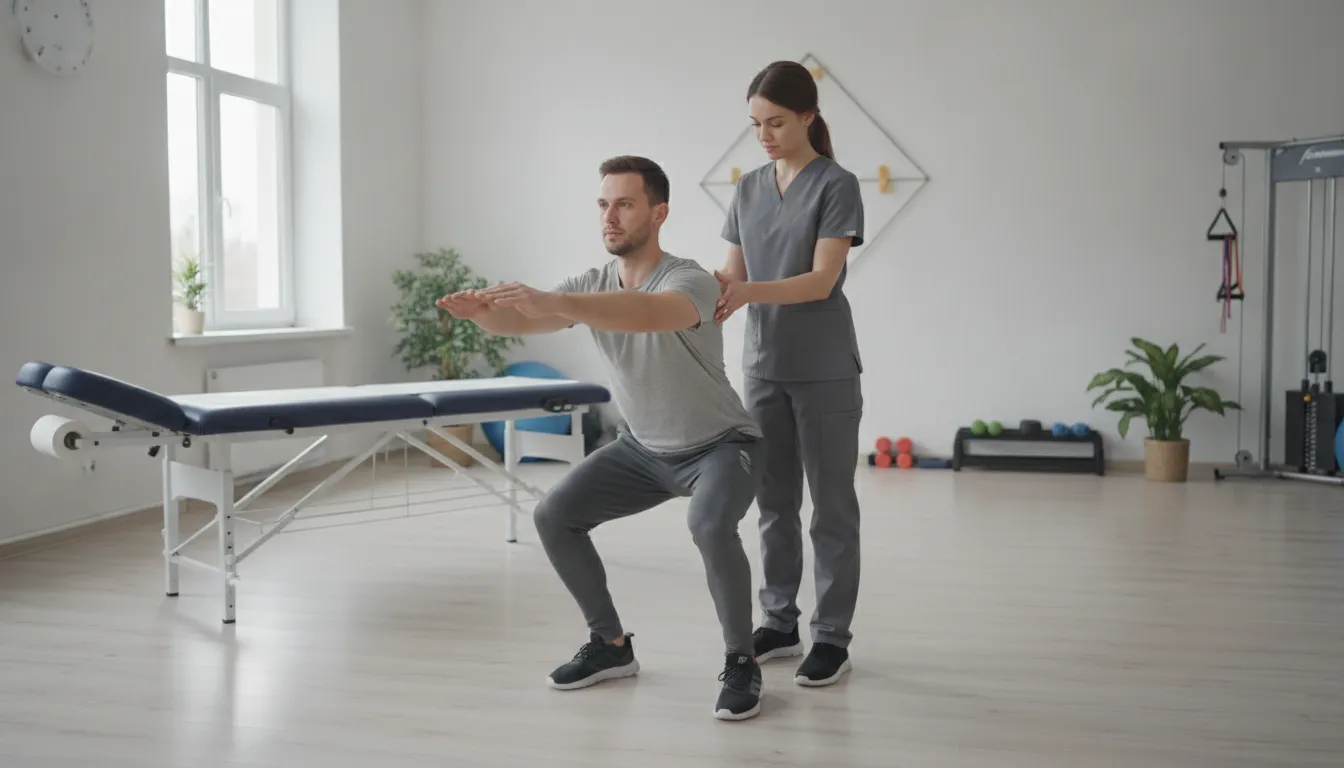
What Is a Chiropractic Rehabilitation Clinic?
11 Min ReadHealthSource Chiropractic
A chiropractic rehabilitation clinic combines chiropractic care with progressive rehabilitation, functional exercise, and additional services that support a broader approach to practice. Instead of treating the clinic as a single-service adjustment office, the model organizes care, technology, wellness, and ongoing support into a connected patient experience. For a chiropractor who owns an existing practice, understanding that model is the first step toward deciding whether a more comprehensive clinic fits the practice's goals.
Explore how HealthSource can help you transform your practice.
A chiropractic rehabilitation clinic is a chiropractic practice that pairs clinical chiropractic care with rehabilitation and other structured services, such as functional exercise, Class IV laser therapy, spinal decompression, Precision Nutrition, Wellness Club programs, and sleep optimization. The exact services offered and the care plan for each person should be determined by qualified clinicians within their scope of practice.
What is a chiropractic rehabilitation clinic?
A chiropractic rehabilitation clinic is built around a broader service model than adjustments alone. Chiropractic care remains an important part of the clinic, but it is supported by services that address movement, exercise, technology-based care, nutrition, wellness participation, and sleep-related goals.
The word rehabilitation does not mean that every patient receives the same treatment sequence. A licensed chiropractor and the clinical team still evaluate the person, discuss goals, and determine what is appropriate. Some patients may need a focused chiropractic plan. Others may benefit from a combination of services that is adjusted over time. The defining feature is not a promise of a particular result. It is a system that gives the clinical team more than one service category to consider when building an appropriate plan.
For practice owners, the distinction matters in two ways. First, a broader model can help a clinic serve different patient needs without reducing the practice to one procedure. Second, it requires more deliberate operations. Equipment, scheduling, staff training, service standards, communication, and clinical oversight all need to work together.
How is a rehabilitation clinic different from an adjustment-only model?
An adjustment-only model centers the patient journey on one primary service. A comprehensive rehabilitation clinic still provides chiropractic care, but it also creates pathways for movement-based care, technology-supported services, wellness education, and recurring programs where appropriate.
| Clinic element | Adjustment-only approach | Comprehensive rehabilitation approach |
|---|---|---|
| Primary service | Chiropractic care is the central offering. | Chiropractic care is connected to several documented service streams. |
| Care conversation | The visit may focus mainly on the immediate chiropractic service. | The team can discuss movement, rehabilitation, technology, nutrition, wellness, and sleep when clinically and operationally appropriate. |
| Clinic design | Space and staffing are organized around one main service. | Space, scheduling, staff roles, and equipment support multiple services. |
| Owner responsibilities | Operations may be simpler, with a narrower service workflow. | The owner must coordinate service delivery, training, systems, and performance across a broader model. |
| Growth path | Growth depends primarily on the demand and capacity of the core service. | Growth planning considers service adoption, team capacity, patient experience, and repeatable operations. |
This comparison is about operating design, not a judgment that one model is right for every practice. A broader clinic model only makes sense when the owner can support the clinical, staffing, and operational requirements that come with it.
What services can a chiropractic rehabilitation clinic include?
HealthSource organizes its comprehensive clinic model around seven documented service streams. The streams are related, but each one has a distinct role. They should not be presented as automatic recommendations or guarantees for every patient.
1. Chiropractic care
Chiropractic care is the clinical foundation of the model. It may include evaluation, chiropractic adjustments, and other care decisions made by licensed professionals within their scope. In a rehabilitation clinic, chiropractic care is not isolated from the rest of the patient experience. It provides the clinical context for considering whether other services fit a person's goals and care plan.
2. Progressive rehabilitation and functional exercise
Progressive rehabilitation and functional exercise add a movement-focused component to the clinic. The emphasis is on helping patients work through appropriate exercises and progressions under professional guidance, rather than treating exercise as a generic class disconnected from clinical care. The exact exercises, intensity, and progression should depend on assessment, goals, and clinical judgment.
3. Class IV laser therapy
Class IV laser therapy is a technology-based service stream in the HealthSource model. Including it in a clinic requires appropriate equipment, staff training, workflow planning, and clear communication about what the service is and how it fits into a patient's plan. Owners should avoid presenting any technology as a universal solution or promising a specific outcome.
4. Spinal decompression
Spinal decompression is another technology-supported service in the seven-stream framework. A clinic that offers it needs a defined process for explaining the service, determining whether it is appropriate, scheduling it, and documenting the care delivered. As with every service, clinical decisions remain with qualified providers.
5. Precision Nutrition
Precision Nutrition brings nutrition guidance and related products into the broader clinic conversation. It can give a practice a structured way to discuss nutrition and lifestyle goals without treating the clinic as a substitute for a patient's primary medical or nutrition professional. The owner's responsibility is to support a clear, compliant process and ensure that the team communicates within its qualifications.
6. Wellness Club
The Wellness Club is a membership-oriented service stream. It is designed as an ongoing wellness option within the larger practice model, not as a promise that every patient should join or that membership will produce a particular result. Owners considering this type of program should define the member experience, scheduling rules, service scope, communication, and cancellation policies before launch.
7. Sleep optimization
Sleep optimization rounds out the seven-stream framework with education, products, and lifestyle support related to sleep. A responsible clinic explains the boundaries of the service and directs patients to appropriate medical care when a concern requires evaluation outside the clinic's scope. The operational challenge is to make the service useful and consistent without overstating what it can do.
Review the seven HealthSource service streams in more detail.
What systems does a chiropractic rehabilitation clinic need?
Adding services is not the same as building a rehabilitation clinic. The clinic needs systems that connect the services without blurring clinical responsibility. Practice owners can evaluate the model through five operational lenses.
1. Clinical decision-making and documentation
Every service should begin with an appropriate clinical conversation. The team needs a consistent process for history, assessment, care planning, documentation, progress review, and referrals when needed. The system should support clinical judgment rather than turn a multi-service menu into a fixed script.
2. Team roles and accountability
A broader service model makes role clarity more important. Licensed chiropractors remain responsible for clinical decisions. Other team members may support patient education, scheduling, exercise workflows, front-office operations, or member communication according to their training and the rules that apply to the practice. Owners should make it clear who can explain a service, who can deliver it, who documents it, and who escalates a concern.
3. Space, equipment, and scheduling
Functional exercise and technology-based services require thoughtful use of space and time. Owners should map the patient journey, estimate appointment lengths, create equipment and room protocols, and plan for maintenance and staff coverage. A clinic can have a broad menu on paper and still create a poor experience if patients cannot move through the schedule smoothly.
4. Training and operating standards
Consistent delivery depends on training that covers both the service itself and the workflow around it. HealthSource describes ongoing training, technology, and operational support as part of its franchise model. For any owner, the practical question is how the team will learn the standards, practice the workflow, receive feedback, and keep the process consistent as the clinic grows.
5. Measurement and responsible improvement
Owners should track operational measures such as appointment capacity, service utilization, completion of training, patient communication, and team performance. These measures are useful for finding friction, but they should not replace clinical judgment or become a reason to recommend an unsuitable service. Growth is healthier when the clinic improves its systems while protecting appropriate care and a clear patient experience.
What should practice owners consider before expanding?
For a chiropractor who already owns a practice, the decision is not simply whether to add another treatment. It is whether the practice can support a coordinated care model. The following questions can make the evaluation more practical:
- Patient fit: Which patient needs and goals would the broader model serve, and which would remain outside the clinic's scope?
- Clinical leadership: Who will set clinical standards, supervise care decisions, and handle referrals or questions that require another professional?
- Team capacity: Does the current team have the time and training to deliver the services consistently?
- Facility readiness: Is there enough space for exercise, equipment, privacy, storage, and safe movement through the clinic?
- Workflow: How will consultations, scheduling, documentation, follow-up, and membership communication work together?
- Owner role: Does the owner want to remain primarily on the tables, or build systems that support leading and managing a larger practice?
- Support: What training, technology, marketing, and operational resources are available during implementation and after launch?
These questions also help owners avoid the common mistake of adding services before the clinic is ready to support them. A clear sequence might begin with clinical and operational readiness, then staff training, then a measured service rollout and review.
Can a chiropractic rehabilitation clinic support practice growth?
A comprehensive clinic model can create more ways to organize care and build a practice, but no service model guarantees growth. Results depend on factors such as market demand, clinical execution, staffing, local competition, owner leadership, patient experience, and financial management.
The strongest growth case is usually operational rather than promotional. A clinic may be better positioned to grow when its services are easy to understand, its team can deliver them consistently, and its systems can be repeated as the owner adds capacity or considers another location. That is different from promising a specific revenue increase or a fixed timeline.
HealthSource positions its franchise opportunity for chiropractors who want to build or transform a more comprehensive practice, with training, technology, marketing, and operating support. Existing owners can use that information to compare the support model with the resources they would need to build independently. Review the franchise opportunity and ownership model before deciding what level of support fits your goals.
Request information about the HealthSource opportunity and discuss your practice goals.
Frequently asked questions
What is the main purpose of a chiropractic rehabilitation clinic?
The purpose is to combine chiropractic care with rehabilitation and related services in a coordinated clinic model. The exact care plan should be determined by qualified clinicians and should reflect each person's needs, goals, and appropriate scope of care.
Is a chiropractic rehabilitation clinic the same as a physical therapy clinic?
No. The professions, licensing requirements, clinical scopes, and services can differ. A chiropractic rehabilitation clinic is organized around chiropractic care and may add functional exercise, technology-supported services, nutrition, wellness, and sleep-related programs. Patients should choose care based on their needs and advice from qualified professionals.
What are the seven HealthSource service streams?
The seven documented streams are chiropractic care, progressive rehabilitation and functional exercise, Class IV laser therapy, spinal decompression, Precision Nutrition, Wellness Club, and sleep optimization. They are service categories within the model, not a promise that every patient will use every service.
Can an existing chiropractic practice become a rehabilitation clinic?
It may be possible, but the owner should evaluate clinical leadership, training, staffing, space, equipment, scheduling, documentation, and patient communication first. A phased implementation can help the team test workflows before expanding the full service model.
Does a broader service model guarantee more revenue?
No. Multiple service streams can create additional ways to structure a practice, but financial performance varies. Owners should review the complete opportunity, understand the costs and responsibilities, and consult qualified professional advisers before making an investment or expansion decision.
Key takeaway
A chiropractic rehabilitation clinic is more than a room with extra equipment. It is a coordinated practice model that connects chiropractic care, rehabilitation, technology, nutrition, wellness, and sleep services with clinical oversight and repeatable operating systems. For an owner considering a broader future, the right next step is to compare the model with the practice's patient needs, team capabilities, goals, and readiness for change.


