
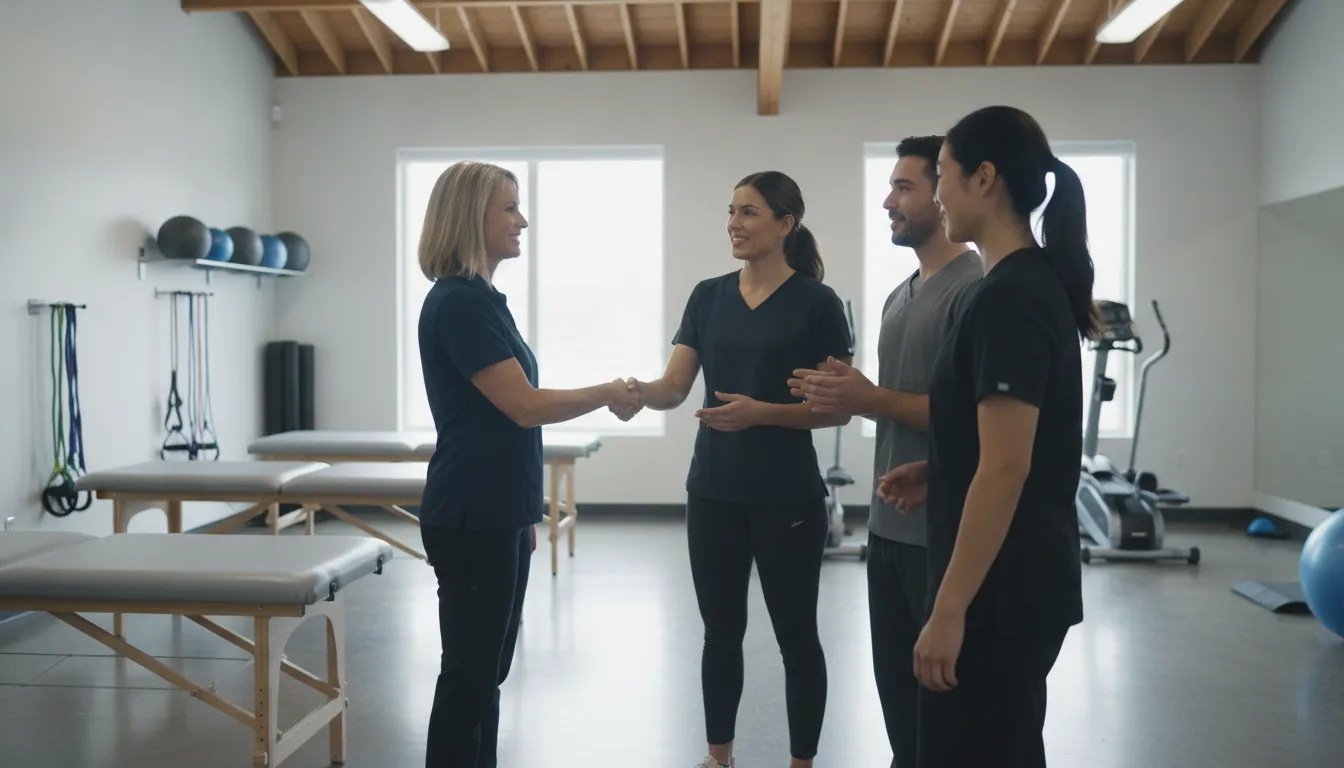
Chiropractic Clinic Grand Opening: A 6-Phase Plan
17 Min ReadHealthSource Chiropractic
A clinic can look ready while the systems behind the front desk, treatment rooms, and community outreach are still untested. A thoughtful opening plan gives a new owner time to turn a vision into a reliable patient experience. It keeps launch day from becoming a one-time celebration.
Request qualified franchise information
A chiropractic clinic grand opening should move through six practical phases: confirm site and operational readiness, hire and train the team, build local awareness, rehearse patient flow, manage launch week, and measure early response. The calendar and staffing needs will vary by market, so use the sequence as a planning framework, not a universal promise.
That framework starts with a clear definition of what the opening must accomplish. Before choosing event details or promotional tactics, establish the operating, patient-care, and follow-up foundations that will support the clinic after the first visitors leave.
What a chiropractic clinic grand opening plan should accomplish
A grand opening is more than a ribbon-cutting or the first day patients walk through the door. It is a planned transition from clinic development to community awareness, staffed operations, and consistent follow-up. The event should introduce the clinic, help local people understand how it serves them, and give the team a controlled opportunity to practice the patient experience.
That makes the grand opening different from opening day. Opening day is an operating milestone. The grand opening is a coordinated communication and relationship-building effort. It may include local outreach, event marketing, and an invitation for prospective patients and community partners to learn about the practice. A strong plan supports both without allowing the event to distract from clinical readiness, compliance, or patient care.
Use the preparation period to build readiness
HealthSource documents a three- to six-month pre-opening preparation context. That range can include site selection and lease work, design and buildout planning, equipment ordering and installation, staff recruitment, marketing preparation, and grand opening execution. It is a planning reference, not a promise that every clinic will follow the same calendar. Market conditions, construction, staffing, local requirements, and other decisions can change the sequence.
For an owner, the most useful question is not, "How quickly can we announce the event?" It is, "What must be true before we invite the community?" Define the clinic's audience. Clarify the services and experience you can accurately describe, assign event ownership, and identify the decisions that require local legal, licensing, or regulatory review. Chiropractors and other qualified professionals remain responsible for clinical and compliance decisions in their market.
A practical planning calendar
- Months 3-6 before launch: Confirm the site and lease path, establish the project sequence, define the clinic's local audience, and document the decisions that affect the event.
- Months 2-3 before launch: Coordinate buildout and equipment work, begin recruiting and hiring, outline the event experience, and prepare accurate local marketing materials.
- About 1-2 months before launch: Train the team on roles, scheduling, intake, patient flow, and communication. Begin appropriate community and referral-network outreach.
- During the final weeks: Complete operational rehearsals, confirm event logistics, check public-facing information, and establish a process for recording inquiries and follow-up.
- After the event: Contact people who requested information, review feedback and sources, and use what you learn to improve the clinic's ongoing outreach.
Planning checklist
- Define the purpose and audience of the event.
- Separate event responsibilities from first-day clinical responsibilities.
- Confirm staffing, training, patient flow, and escalation paths.
- Review local permits, licenses, inspections, and marketing requirements.
- Prepare a realistic outreach and follow-up process without guaranteeing attendance or results.
Owners evaluating a supported model can review the HealthSource franchise opportunity to understand how broader systems and preparation support may fit their goals.
How do you make the clinic ready before opening day?
Readiness is more than a finished reception area. Before inviting the community to a chiropractic clinic grand opening, confirm that the facility, clinical environment, technology, team workflows, and patient experience can operate together safely and consistently. A practical checklist helps you find gaps while there is still time to correct them.
- Confirm the site and buildout. Walk the space against the approved layout and verify that construction, signage, lighting, utilities, accessibility features, storage, treatment areas, and waiting areas are complete. HealthSource documents support with site selection, clinic design and buildout, and clinic setup. Keep the final approval decisions with the appropriate project, legal, and construction professionals.
- Install and test equipment. Confirm that ordered equipment has arrived, is installed correctly, and is ready for its intended clinical use. Check treatment tables, rehabilitation equipment, technology-based services, supplies, and backup procedures. Create a simple owner-approved inventory so staff know what is available, where it belongs, and whom to contact if something fails.
- Complete local compliance checks. Permits, business licenses, professional licenses, inspections, health and safety requirements, documentation standards, privacy obligations, and insurance or payer requirements vary by location and practice model. Do not assume that a checklist from another state applies to your clinic. Confirm every requirement with the proper local and state authorities, your legal adviser, licensing professionals, and other qualified professionals before opening.
- Configure the technology. Set up and test patient scheduling, records, billing and collections workflows, communications, reporting, and any connected systems. Use test records and controlled scenarios where appropriate. Verify user access, data handling, appointment reminders, payment processes, and downtime procedures without exposing real patient information.
- Prepare patient intake and scheduling. Review each step from the first inquiry through arrival, forms, history collection, clinical evaluation, checkout, follow-up, and the next appointment. Make instructions easy to understand, assign ownership for each handoff, and ensure staff can explain what patients should expect without making unsupported clinical promises.
- Run a full rehearsal. Conduct a dry run with the entire opening team. Simulate calls, online scheduling, a late arrival, a crowded waiting area, equipment troubleshooting, a documentation question, and an escalation to the appropriate clinician or manager. Time the patient flow, identify bottlenecks, and revise roles or scripts before launch day.
The goal is not to create a perfect-looking space for photographs. It is to open with dependable systems that protect patients, support clinicians, and give the team a clear response when real-world conditions differ from the plan.
How should you hire and train the opening team?
A strong opening team needs more than enough people to cover the schedule. It needs clear responsibilities, consistent communication, and a shared understanding of what a patient should experience from the first phone call through follow-up. Build the team around the care model and the actual workflow of the clinic, then hire for both technical ability and alignment with a patient-first culture.
Define the roles before you post the jobs
Start by separating clinical and front-office accountability. Clinical team members should work within their licenses and training, follow approved care and documentation processes, and know when an issue requires the chiropractor's judgment. Front-office staff may own phone responses, scheduling, intake coordination, insurance or payment questions within their scope, and communication about next steps. The owner or clinic leader should define who makes decisions, who hands off information, and who escalates a concern.
Write a simple responsibility map for recurring situations. For example, identify who welcomes a new patient, who confirms the health history is complete, who prepares the room, who explains the next step, and who closes the follow-up loop. This prevents the common opening-week problem in which everyone assumes someone else is handling an important task.
When evaluating candidates, look for dependable communication, coachability, and respect for patient privacy alongside role-specific credentials and experience. A polished resume cannot replace calm listening, accurate handoffs, and the willingness to use a defined system. For existing owners considering transforming an independent practice, this role clarity can also help an established team adapt to new workflows without losing its service strengths.
Train through practice, not just presentation
Use the weeks before opening to rehearse the patient journey. Run mock calls, appointment scheduling, check-in, clinical handoffs, room turnover, payment questions, and follow-up. Include realistic complications, such as a late arrival, an incomplete form, a confused family member, or a patient who needs a question escalated. After each rehearsal, ask what felt unclear and update the process while there is still time.
HealthSource documents a Cortex learning management system with more than 900 video courses, including clinical, business operations, and technology topics. That library can provide structured learning for different roles, but each team member still needs practice applying the material in the local clinic. HealthSource also documents weekly Tuesday training and quarterly field expert visits. These are support resources described by the franchise system, not a substitute for local licensing, compliance review, role-specific credentials, or hands-on supervision.
Make communication part of the training standard. Teach staff to use plain language, protect confidential information, avoid promising outcomes, and explain what happens next. A brief daily huddle during the launch period can surface staffing gaps and patient-flow issues early. The goal is not a perfect script. It is a team that knows its responsibilities, communicates reliably, and can deliver a calm, respectful experience when the grand opening becomes a busy day.
How can prelaunch outreach build local awareness?
Effective outreach begins before the doors open, but it should do more than announce a date. The goal is to explain who the clinic serves, what patients can expect, and how the new location will participate in the community. A clear value proposition might emphasize convenient access to chiropractic care, rehabilitation support, patient education, or a modern approach to helping people move and function well. Keep the message accurate, specific to the services actually available, and appropriate for the local audience.
Build relationships before you promote the event
Local awareness grows through repeated, relevant contact rather than a single advertisement. Identify nearby professionals and organizations whose audiences may benefit from learning about the clinic. Depending on local rules and the nature of each relationship, this could include complementary healthcare providers, fitness professionals, employers, schools, community groups, and neighborhood organizations. Introduce the clinic, listen to community needs, and explain how referrals or educational collaboration would work. Any referral arrangement, health claim, or promotional offer should receive the required professional and legal review before it is shared.
HealthSource documents support for community outreach and referral-network building as part of its local marketing approach. That support can help an owner organize outreach priorities while still leaving room for market-specific judgment and local compliance requirements.
Coordinate the announcement across every public touchpoint
A compliant grand opening announcement should include the clinic name, location, anticipated timing, services available, and a straightforward way to learn more. Avoid implying guaranteed outcomes, overstating credentials, or using patient imagery and testimonials without the proper permissions. Confirm that the announcement follows applicable advertising, privacy, licensing, and professional standards before publication.
Update the website and digital profiles so the same core information appears everywhere. Check the location, hours, phone number, directions, service descriptions, accessibility details, and contact form. Add a useful opening announcement to the website, then adapt it for local social profiles, email lists, community calendars, and approved partner channels. Consistent information reduces confusion when people search for the clinic after seeing an invitation.
Make event logistics easy to understand
Decide whether the event will be an open house, educational gathering, community meet-and-greet, or another format that fits the clinic and its neighborhood. Plan the invitation list, registration or RSVP process, parking and accessibility, staffing, refreshments, demonstrations, privacy boundaries, and a clear contact person. Invitations should set realistic expectations. They can invite people to tour the space, meet the team, ask general questions, or learn about available services without promising attendance, appointments, or clinical results.
HealthSource documents grand opening campaign planning, local advertising strategy, and event marketing support. Use that planning to establish a simple follow-up process: record permission-based inquiries. Note how each person heard about the event, respond to questions, and offer an appropriate next step. Review responses with the team after the event so future community outreach becomes more relevant and useful.
What should happen during opening week?
Opening week should be managed as a controlled transition from community event to dependable patient care. The event creates introductions, but the operating system behind it determines whether visitors receive a clear, professional experience and whether the team can follow through afterward. Before the doors open, assign ownership for greeting, registration, education, clinical conversations, scheduling, documentation, and follow-up. Every team member should know when to escalate a question to the appropriate clinical or operational lead.
| Event-day priorities | First-week operating priorities |
|---|---|
| Welcome visitors, explain the clinic's patient-centered mission, and direct people through a simple flow. | Run appointments on schedule, maintain a calm handoff between front office and clinical staff, and identify bottlenecks. |
| Offer accurate, accessible education about the clinic's services without making individual clinical promises. | Answer patient questions within the appropriate professional role and reinforce education during the intake and care experience. |
| Capture complete contact and interest information with the required permissions and documentation. | Review records for completeness, protect patient information, and complete follow-up tasks consistently. |
| Make the next step clear, such as requesting an appointment or evaluation when appropriate. | Track event-to-appointment handoffs, confirm scheduled visits, and contact people according to the clinic's approved process. |
Build one visible patient flow
Use a defined path from arrival to departure: greeting, registration, education, clinical interaction when appropriate, scheduling, and follow-up consent or instructions. Test the path under realistic conditions before the event. The goal is not speed at any cost. It is a patient-centered experience in which visitors know where to go, what information they are providing, and what happens next. Intake and documentation workflows should be ready for both event visitors and the first scheduled appointments. Operational readiness includes workflow testing and staff familiarity with the systems used at launch before public opening.
Use communication and contingency plans
Hold a short team huddle at the start of each day and a debrief afterward. Review appointments, role coverage, questions that need clinical review, incomplete documentation, follow-up assignments, and any change to the next day's plan. Keep an escalation path for schedule disruption, unexpected visitor volume, equipment problems, or questions outside a staff member's role. Synchronized internal communication supports consistent service during an intense launch period when responsibilities are changing quickly.
Document what the team learns, then adjust the workflow rather than improvising a new process for every visitor. Opening week is the first test of the clinic's operating model. A disciplined handoff from event engagement to appointments, education, documentation, and follow-up gives the team a practical foundation for ongoing community service.
Which early metrics matter after the grand opening?
The first measurement period is less about proving a launch was successful and more about learning how people move from awareness to care. Establish a simple baseline for the event and the first several weeks of appointments, then review the information consistently. Local response will vary, so use the data to understand your market rather than compare your clinic with an arbitrary industry target.
Measure the path from attendance to appointment
Begin with the number of people who attended, spoke with the team, or completed an on-site interaction. Then track how many asked for more information, scheduled an evaluation or appointment, and attended that appointment. The relationship between attendees and scheduled appointments is a useful early conversion measure, while the show rate helps distinguish interest from completed visits. Review these figures by event, date, and campaign when possible. A large turnout does not automatically indicate strong follow-through, and a smaller event may reveal a more engaged audience.
Record how each person heard about the opening. Useful source categories might include a local partner, referral, social media, search, email, direct invitation, or walk-in traffic. Keep the categories consistent so the team can identify which outreach activities brought people into the clinic and which produced appointment requests. Digital booking and communication tools can make this tracking easier, but the process still depends on accurate staff documentation.
Track follow-up and patient experience
Follow-up should be measured as an operating process, not left to memory. Record whether each inquiry received a response, when the response occurred, whether an appointment was offered, and whether the person needed additional information. A short, consistent follow-up process helps the team identify gaps without treating every inquiry as if it has the same needs.
Pair these counts with qualitative feedback. Ask visitors and new patients what was clear, what felt confusing, and whether scheduling, check-in, education, or communication could be improved. Quantitative measures such as attendance and appointments are most useful when considered alongside patient feedback. This combination can show whether a problem is related to outreach, capacity, messaging, or the experience inside the clinic.
Set a weekly review with the owner and opening team. Choose one or two process changes, document who owns each action, and check the effect during the next review. For owners evaluating a broader support model, the HealthSource franchise opportunity provides a starting point for understanding how systems and support may fit into long-term clinic development.
Talk with HealthSource about your clinic opening plan
Frequently Asked Questions
How do you plan a chiropractic clinic grand opening?
Work backward from your intended launch window and organize the work into phases: confirm the site and local requirements. Complete buildout and equipment setup, hire and train the team, prepare outreach, rehearse patient flow, and measure early results. Assign an owner to each decision, document dependencies, and leave time to correct problems before inviting the public.
What should be included in a chiropractic clinic grand opening announcement?
Explain what is opening, who the clinic serves, the location, the event date and hours, what guests can expect, and how to contact the clinic. Keep the message patient-centered and easy to scan. Confirm that every statement, invitation, and clinical description follows applicable advertising, privacy, and professional requirements.
What is the best timing for a chiropractic clinic grand opening?
The best timing is when the clinic can deliver a consistent patient experience, not simply when the space is complete. Confirm staffing, scheduling, intake, equipment, technology, signage, and follow-up processes first. Preparation timelines vary by market, construction needs, licensing, inspections, and hiring conditions, so avoid relying on a universal opening date.
How can you attract new patients during a chiropractic clinic grand opening?
Build awareness before launch through a clear local message, a complete digital presence, community outreach, referral relationships, and a well-organized event. Make it simple for interested people to ask questions or schedule an appropriate next step. Track where inquiries originate and follow up promptly, while avoiding unsupported promises about outcomes or demand.
What role does community engagement play in a chiropractic grand opening?
Community engagement helps introduce the team, learn local needs, and begin relationships that continue after the event. Consider appropriate partnerships with nearby organizations and invite questions about the clinic's services and patient experience. Treat the grand opening as the start of ongoing education and communication, rather than a one-day substitute for consistent local marketing.
Plan Your Next Step With HealthSource
A thoughtful launch plan can help you organize the operational, staffing, and outreach decisions that shape a new chiropractic clinic opening. If you are evaluating whether a supported franchise model fits your goals, request qualified franchise information and discuss your clinic launch plans with the HealthSource team. Use that conversation to ask practical questions, understand the support model, and determine whether the opportunity aligns with your experience and direction.


