
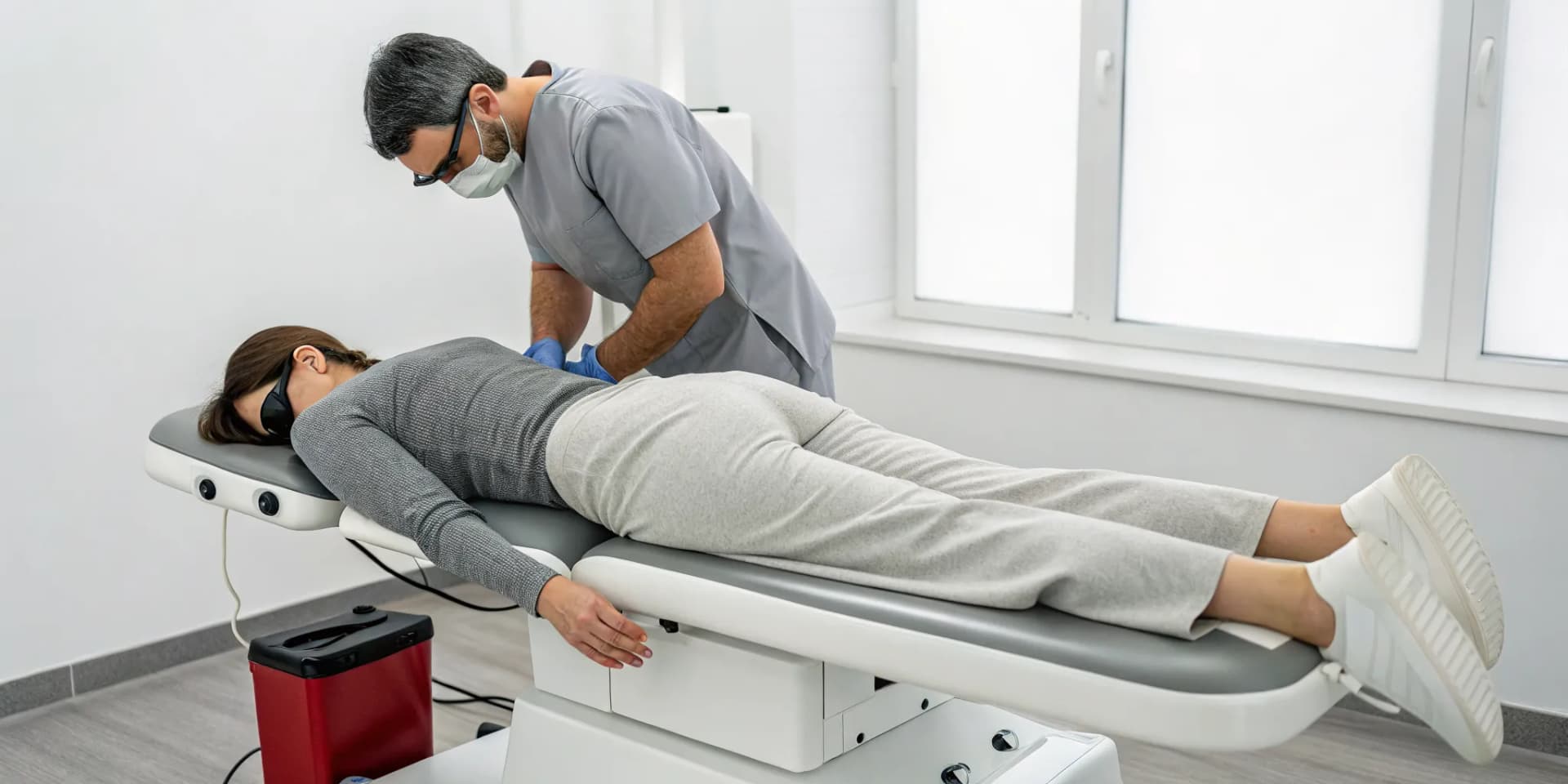
Best Class 4 Laser for Chiropractic Disc Injuries 2026
26 Min ReadHealthSource Chiropractic
For many clinic owners, the goal is to build a practice that can thrive and grow, even when you’re not the one performing every single treatment. This means creating efficient systems and adding high-value services. A Class 4 laser is a powerful strategic investment that does both. It introduces a profitable, cash-based revenue stream for treating complex conditions like disc injuries. Because treatments are fast and can be delegated to trained staff, it improves your clinic’s workflow and frees you up to focus on managing your business. This article will explore the business case for this technology and help you find the best class 4 laser for chiropractic disc injuries to build a more scalable and profitable practice.
Key Takeaways
- Treat Stubborn Injuries at the Source: Class 4 lasers use photobiomodulation to send light energy deep into tissues, stimulating cellular repair and reducing inflammation. This gives you an effective tool to heal complex conditions like disc injuries from the inside out.
- Enhance Your Existing Treatments: Laser therapy is not a replacement for your adjustments or decompression; it makes them more effective. Using the laser before a treatment can reduce muscle guarding and inflammation, leading to better patient outcomes and a more comfortable experience.
- Build a More Profitable, Scalable Clinic: Adding a Class 4 laser introduces an efficient, cash-based revenue stream. The quick treatment times improve your daily workflow, while superior patient results build your reputation, helping you create a more scalable and less physically demanding practice.
How Do Class 4 Lasers Treat Disc Injuries?
As a chiropractor, you’re always looking for effective ways to help your patients find lasting relief, especially from stubborn conditions like disc injuries. Class 4 laser therapy is a powerful, non-invasive tool that can make a significant difference in your treatment outcomes. Instead of just managing symptoms, this technology works at a cellular level to promote true healing from within. It uses a process called photobiomodulation to stimulate the body’s natural repair mechanisms, reduce inflammation, and accelerate recovery. By adding this advanced modality, you can offer patients a path to faster pain relief and improved mobility, setting your clinic apart as a leader in patient care. This approach not only enhances patient outcomes but also aligns with building a more modern, results-driven practice with diverse service offerings.
What Is Photobiomodulation?
At its core, photobiomodulation is a simple concept: using light to improve health. During a Class 4 laser treatment, a device delivers specific wavelengths of red and near-infrared light deep into the body’s tissues. Unlike surgical lasers, this light doesn’t cut or burn. Instead, the light energy is absorbed by cells, triggering a cascade of beneficial biological effects. Think of it as giving your cells a powerful energy boost to do their job better and faster. This process helps reduce inflammation, improve circulation, and kick-start tissue regeneration right at the source of the injury. It’s the fundamental science that makes laser therapy such an effective tool for treating deep-seated musculoskeletal issues.
Stimulating ATP, Blood Flow, and Collagen
So, what happens inside the cells during photobiomodulation? The photons from the laser are absorbed by the mitochondria, which are the powerhouses of your cells. This absorption stimulates the production of adenosine triphosphate, or ATP, the primary energy currency for all cellular processes. With more ATP available, cells have the fuel they need to repair themselves more efficiently. This energy surge also leads to vasodilation, which widens blood vessels and improves circulation to the injured area. Enhanced blood flow delivers more oxygen and vital nutrients while carrying away waste products, creating the ideal environment for healing and collagen production.
Class 4 vs. Class 3: What's the Difference?
When researching lasers, you’ll see both Class 3 and Class 4 options, and the distinction is important. The primary difference is power. Class 4 lasers are significantly more powerful than their Class 3 counterparts, often called "cold lasers." This higher power allows them to generate a soothing, therapeutic heat and, more importantly, penetrate much deeper into the body. For an injury like a herniated disc, which is located deep within the spinal column, this depth is critical. While a Class 3 laser might be suitable for superficial issues, a Class 4 chiropractic laser has the strength needed to reach the disc and surrounding tissues to deliver a therapeutic dose of light energy.
Why Lasers Work for Disc Injuries
Bringing it all together, the power and depth of Class 4 lasers make them uniquely suited for treating disc injuries. Research has shown that laser therapy is particularly effective for lumbar herniated discs, with some studies reporting success rates of over 80%. Patients often experience significant pain reduction, better mobility, and accelerated nerve repair with minimal to no side effects. By incorporating this technology, you can provide a highly effective treatment that complements your adjustments and other therapies. Offering such a results-oriented service can become a cornerstone of your practice, attracting new patients and establishing your clinic as a destination for advanced care. It's a powerful way to add one of the seven unique revenue streams that can help your business thrive.
Benefits of Class 4 Laser Therapy
Integrating a Class 4 laser into your clinic isn't just about adding another piece of equipment; it's about fundamentally changing how you approach complex cases like disc injuries. The benefits extend to your patients, your staff, and your bottom line. By using this technology, you can deliver more effective, efficient, and non-invasive care that sets your practice apart. The core of this treatment is photobiomodulation, a process where light energy stimulates cellular activity to promote healing from within.
This approach aligns perfectly with a modern, results-driven practice. Instead of relying solely on adjustments, you can offer a multi-faceted treatment plan that addresses pain, inflammation, and tissue repair at the source. For patients who are wary of surgery or long-term medication, this provides a powerful and safe alternative. For you, the practitioner, it means achieving better patient outcomes, which builds your reputation and drives referrals. Adopting this kind of advanced technology is a key part of the HealthSource business model, which focuses on providing comprehensive care that goes beyond traditional chiropractic services. It’s a way to build a more resilient and profitable clinic.
Reach Deep Tissue Injuries
One of the biggest advantages of Class 4 lasers is their power. Unlike their less powerful Class 3 counterparts, Class 4 lasers can penetrate deep into the body to reach tissues that other modalities can't. This is critical when treating disc injuries, which are located deep within the spinal column. The laser delivers concentrated light energy, or photons, directly to the injured cells. This process, known as photobiomodulation therapy, triggers a cascade of positive biological effects. It helps cells repair themselves, improves circulation to the damaged area, and reduces swelling, creating an optimal environment for healing. This ability to target deep, specific areas makes it an invaluable tool for addressing the root cause of disc-related pain.
Reduce Inflammation and Relieve Pain Faster
For patients with acute or chronic disc pain, fast relief is their top priority. Class 4 laser therapy excels at this by quickly reducing inflammation and calming irritated nerves. The strong red and near-infrared light penetrates deep into tissues, where it's absorbed by cellular mitochondria. This absorption helps cells produce more adenosine triphosphate (ATP), the energy currency of the body. With more energy, cells can function more effectively to fight inflammation and begin the repair process. This cellular activity provides rapid pain relief for conditions ranging from sciatica and nerve impingement to degenerative disc disease. It’s a powerful way to meet the growing demand for chiropractic care that provides immediate, tangible results for your patients.
Accelerate Tissue Repair with Minimal Side Effects
Class 4 laser therapy offers a compelling, non-surgical, and drug-free path to healing for disc injuries. It works by stimulating your body's own natural repair mechanisms. The light energy promotes collagen synthesis, which is essential for repairing the tough outer layers of a spinal disc. This helps accelerate tissue regeneration and improve the structural integrity of the spine. Studies on laser therapy for herniated discs have shown a success rate of over 80% with very few side effects, making it an incredibly safe option for your patients. Offering this kind of advanced, low-risk treatment can be a major differentiator for your clinic, attracting patients who are looking for effective alternatives to more invasive procedures.
Improve Outcomes with Shorter Treatments
From a practice management perspective, efficiency is key. Class 4 laser treatments are remarkably fast, often taking less than 10 minutes from start to finish. Most sessions for a specific area only require two to six minutes of active laser application. This speed allows you to treat multiple areas in a single visit or easily integrate laser therapy with other treatments like spinal decompression or manual adjustments. The short treatment time means you can see more patients without running behind, creating a smoother workflow for your entire team. This efficiency not only improves the patient experience but also directly impacts your clinic’s profitability, helping you add one of several unique revenue streams to your practice.
How Does Laser Therapy Compare to Other Treatments?
As a chiropractor, your treatment room is already filled with effective tools for helping patients find relief and healing. The question isn't about replacing what works, but about enhancing it. Integrating Class 4 laser therapy into your practice is about adding a powerful, non-invasive modality that complements your existing treatments to deliver even better, faster results for your patients, especially those with stubborn disc injuries.
Think of it as adding a specialized instrument to your orchestra. Your current methods, like manual adjustments and spinal decompression, are essential for addressing the structural and mechanical aspects of pain. Laser therapy works on a different, cellular level. It uses light energy to reduce inflammation, manage pain, and accelerate tissue regeneration from the inside out. By understanding how it works alongside other common treatments, you can see how it fills a crucial gap in patient care. It allows you to create more comprehensive, multi-faceted treatment protocols that address injuries from every angle, leading to improved outcomes and higher patient satisfaction. Let's look at how laser therapy stacks up against and, more importantly, works with some of your go-to therapies.
Laser Therapy vs. Spinal Decompression
Spinal decompression is a fantastic tool for treating disc injuries. By gently stretching the spine, it creates negative pressure that can help retract bulging or herniated discs, taking pressure off nerves and providing significant relief. It’s a mechanical solution to a mechanical problem.
Laser therapy offers a biological enhancement to this process. While decompression is creating space, the laser can be used to target the affected disc and surrounding tissues. It reduces the inflammation that causes pain and stimulates cellular repair in the damaged tissue. Combining these two therapies can create a powerful synergistic effect. Decompression provides the immediate mechanical relief, while laser therapy accelerates the underlying healing, helping to stabilize the area and reduce the chances of re-injury.
Laser Therapy vs. Ultrasound
Many clinics use therapeutic ultrasound, which uses sound waves to create gentle heat, increase blood flow, and reduce pain. It’s a familiar and effective modality for many soft tissue injuries. However, when it comes to treating deep-seated issues like lumbar disc injuries, Class 4 lasers have a distinct advantage: depth of penetration.
The high-powered light from a Class 4 laser can reach tissues several centimeters below the skin, something ultrasound therapy simply cannot do. While both treatments aim to reduce inflammation and promote healing, the laser’s ability to deliver more energy to a deeper target makes it uniquely suited for disc-related conditions. It's not that one is "bad" and the other is "good"; it's about using the right tool for the specific clinical challenge you're facing.
Laser Therapy vs. Manual Adjustments
Manual adjustments are the cornerstone of chiropractic care, and for good reason. They are essential for restoring proper joint motion, improving spinal alignment, and ensuring a healthy nervous system. Laser therapy is not a replacement for the adjustment; it’s the perfect partner to it.
Think about how much easier and more effective an adjustment is when the patient’s muscles are relaxed and inflammation is low. By applying laser therapy before an adjustment, you can reduce pain and muscle guarding, making the patient more comfortable and their body more receptive to the correction. After the adjustment, the laser can help calm any residual inflammation and promote healing in the surrounding soft tissues. This combination helps you achieve better results with your manual adjustments and provides a more comfortable experience for your patient.
Combining Laser Therapy with Your Current Treatments
The true value of Class 4 laser therapy is realized when you see it as an integrated part of a comprehensive care plan. It doesn’t operate in a vacuum. Instead, it enhances the effectiveness of the treatments you already trust and perform every day. When you combine laser therapy with chiropractic care and physical therapy, you can help patients experience faster pain relief and a more rapid return to their normal activities.
Imagine a protocol for a patient with a herniated disc: you can use spinal decompression to relieve mechanical pressure, laser therapy to reduce inflammation and kickstart cellular repair, and a specific adjustment to restore proper biomechanics. This multi-pronged approach addresses the injury from all sides, leading to more durable and complete outcomes. Integrating laser therapy allows you to build a more results-driven practice and reinforces your clinic’s position as a leader in patient care, which is a core part of the HealthSource business model.
What to Look for in a Class 4 Laser
Choosing a Class 4 laser is a significant investment in your clinic's future. It’s more than just buying a piece of equipment; it’s about selecting a tool that will deliver consistent patient results, integrate smoothly into your workflow, and provide a strong return on investment. With so many models and features on the market, it’s easy to feel overwhelmed. The key is to focus on the factors that directly impact treatment efficacy, clinic efficiency, and long-term reliability.
Think of this as building out another pillar of your practice. The right laser can become a cornerstone of your treatment protocols for disc injuries and other complex conditions. To make a smart decision, you’ll want to look beyond the price tag and evaluate the core specifications of each device. From power and wavelength to safety and support, each element plays a role in how effectively you can serve your patients and grow your business. Let’s break down the essential features to compare.
Power Output (Wattage)
Power, measured in watts (W), is one of the most critical factors to consider. It determines how deeply the laser energy can penetrate tissue and how quickly you can deliver a therapeutic dose. A higher-wattage laser can reach deep-seated injuries, like those in the lumbar spine, much more efficiently than a lower-powered one. For example, a 40W laser might treat a deep area in just a few seconds, while a 10W laser could take significantly longer to treat a more superficial area. This speed directly impacts your clinic’s workflow, allowing you to treat more patients without sacrificing quality of care.
Wavelength Options
Different wavelengths of light are absorbed by different types of tissues in the body. Some lasers come with a single wavelength, while others offer multiple options (typically up to four) in one device. Having multiple wavelengths gives you the versatility to treat a wider range of conditions. For instance, one wavelength might be ideal for targeting hemoglobin to improve circulation, while another is better absorbed by water in the tissues to manage inflammation. A multi-wavelength laser allows you to customize treatments for specific patient needs, enhancing the precision and effectiveness of your care protocols.
Treatment Depth
The ability to reach deep tissue is what sets Class 4 lasers apart from their Class 3 counterparts. When treating disc injuries, sciatica, or deep muscle strains, you need a device that can deliver energy several centimeters below the skin. The laser's power output is the primary driver of its treatment depth. Always verify the effective depth a laser can reach to ensure it aligns with the types of injuries you treat most often. This capability is essential for producing the significant clinical outcomes that build a results-driven practice and set your clinic apart from the competition.
Hands-Free vs. Handheld Models
Your choice between a hands-free and a handheld model will depend on your clinic’s operational style. Handheld applicators give you direct control for attended sessions, allowing you to target specific points and use massage techniques during treatment. On the other hand, hands-free systems let you treat a patient while you attend to other tasks or even another patient. This can dramatically improve your clinic’s efficiency and is a key feature for chiropractors looking to build a more scalable business model. Some advanced systems even offer both options, giving you maximum flexibility.
FDA Clearance and Safety
Patient safety is non-negotiable. Ensure any laser you consider is FDA-cleared. This clearance indicates that the device has been reviewed for safety and effectiveness according to federal standards. Using an FDA-cleared laser not only protects your patients but also safeguards your practice from liability. Reputable manufacturers will prominently display their FDA clearance, so if you can’t find it, that’s a major red flag. This is a simple but crucial checkpoint that builds trust and reinforces your commitment to providing the highest standard of care.
Warranty and Vendor Support
A laser is a long-term asset, and the support you receive after the purchase is just as important as the device itself. Look for a comprehensive warranty that protects your investment. Beyond that, evaluate the vendor’s support system. Do they offer in-depth clinical franchise training and support? Is there a dedicated team you can call with questions? Some companies even provide marketing materials to help you educate patients and promote your new service. Choosing a vendor who acts as a true partner will help you integrate the laser successfully and maximize its potential.
Top Class 4 Laser Brands to Consider
Choosing the right Class 4 laser is a significant step for your clinic. The market is full of options, and the best fit depends on your specific patient needs, practice goals, and budget. To help you get started, we’ve gathered a few reputable brands known for their quality and effectiveness in the chiropractic space. Think of this as a starting point for your research. Each of these options offers unique features that can help you deliver superior patient outcomes and build a more efficient, results-driven practice.
Medray QuantumX
Medray focuses specifically on the chiropractic field, so they understand the unique challenges and opportunities within your practice. Their QuantumX laser is an FDA-cleared Class 4 device designed to help your patients find relief from pain and recover faster without relying on medication. By incorporating a tool built for chiropractors, you can confidently address a range of conditions, from chronic back pain to acute disc injuries. Delivering these kinds of results not only improves patient satisfaction but also strengthens your clinic's reputation as a center for effective, modern care, which is key for long-term growth and attracting new patients.
REMY FX Elite
If you're looking to position your clinic as a premium, cutting-edge facility, the REMY FX Elite is worth a look. This is a top-of-the-line laser known for its high power and extensive features, making it incredibly versatile for a wide range of treatments. With a more powerful device, you can often achieve therapeutic goals in less time, which is a win for both you and your patients. For practice owners aiming to treat complex cases or simply offer the most advanced technology available, the REMY FX Elite represents a significant investment in your clinic’s capabilities and can become a major differentiator in your local market.
UltaLaser PBM Pro and Lite
UltaLaser offers valuable flexibility with its Pro and Lite models, recognizing that not every clinic has the same needs or budget. The PBM Pro model delivers the high power necessary for treating deep tissue and challenging conditions, while the PBM Lite provides a more compact and affordable entry point into laser therapy. This allows you to choose the right tool for your current situation. Both are designed to reduce pain and swelling while accelerating healing. This kind of product flexibility means you can invest in technology that aligns perfectly with your practice's growth stage and clinical focus.
S.T.A.R. Hands-Free Therapy System
For the chiropractor looking to build a more scalable and less physically demanding practice, a hands-free system is a game-changer. The S.T.A.R. Hands-Free Therapy System from Medray is an add-on that allows the laser to work on a patient without you needing to hold the applicator. This frees you up to manage other aspects of your clinic, oversee another patient's treatment, or simply reduce the daily physical strain on your own body. It’s a powerful step toward creating more efficient workflows and transitioning to a model where you spend more time managing your business and less time on the tables.
How Much Do Class 4 Lasers Cost?
Thinking about adding a Class 4 laser to your practice is a big step, and naturally, the first question on your mind is about the cost. The price tag on these devices can seem substantial, but it’s more helpful to think of it as an investment in your clinic’s future. The cost of a Class 4 laser varies widely depending on its power, features, and the manufacturer. You’re not just buying a piece of equipment; you’re investing in better patient outcomes, increased efficiency, and a powerful new service offering.
Integrating a Class 4 laser can transform your treatment protocols for disc injuries and other complex conditions, allowing you to provide faster, more effective relief. This not only builds your reputation as a results-driven practice but also opens up new financial opportunities. By offering advanced laser therapy, you can introduce one of several unique revenue streams that can significantly impact your bottom line. As you review the different pricing tiers, consider how each level of investment aligns with your clinic’s current needs and long-term growth goals. This isn't just about managing an expense; it's about strategically positioning your practice for success.
Entry-Level Models ($8,950–$12,000)
If you're just beginning to explore laser therapy, entry-level models offer a fantastic starting point without a massive upfront cost. In this price range, you'll find reliable lasers that are perfectly capable of delivering effective photobiomodulation for a variety of conditions, including disc injuries. While they may have lower power outputs or fewer pre-set protocols compared to their more expensive counterparts, they provide the core functionality needed to achieve great clinical results. Think of these models as a solid foundation for integrating advanced technology into your practice, allowing you to build confidence and see a return on your investment before scaling up.
Mid-Range Models ($12,000–$18,000)
For an established practice ready to make a more significant investment in technology, mid-range Class 4 lasers hit a sweet spot between performance and price. These models typically offer higher wattage, which allows you to treat deeper tissues and reduce treatment times, a huge plus for a busy clinic. You’ll also find more advanced features like multiple wavelengths, more sophisticated software with a wider range of treatment protocols, and improved user interfaces. This tier is ideal for chiropractors who want to expand their capacity to treat complex cases more efficiently and are looking for a workhorse laser that can handle a steady volume of patients.
Premium Models ($18,000–$24,995)
When your goal is to be the leading clinic for advanced care in your area, premium Class 4 lasers are the way to go. These top-of-the-line models come with the highest power outputs, the most advanced features like hands-free applicators, and robust software designed for maximum efficiency. Investing in a premium laser means you can deliver the fastest, most effective treatments for even the most challenging disc injuries. This level of technology not only produces exceptional patient outcomes but also sends a clear message that your practice is committed to providing the absolute best care available, solidifying your reputation as a market leader.
Exploring Financing Options
The initial cost of a Class 4 laser shouldn't be a barrier to bringing this powerful technology into your clinic. Most manufacturers and medical equipment suppliers offer flexible financing options that make the investment much more manageable. You can often spread the cost over several years with low monthly payments, allowing the laser to start generating revenue long before it's fully paid off. When you begin to research your options, be sure to ask about financing plans. This approach allows you to preserve your cash flow for other operational needs while still equipping your practice with the tools you need to grow and deliver outstanding care.
Is a Class 4 Laser a Good Investment for Your Clinic?
Deciding to add a Class 4 laser to your clinic goes beyond just buying a new piece of equipment. It’s a strategic move that can reshape your practice's profitability, efficiency, and clinical outcomes. When you look at it as a business investment, you need to consider how it will impact your revenue, your daily operations, your team, and most importantly, your patients' results. Let's break down what this investment really means for your clinic's growth.
Adding a New Revenue Stream
Integrating a Class 4 laser introduces a powerful, cash-based service that patients are happy to pay for out-of-pocket. This creates a reliable new income source that isn't dependent on insurance reimbursements. Think of it as diversifying your clinic's financial portfolio. Instead of relying solely on adjustments, you can offer premium treatment packages for complex cases like chronic disc injuries, attracting new patients and increasing the lifetime value of existing ones. This is a key step in building a more resilient and profitable practice. By adding services that deliver exceptional value, you can create a business with multiple, robust revenue streams that support long-term growth and stability.
Creating Efficient Treatment Protocols
One of the biggest operational advantages of a Class 4 laser is its efficiency. Since treatments are often completed in under 10 minutes, you can significantly improve patient flow without rushing or compromising care. This speed allows you to see more patients throughout the day or, alternatively, to spend more time on diagnosis and patient education. For clinic owners looking to reduce their own adjusting hours, this is a game-changer. You can train your staff to perform laser therapy, freeing you up to focus on managing the business. This level of efficiency is fundamental to creating a scalable business model that can grow without being limited by your personal time on the tables.
Training Your Staff and Educating Patients
While Class 4 lasers require certification, think of this training as an investment in your team. Properly training your staff to operate the laser not only ensures safe and effective treatments but also empowers them with new skills, increasing their value and engagement within the practice. This allows you to confidently delegate treatments and build a more self-sufficient team. On the patient side, education is key. When patients understand how photobiomodulation works to heal their tissues, they see the value in the treatment, which improves case acceptance and compliance. Excellent franchise training and support systems can provide the scripts and materials to make this process seamless.
Building a More Results-Driven Practice
Ultimately, the best investment is one that gets your patients better results, faster. With reported success rates of over 80% for conditions like herniated discs, Class 4 lasers can set your clinic apart as a leader in outcomes. Delivering superior results builds a powerful reputation, turning happy patients into your best source of referrals. This creates a virtuous cycle of growth, attracting more patients who are seeking effective, non-invasive solutions for their pain. As the demand for chiropractic care continues to rise, having advanced technology that delivers on its promises positions your clinic as the go-to provider in your community for years to come.
Frequently Asked Questions
Can my staff perform laser therapy treatments? Yes, and this is one of the biggest advantages for a growing practice. With proper certification and training, which is typically provided by the laser manufacturer, your chiropractic assistants or other team members can confidently and safely administer laser therapy. This allows you to delegate treatments, improve your clinic's workflow, and free yourself up to focus on diagnostics, adjustments, and managing your business.
How do I integrate this into my billing? Is it a cash service? Class 4 laser therapy is most often offered as a cash-based service. This is a significant benefit, as it creates a new revenue stream that is not dependent on the complexities of insurance billing. Many clinics offer laser therapy in packages of multiple sessions or bundle it with other services like spinal decompression to create comprehensive and high-value care plans for patients.
How long does it take for patients to feel a difference? Many patients report feeling a soothing warmth and some pain relief after their very first session, largely due to the laser's immediate effect on inflammation and circulation. However, true, lasting healing happens at a cellular level and requires a series of treatments. The full benefits of tissue repair and regeneration typically become more apparent after a few sessions, depending on the severity and chronicity of the injury.
Is this technology only useful for disc injuries? While Class 4 lasers are exceptionally effective for deep-seated disc injuries, their application is much broader. The technology is incredibly versatile for treating a wide range of musculoskeletal conditions. You can use it to address issues like sciatica, neuropathy, plantar fasciitis, rotator cuff injuries, and even arthritis. This versatility makes it a valuable tool for a large percentage of the patients who walk through your door.
What kind of training is required to use a Class 4 laser? Reputable manufacturers provide comprehensive training and certification with the purchase of their device. This training covers the science behind photobiomodulation, clinical protocols for various conditions, and essential safety procedures. The goal is to ensure you and your team are completely comfortable and proficient with the technology so you can deliver safe and effective treatments from day one.


