
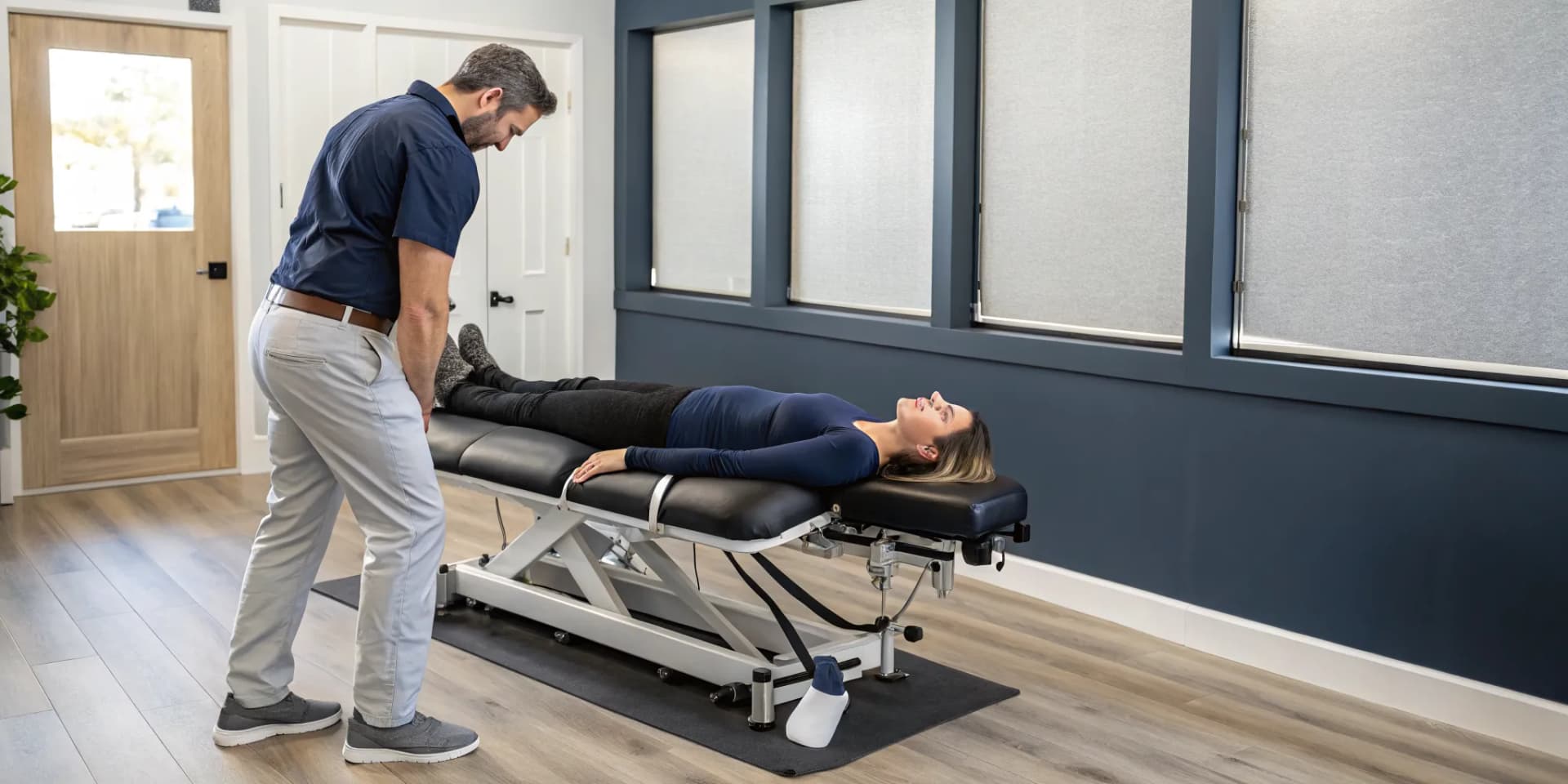
A Chiro's Guide to Advanced Spinal Decompression Training
19 Min ReadHealthSource Chiropractic
The physical demands of being a chiropractor are real. While you love helping patients, you may be looking for a way to scale your impact without spending every hour on your feet performing adjustments. Building a practice that can thrive even when you step away from the table requires smart systems and high-value services that your team can deliver. This is where spinal decompression fits perfectly into your long-term vision. Pursuing advanced spinal decompression training for chiropractors allows you to introduce a sophisticated, protocol-driven therapy into your clinic. It empowers you to oversee complex cases and lead your team, creating a more scalable business model that gives you freedom and a more valuable asset for the future.
Key Takeaways
- Become the go-to expert for complex spinal issues: Advanced spinal decompression training equips you to offer effective, non-surgical solutions for conditions like herniated discs, setting your clinic apart and creating a significant new revenue stream.
- Look for a program that offers more than just technique: The best training includes a comprehensive curriculum, hands-on practice, and ongoing support, giving you a full clinical and business system for success.
- Understand the full financial picture for a strong ROI: A smart investment requires looking at all costs, from training and equipment to potential ongoing fees, so you can confidently build a profitable service that transforms patient lives.
What Is Advanced Spinal Decompression Training?
If you're looking to expand your clinical toolkit, advanced spinal decompression training is a powerful next step. Think of it as a specialized education designed for chiropractors like you to master non-surgical spinal decompression therapy. This isn't just a refresher course; it's a deep dive into the latest, most effective techniques for treating conditions like herniated discs, sciatica, and degenerative disc disease. By completing this type of training, you move beyond basic adjustments and position yourself as a specialist in resolving complex spinal issues.
This advanced skill set is a core component of building a modern, patient-focused clinic. It allows you to offer a highly effective, non-invasive solution that many patients are actively seeking. Integrating these services aligns perfectly with a different kind of chiropractic business model that prioritizes comprehensive care and exceptional outcomes. Ultimately, this training equips you with the expertise to not only treat more conditions but also to build a more resilient and reputable practice that stands out in your community. It’s about adding a sophisticated, in-demand service that can become a cornerstone of your clinic's success.
How It Benefits Your Practice
Adding advanced spinal decompression to your services does more than just enhance your clinical skills; it directly contributes to the growth and stability of your practice. When you become an expert in this therapy, you differentiate your clinic from the competition. This specialization builds your reputation as the go-to provider for complex back and neck pain, which naturally leads to an increase in patient referrals. Patients who experience significant relief from a non-surgical treatment are your best advocates, sharing their success stories with friends, family, and online.
This expertise also opens up new avenues for revenue. By offering a premium, specialized service, you can diversify your income beyond standard adjustments. This is a key strategy for building a more profitable and scalable business, allowing you to benefit from unique revenue streams that create a stronger financial foundation for your clinic. It’s a strategic investment that pays dividends through improved patient loyalty, a stronger market position, and a healthier bottom line.
Improve Patient Outcomes and Satisfaction
At the end of the day, our goal is to help patients feel better, and advanced spinal decompression delivers on that promise in a big way. Studies have shown that this non-surgical therapy has a success rate between 71% and 89%, with many patients reporting life-changing pain relief and restored mobility. Instead of just managing symptoms, this therapy addresses the root cause of pain by gently decompressing the spine, relieving pressure on discs and nerves.
This high rate of success translates directly into higher patient satisfaction. When patients see real, lasting results without having to resort to injections or surgery, their trust in you and your practice deepens. This level of care meets the growing demand for effective chiropractic services and helps you build a loyal patient base. Providing solutions that truly work is the most powerful way to ensure your patients are happy, healthy, and eager to recommend your clinic to others.
Key Techniques You'll Master
Advanced spinal decompression training equips you with a specific and powerful set of clinical skills. You'll learn to confidently interpret complex MRI reports to pinpoint the exact cause of a patient's pain and determine if they are a good candidate for therapy. The curriculum will guide you in developing precise and effective treatment plans tailored to each individual's condition, from understanding disc anatomy to mastering the controls of the decompression table itself.
Beyond the technical aspects, quality training programs also cover crucial patient management strategies. You'll learn how to communicate the benefits of the therapy effectively, set realistic expectations, and foster patient commitment to the full treatment plan. This comprehensive approach ensures you are prepared for every aspect of delivering this service. With the right franchise training and support, you can seamlessly integrate these new techniques into your practice, knowing you have the backing to succeed.
How to Choose the Right Spinal Decompression Program
Adding spinal decompression to your clinic is a significant step, and selecting the right training program is crucial for your success. The quality of your training directly impacts your clinical confidence, patient outcomes, and the service's profitability. A great program goes beyond teaching you how to operate a table; it equips you with the diagnostic skills, patient management strategies, and business systems to fully integrate this therapy into your practice. Think of it as an investment not just in a new piece of equipment, but in a comprehensive service line that can transform your clinic.
As you explore your options, it’s important to look past the initial sales pitch and evaluate what you’ll actually get. A weekend course might teach you the basics, but will it give you the confidence to handle complex cases or answer tough patient questions? The best programs are designed to build true expertise. They provide a deep understanding of the science, hands-on practice with the technology, and proven protocols for patient care. As you weigh your choices, consider the program's overall approach, the training format, the depth of the curriculum, and the support you’ll receive after the course ends. These elements will determine how effectively you can implement what you learn and achieve the results you want for your patients and your business.
The HealthSource Comprehensive Approach
At HealthSource, we believe that clinical excellence and business success go hand in hand. That’s why our approach to spinal decompression is about more than just technique; it’s about integrating a proven system into your practice. We partner with leading educators like KDT.TV, which offers some of the most complete online training for spinal decompression therapy available to chiropractors. This ensures you receive top-tier clinical education. But we don’t stop there. We provide you with the operational and marketing frameworks to make spinal decompression a successful and profitable part of your clinic. This comprehensive support is a core piece of the HealthSource business model, designed to help you achieve better patient outcomes while building a stronger, more sustainable practice.
Evaluating Online vs. In-Person Training
Deciding between online and in-person training depends on your learning style and schedule. Online courses offer incredible flexibility, allowing you to learn at your own pace without taking excessive time away from your clinic. Many programs, including those from our partners, provide a hybrid model that gives you the best of both worlds. For example, you can complete the theoretical coursework online and then attend a hands-on session to practice your skills under expert supervision. This blended approach ensures you build both the knowledge and the practical confidence needed to perform treatments effectively. After completing the coursework, hands-on training, and a final test, you can earn a valuable certification, like the KDT Certified Practitioner credential, to showcase your expertise.
What to Look for in a Curriculum
A robust curriculum is the foundation of any quality training program. Look for courses that cover the full spectrum of spinal decompression therapy. This includes deep dives into disc anatomy, pathology, and how to properly read MRI reports to identify ideal candidates. The best programs, like those offered by Hill DT Solutions, also teach patient commitment strategies, advanced table features, and how to create customized treatment plans. A comprehensive curriculum should also equip you with the tools to communicate the value of the therapy to patients and integrate it seamlessly into your clinic’s financial structure. This knowledge is key to turning your clinical skills into one of your practice’s powerful revenue streams.
The Importance of Post-Training Support
Your learning journey doesn’t end once you receive your certificate. You will inevitably encounter complex cases and have questions as you begin implementing spinal decompression in your practice. That’s why ongoing support is so important. Look for programs that offer access to instructors or a community of peers after the training is complete. Some providers offer a concierge service, allowing you to consult with an experienced doctor when you need guidance on a specific case. This kind of mentorship is invaluable. It’s also a cornerstone of our franchise culture at HealthSource. We provide continuous training and support to ensure you always have the resources and community you need to practice with confidence and grow your clinic.
What to Consider When Selecting a Training Program
Choosing the right training program is a critical step in bringing advanced spinal decompression to your clinic. The quality of your education directly impacts your team's proficiency, your confidence, and ultimately, your patients' results. It’s important to look beyond the price tag and evaluate the key components that separate a basic certification from a truly transformative learning experience. A great program doesn't just teach you how to use a machine; it gives you a complete system for delivering exceptional care and getting predictable outcomes.
Look for Expert Instructors with Proven Experience
The best training comes from seasoned professionals who have successfully used these techniques in their own clinics. Instructors with real-world experience offer practical insights into patient communication, troubleshooting complex cases, and integrating the service seamlessly into your workflow. When vetting a program, look for a proven franchise team that is deeply invested in your success. Learning from experts who have built thriving practices ensures you get advice that is not just theoretically sound, but also practical and immediately applicable to your own clinic.
Compare Hands-On vs. Online Learning Opportunities
Think about the format that best fits your learning style and schedule. Online courses offer incredible flexibility for foundational concepts, but nothing replaces hands-on practice for mastering technique. The ideal program often combines both, letting you cover theory online before an in-person session to refine your skills under expert guidance. A robust training and support system should offer this blended approach. This ensures you are not just certified, but truly competent and confident in your new skills from day one with actual patients.
Ensure the Curriculum Is Comprehensive and Evidence-Based
A great program teaches you much more than just how to operate the equipment. Look for a curriculum that covers the full spectrum of care, including patient selection, MRI interpretation, and customized treatment planning. The best programs are grounded in evidence-based practices, ensuring you’re learning protocols that are both effective and safe. A program built on proven clinical systems provides a complete roadmap, equipping you to handle diverse patient needs and achieve the kind of results that build a strong reputation.
Prioritize Ongoing Support and Educational Resources
Your education shouldn't stop the moment the course ends. The field of chiropractic care is always evolving, so having access to ongoing support is critical for long-term success. Before committing to a program, ask what happens after you complete the initial training. Is there a community where you can ask questions and get updated materials? A strong franchisee culture provides a built-in support network, connecting you with mentors and peers who can help you overcome challenges and stay at the forefront of patient care.
Breaking Down the Costs and ROI
Adding a new service like advanced spinal decompression is a significant business decision, and it’s smart to look at it from every angle. Thinking about the investment isn't just about the initial price tag; it's about understanding the full financial picture and the potential return for your practice. When you invest in new skills and technology, you're creating opportunities to deliver better patient outcomes and open up new revenue streams. A well-planned investment can transform your clinic’s growth trajectory, turning a successful practice into a thriving community wellness hub.
The key is to go in with your eyes open, aware of all potential expenses, from training fees to equipment and ongoing memberships. By mapping out the costs against the potential for increased patient volume and higher-value services, you can make a strategic decision that pays off for years to come. This is where having a proven system can make all the difference, helping you account for every variable and giving you a clear path to profitability. It’s about moving from just practicing chiropractic to building a scalable, impactful business.
Understanding Program and Certification Fees
The first cost you'll encounter is for the training and certification program itself. These fees can vary quite a bit, so it’s important to know what you’re getting for your money. Typically, the program cost covers access to online learning modules, hands-on clinical training, examination fees, and the final certificate that designates you as a certified practitioner. This certification isn't just a piece of paper; it’s a mark of credibility that gives patients confidence in your expertise. When comparing programs, ask for a detailed breakdown of what the fee includes to avoid any surprises. A comprehensive approach to franchise training and support often bundles these educational costs into a more predictable package.
Factoring in Equipment Investments
Beyond the training, the most significant expense is the spinal decompression equipment. A high-quality decompression table is the centerpiece of this service, and it's an investment in your patients' results and your clinic's reputation. The technology is designed to create negative pressure within the disc, allowing it to retract and heal, which is a powerful solution for patients with debilitating pain. While the upfront cost can be substantial, this equipment is what enables you to offer a premium, non-surgical treatment. Think of it as the engine that drives one of your clinic's most impactful services and one of your seven unique revenue streams. Choosing the right equipment is just as important as choosing the right training.
Exploring Your Payment and Financing Options
Financing a new service line doesn't have to be a hurdle. Many equipment manufacturers and training organizations offer payment plans or financing options to make the investment more manageable for clinic owners. It’s worth exploring these internal options first, as they are often tailored to the needs of chiropractors. You can also look into traditional small business loans or equipment financing from third-party lenders. Some professional organizations even offer discounts on training for members, which can help reduce the overall cost. When you have a clear picture of the total costs and fees, you can build a financial plan that works for your practice and sets you up for a strong return.
Watching Out for Hidden Costs and Membership Fees
When you're budgeting for your new spinal decompression service, make sure to look beyond the initial training and equipment costs. Some certifications require you to join a professional society and pay annual membership dues to maintain your credentials and access ongoing resources. You might also encounter costs for continuing education, marketing materials to promote your new service, or software updates for your equipment. These ongoing expenses are part of the total cost of ownership. Asking about them upfront helps you create a realistic budget and ensures your investment remains profitable. A transparent chiropractic business model removes the guesswork, allowing you to focus on patient care.
Don't Let These Myths Hold Your Practice Back
Adopting a new therapy can feel like a big leap, especially when you hear conflicting information. Spinal decompression is a powerful tool, but it’s surrounded by a few persistent myths that can cause even the most forward-thinking chiropractor to pause. Let’s clear the air on some of the most common misconceptions so you can make an informed decision about what’s best for your patients and your practice. Seeing past these myths is the first step toward integrating a service that can transform patient outcomes and build a stronger business.
Addressing Common Safety and Pain Concerns
One of the biggest hesitations practitioners have about spinal decompression therapy revolves around patient comfort. Is it painful? Is it safe? The reality is that this therapy is designed to be gentle. Unlike older traction methods, modern decompression tables use computer-aided technology to create a gentle, intermittent pull that avoids triggering muscle spasms. This process is not only comfortable for the patient but also highly effective. When compared to more invasive options like surgery or long-term medication use, the safety profile of chiropractic care, including spinal decompression, is remarkably high. It’s a non-surgical approach that works with the body’s natural healing processes.
Understanding the Scientific Backing
Spinal decompression isn't just a trend; it's a therapy grounded in well-established physiological principles. The core concept is simple: creating negative pressure within the spinal discs. This negative pressure helps retract bulging or herniated disc material, taking pressure off pinched nerves. It also encourages the flow of water, oxygen, and nutrient-rich fluids into the discs so they can heal. This isn't guesswork. It's a targeted, non-invasive solution for specific spinal conditions that has gained significant attention in the medical community. By adding an evidence-based therapy like this, you reinforce your clinic's reputation for providing the advanced, effective care that is central to the HealthSource business model.
Calculating the True Return on Investment
When you think about ROI, it’s easy to get stuck on the initial equipment cost. But the true return on spinal decompression therapy is measured in patient success and practice growth. For patients, the return is a life with less pain and the ability to avoid invasive surgery. For your practice, this translates directly into a new and valuable service offering. Adding spinal decompression diversifies your clinic’s income and is one of the seven unique revenue streams you can build with HealthSource. It attracts a new type of patient and provides a powerful solution for existing ones, strengthening patient loyalty and generating referrals.
Defining Ideal Patient Candidates
You might think spinal decompression is only for the most severe cases of herniated discs, but its application is much broader. While it is a fantastic tool for disc injuries, it’s also highly effective for patients with sciatica, degenerative disc disease, and posterior facet syndrome. The key is a proper diagnosis. The most successful outcomes start with a thorough examination to confirm that decompression is the right tool for that specific patient. With the right training and support, you can learn to confidently identify the ideal candidates. This expands your ability to help more people in your community and solidifies your role as a go-to expert for complex spinal issues.
Frequently Asked Questions
How is advanced training different from the basic spinal decompression knowledge I already have? Think of it as the difference between knowing the basics of adjusting and mastering a specialized technique. Advanced training goes far beyond just operating a table. It equips you with the diagnostic skills to confidently read MRIs, create precise treatment protocols for complex conditions like herniated discs or sciatica, and manage patient cases from start to finish for the best possible outcomes.
What is the typical total investment required to add spinal decompression to my clinic? The total investment includes three main parts: the training and certification fees, the cost of a high-quality decompression table, and any potential ongoing membership or support fees. While the equipment is the largest single expense, a quality program will help you understand all the costs upfront. Many providers also offer financing options to make the investment more manageable for your practice.
How do I determine which of my patients are the best candidates for this therapy? This is a core focus of any quality training program. You'll learn how to conduct thorough examinations and interpret diagnostic imaging to identify patients who will benefit most, such as those with degenerative disc disease, sciatica, or specific types of disc herniation. The training also teaches you how to spot contraindications, ensuring you can confidently recommend the therapy safely and effectively.
I'm busy running my clinic. How flexible are the training options? Many modern programs are designed specifically for busy chiropractors like you. They often use a hybrid model that allows you to complete the in-depth theoretical coursework online at your own pace. Then, you can attend a shorter, hands-on session to practice your technique with expert guidance, minimizing your time away from the office.
What kind of support can I expect after I complete my certification? Your education shouldn't end when you get your certificate. The best programs provide ongoing support, which might include access to a community of fellow practitioners, continuing education resources, or even one-on-one mentorship for challenging cases. This ensures you have a network to rely on as you build confidence and integrate this powerful service into your practice.


